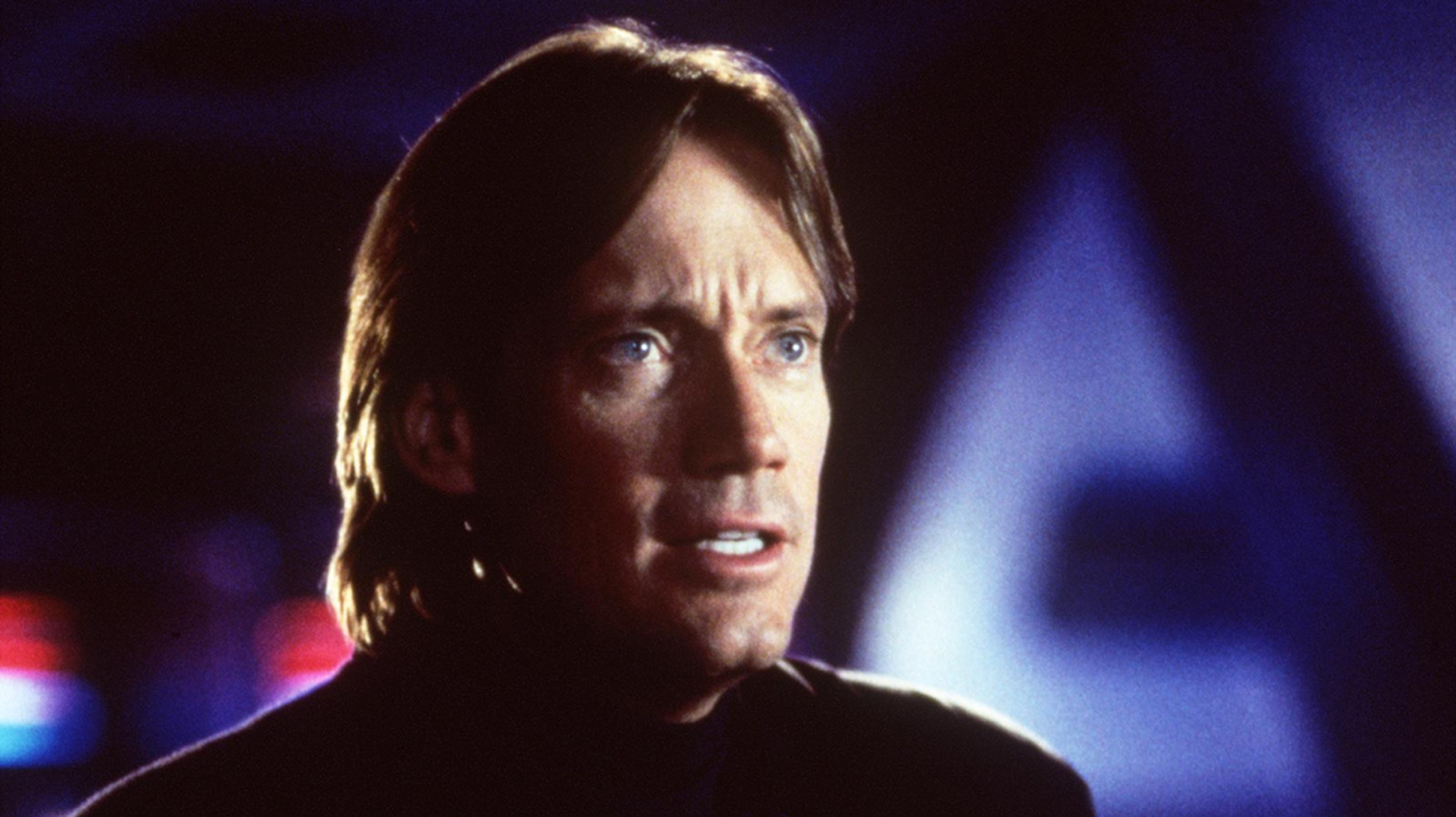
Gene Roddenberry gave audiences faith in humanity through his vision of “Star Trek.” He made such an impact on several generations that some “Star Trek” legends had their ashes sent into space to explore the final frontier beyond death. But “Star Trek” isn’t all he created. While people love his Vulcans, Klingons, and even the Ferengi, Roddenberry had other sci-fi stories to share. They’re criminally underrated, but well worth your time. “Andromeda” was one such story.
Made in the 2000s, nearly a decade after Roddenberry’s death, “Andromeda” was a science fiction television series that brought to life unused “Star Trek” ideas from Roddenberry’s notes. The series was developed by Robert Hewitt Wolfe, another Trek veteran, best known as a writer for “Deep Space Nine”. The series executive producer was none other than Majel Barrett-Roddenberry, the First Lady of Star Trek, Gene’s widow and long-time collaborator. “Andromeda” isn’t part of the “Star Trek” franchise and was never intended to directly extend that universe, but Roddenberry’s creative legacy is easily recognizable.
Besides “Andromeda,” Majel Barrett was responsible for bringing to life “Earth: Final Conflict,” another project of her late husband’s. Both explore humanity’s future, sentient starships, and the endurance of civilization. In fact, the protagonist of “Andromeda,” Dylan Hunt, had appeared in earlier Roddenberry projects from the 1970s: “Genesis II” and “Planet Earth.” This all suggests a continuity of thematic interest even before the series was realized. “Andromeda” stands as one of the most compelling science fiction series of the 2000s. It seamlessly combines ambitious storytelling with Roddenberry’s philosophical concerns about civilization, morality, and the future.
Andromeda’s story
“Andromeda” has a simple, but powerful premise: A captain and his sentient starship wake up after 303 years of being frozen in time, only to find the galaxy in ruin. They were once part of a vast interstellar government, called the Systems Commonwealth, and now they have to face its collapse. The civilization is sunk into disorder, but Captain Dylan Hunt believes order and cooperation can be restored. He sets out to rekindle the lost commonwealth of worlds.
Many modern Sci-Fi series rely on grim futures to warn their audience about the consequences of their actions, but Andromeda manages to balance the dystopian setup with a persistent optimistic core. The Systems Commonwealth’s fall means that even in the future, long-standing social structures and peace can easily crumble. The strong still prey on the weak, and humanity and individuality are endangered. But Captain Hunt’s central mission, to rebuild what was lost, keeps the narrative anchored in the belief that civilization and its ideals are worth fighting for.
“Andromeda” reflects these themes of resilience, ideals, and moral purpose, but unlike other must-watch sci-fi shows, there’s no system to rebel against, and no government to overthrow. Its heroes are driven by the conviction that a better future can be built with strong ideals, confidence, diplomacy, and strength. Hunt is a leader committed to the greater good rather than a rogue figure rebelling against the status quo.
“Andromeda” achieved its distinctive appeal by maintaining the tension between dystopian decline and hope of reconstruction, but the show isn’t afraid to explore how fragile ideals can be or how moral principles aren’t universal across societies. In “Andromeda,” cooperation, justice, and unity are not self-sustaining but require continuous effort, reflection, and often hard choices to survive the universe’s complex societies.
Andromeda’s connections to Roddenberry and Star Trek
“Andromeda” isn’t just another space opera from the early 2000s. It’s a cult classic sci-fi series like Farscape. It drew on concepts developed decades before the series ever aired. Roddenberry had been sketching out ideas about the starships, post-collapse societies, and heroes striving to restore civilization long before his passing. After, his widow, Majel Barret-Roddenberry, began exploring his archives for unfinished stories and unrealized concepts. She became known as the First Lady of “Star Trek” due to her extensive and continuous involvement with the franchise, not just behind the scenes but also in front of the camera as Lwaxana Troi and “Star Trek’s” ship computer voice. She was the perfect choice to champion “Andromeda” as part of an effort to bring Roddenberry’s unproduced ideas to life.
Although “Andromeda” carries Roddenberry’s name in its official title and explores familiar themes, it was never developed as an actual “Star Trek” spinoff. “Andromeda’s” story stands completely apart from Starfleet and the Federation. The concept evolved into a new universe with its own interstellar government and distinctive alien species. Still, the lineage to “Star Trek” is evident in “Andromeda’s” core ideas.
Both series feature starship crews navigating vast, often hostile space, wrestling with ethical dilemmas about civilization, society, and humanity’s future. But where “Star Trek” generally presents a confident, expanding future, “Andromeda” places its ideals against a fallen world. It explores how hard it is to rekindle hope once it’s been lost. This is an obvious and serious tonal shift that diverges from “Star Trek’s” utopian vision. But in a way, it manages to honor it too.