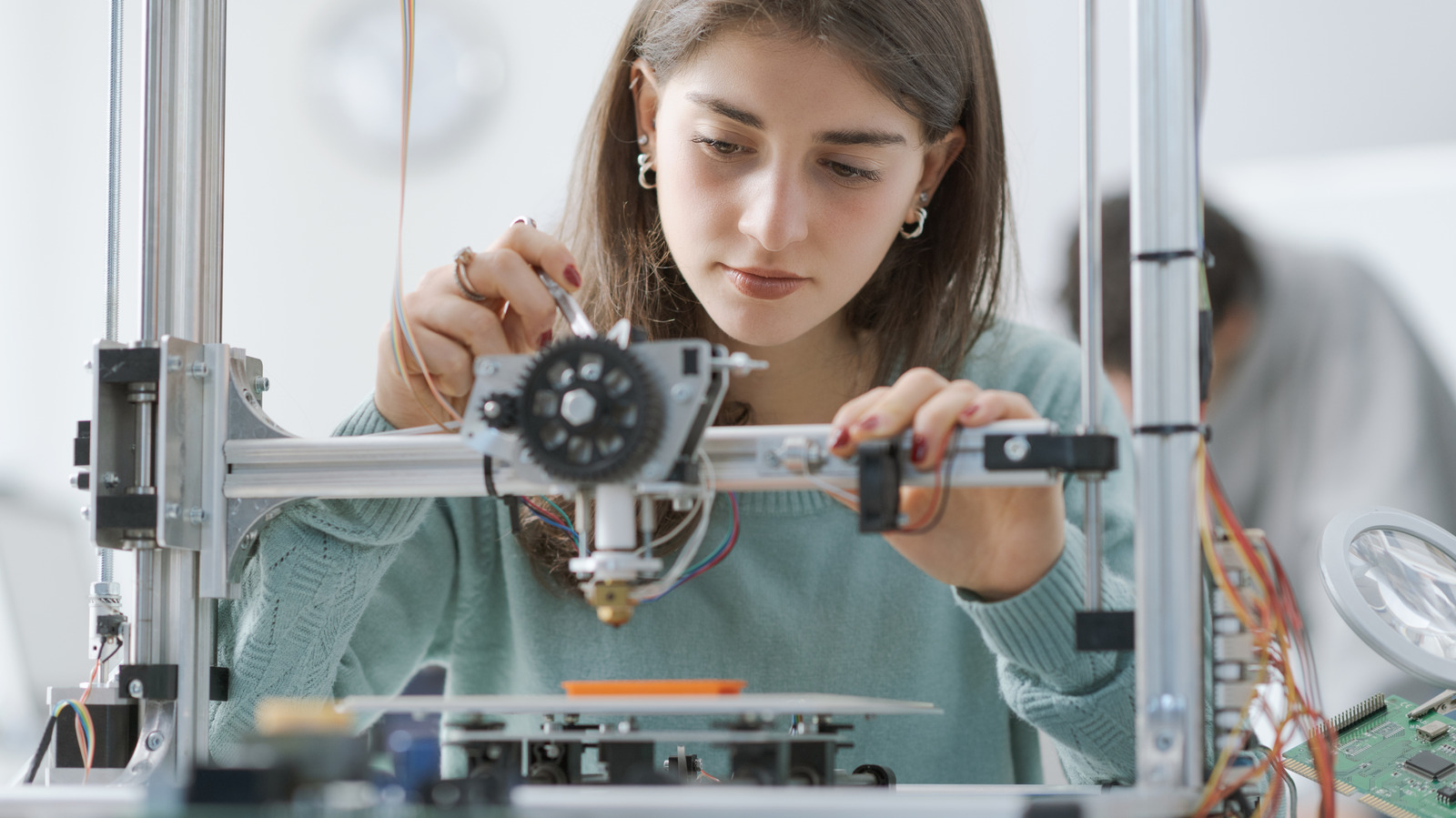
3D printers have evolved rapidly with each new version, making it incredibly easy for users to fabricate custom parts, props, and many other gadgets at home. However, among many of the best projects that you can do on your own, there are also some things that you should never 3D print, no matter how convenient they might seem. That’s because while some ideas may look cool on paper, they can lead to unsafe or even illegal items.
Standard filaments used in a 3D printer, such as ABS and PLA, give off some toxic fumes in case of overheating or when placed in other environments, and can harm your health. Moreover, even if an object appears to be solid and safe on your workbench, it still may fail under heat, pressure, or impact, especially when layer adhesion is not ideal. This process might also create tiny gaps and pores that make it easy for moisture and bacteria to accumulate and pose a health risk if it comes into contact with the mouth, food, or skin.
Because of all these factors, there are some projects that you should think twice before pursuing, since many conveniences should never override safety. That’s why when dealing with objects that could injure someone or even cause legal trouble, it’s important to understand which ones carry a real risk and the reasons that they should be avoided before you start a new project.
Food-Contact Utensils
The idea behind printing your own kitchenware is great, since you can customize your items the way you want to, but if you value your health, this is one of the things that you should never 3D print. That’s because the process of making one can create a microbiological environment on your items. So these layers can end up serving as a refuge for pathogens like E. coli and salmonella, which are hard to remove with standard dishwashing.
Even if the printed object appears smooth, these 3D printed parts may not be reliable, since FDM (Fused Deposition Modeling) still creates some microscopic grooves where moisture and organic residue accumulate, and that’s where bacteria can attach and multiply. Since cleaning tools and dishwashers aren’t strong enough to reach these gaps, the contamination can pose a biological risk to users if contamination persists and grows over time, making the utensil a hazard for your health.
Besides this, there are other concerns associated with printed kitchenware, since filaments contain dyes, plasticizers, or additives, which are not certified for food contact, while materials can also release styrene when exposed to heat. In any case, even if it may not be safe to 3D-print kitchenware and use it right after that, the risk can be reduced by using specific food-grade epoxy resin to cover layer lines in your printed objects and make it safer for use.
Firearms
3D printed guns are also something that you should never print at your home, especially because these items can be very unreliable and pose a real threat to your life, even if you are creating one just for fun. That’s because firearms need material reliability and a precision that 3D printers may not be able to provide, creating a serious hazard that not only can be harmful to users but also to others nearby.
The issue lies in materials such as PLA and ABS that were designed for prototyping, not for containing explosive forces that are generated when a gun is fired, creating pressures that can reach tens of thousands of pounds per square inch. Unlike forged metal components, the strength of 3D-printed parts varies depending on the direction of printed layers, which may cause sudden fractures. That means if a printed gun fails during use, it can explode without warning, sending sharp fragments and increasing the likelihood of injuries to your body. Also, you may be committing a crime when printing a 3D firearm, since regulations in many countries, including the U.S., are evolving to address these so-called ghost guns.
Medical devices
It’s possible to find many projects for masks, splints, and other tools made for medical usage online, but just because they are available to download doesn’t mean you should print one of these to use on your own. To ensure safety for users, these medical devices require regulatory certification, sometimes require biocompatible materials, and also need to have a sterile manufacturing process that a home 3D printer cannot provide. So using one of those can expose your health to many risks, including potentially serious infections.
That’s because many 3D printing materials, such as resins, can have components and additives that are cytotoxic when in contact with skin for a prolonged time. Considering that layered lines can also create channels that harbor bacteria and that many patients need sterile equipment to prevent infections, a home-printed medical device will be a dangerous biohazard, instead of helping you recover.
However, this doesn’t mean that every 3D printed medical device is unsafe to use, only the ones homemade. When made in controlled environments, this way of manufacturing can be easily used for healthcare, so hospitals and specialized manufacturers often use specific printers that are created to work according to the regulatory oversight and quality testing. For anyone considering such a project, the best option is to rely on regulated equipment instead of creating one at your own 3D printer to protect patient health.
Structural Furniture
When searching for a new project to use your 3D printer, you may find many pieces of furniture available for printing, and while many of them can be safe to create, it’s important to know how to use them properly. For example, decorative pieces, cable organizers, a new drawer divider, and other similar items are among the safe ones to print at your home. These kinds of projects aren’t made to withstand heavy mechanical stress and are less likely to cause injuries if they fail.
However, it’s important to use caution when printing other furniture, especially chairs, stools, or other ones that will have to deal with weight or be constantly used. While they may appear solid during the first few times you use it, some hidden weaknesses can develop over time due to the nature of layered fabrication. So, while they may not be visible at first, after repeated use, these flaws can cause the furniture to crack and collapse without warning.
These 3D printed items aren’t made to support body weight and repeated use, unlike when the world’s largest 3D printer can print a house, so failures like this can lead to a serious risk of falls and injuries. The risk aggravates when the parts are printed in segments and placed together after this. At the same time, this doesn’t mean that this furniture has no place at your home, since many of them work well for decorative purposes and are used within their intended limits.
Protective Safety Gear
Creating a custom helmet, knee pads, or any other 3D printed protective gear might seem like a clever solution, especially to save some money instead of buying an original one. However, these items should never replace their certified counterparts. That’s because protective equipment not only needs to look tough but also have specific materials and internal structures designed to absorb impact and protect your body during accidents.
That later part, however, is hard to match with a traditional 3D printer at your home, since most common filaments behave differently under stress than professional safety materials. Many prints are anisotropic, meaning their strength varies depending on the direction of layers, causing the object to split apart instead of deforming safely. Rather than absorbing energy during a collision, a printed helmet may transfer all the force directly to your body.
So using any kind of protective safety gear that is 3D printed can give you only a false sense of security and can be far more dangerous than not having any kind of protection. Legitimate gear also must comply with many standards that require extensive quality control, something that consumer printers cannot guarantee. As happens with medical devices, if an item is meant to protect you, relying on a homemade version is a gamble not worth taking, regardless of how reliable 3D printers have become.