Ukrainian defense tech companies received the country’s first export permits in early February as Ukraine looks to capitalize on the dramatic recent expansion of the defense sector and boost the wartime economy. The news came days after Ukrainian President Volodymyr Zelenskyy confirmed the decision to allow international weapons sales and unveiled plans to establish ten export centers across Europe in 2026.
The move to permit Ukrainian arms exports has been a long time coming, with defense tech companies arguing that they have spare production capacity due to the Ukrainian state’s limited purchasing power. With foreign sales now on the agenda, potential participating companies much make sure they are in a position to make the most of the emerging opportunities.
Since the onset of the full-scale Russian invasion in February 2022, Ukraine’s defense tech sector has proved itself in the most demanding conditions imaginable. Ukrainian companies, many of them young, resource-constrained, and operating under constant attack, have designed, adapted, and deployed weapons systems at a pace rarely seen in peacetime industries.
Crucially, these firms have been able to produce and refine innovative products in combat conditions based on real-time battlefield feedback. In practice, this has meant development cycles that can often be measured in days or weeks, rather than the multi-year acquisition cycles typical of traditional defense procurement.
The performance of Ukraine’s defense tech industry has generated significant international interest and a spate of early seed investments. As the war continues and the Ukrainian government moves to open up foreign markets, ambitious defense sector companies will need to focus on maximizing their export readiness.
In the context of the Ukrainian defense tech industry, export readiness refers to a company’s ability to navigate the complex legal, regulatory, and compliance frameworks governing the international sale of defense and dual-use technologies. This includes securing the necessary export licenses from the Ukrainian authorities, understanding and complying with destination country import controls, adhering to multilateral export control regimes, implementing robust end-use monitoring and supply chain security, and demonstrating transparency in ownership and governance to satisfy due diligence requirements of foreign buyers and investors.
For Ukrainian companies, export readiness also means turning battlefield innovation into compliant, scalable products for global markets and converting their tactical advantage into strategic economic growth. The Ukrainian businesses building these weapons systems and the investors backing them must begin this work now, not after the first export opportunity appears. Waiting until a deal is on the table could result in losing momentum, credibility, and valuation.
International defense markets operate under strict and unforgiving rules. Compliance with frameworks such as the US International Traffic in Arms Regulations (ITAR), Export Administration Regulations (EAR), the EU’s Dual-Use Regulation, and related NATO-aligned regimes is not optional.
These rules apply not only to finished products, but also to components, software, technical data, and even the nationality of personnel involved in development. Under the incorporation principle, foreign-origin controlled parts integrated into Ukrainian products can subject the final system to external jurisdiction and re-export restrictions.
Some US export rules allow limited flexibility when controlled components are only a small part of a system. ITAR does not. Even minor integration of ITAR-controlled items can trigger full US export licensing obligations. Companies that treat export controls as an afterthought often discover too late that they have painted themselves into a regulatory corner.
A critical but often underestimated component of export readiness is supply chain integrity. Many modern defense and dual-use systems rely on electronics, sensors, chips, and subcomponents sourced through global markets.
Supply chains with hidden or poorly documented tails that run back to China or other high-risk jurisdictions can quietly disqualify an otherwise competitive product from Western export markets. In some cases, these dependencies can trigger outright prohibitions; in others, they impose licensing requirements so onerous that customers walk away.
Eurasia Center events

Export readiness also requires institutional maturity inside companies. This includes appointing dedicated export control and compliance officers; implementing comprehensive trade compliance policies and procedures that govern every stage of the product lifecycle from design and procurement to production, marketing, and after-sales support; and building internal capability to identify, classify, and manage controlled items and technologies.
Ukrainian companies need to understand which products fall under which regulatory regimes, which export markets are realistically accessible, and what licensing pathways exist. Filing for licenses proactively, engaging early with national authorities, conducting internal compliance audits, and mapping obligations in advance can prevent costly delays, enforcement actions, and reputational damage that investors, partners, and customers alike are increasingly unwilling to tolerate.
Mistakes can be costly, with the compliance failures or unauthorized exports of a single private company capable of triggering diplomatic incidents, sanctions, or restrictions that jeopardize market access and credibility for Ukraine’s entire defense industrial base. This makes institutional discipline a matter of national security, not merely corporate risk management.
The implications are equally clear for international investors. As capital becomes more selective and diligence more rigorous, shareholder value will increasingly favor Ukrainian defense companies that are compliant, transparent, and forward-looking. Funds that encourage early investment in governance, compliance infrastructure, and supply chain resilience are not being overly cautious; they are protecting downside risk and enhancing upside potential. In future funding rounds and exit scenarios, export readiness will be a differentiator that directly affects valuation.
There is also a broader strategic dimension. Ukraine’s integration into Western defense and industrial ecosystems will depend not only on political alignment, but also on regulatory compatibility. Companies that are export-ready today will be in a position to participate in joint development programs and contribute to trusted supply chains tomorrow.
Ukraine’s defense sector has already demonstrated enormous battlefield credibility. The next phase is commercial and institutional credibility. Companies and investors who act now by auditing supply chains, implementing compliance frameworks, and preparing for regulated exports will be the ones best placed to lead the global defense market.
Michael Druckman is the founder and managing director of Trident Forward.
The views expressed in UkraineAlert are solely those of the authors and do not necessarily reflect the views of the , its staff, or its supporters.

The Eurasia Center’s mission is to enhance transatlantic cooperation in promoting stability, democratic values, and prosperity in Eurasia, from Eastern Europe and Turkey in the West to the Caucasus, Russia, and Central Asia in the East.
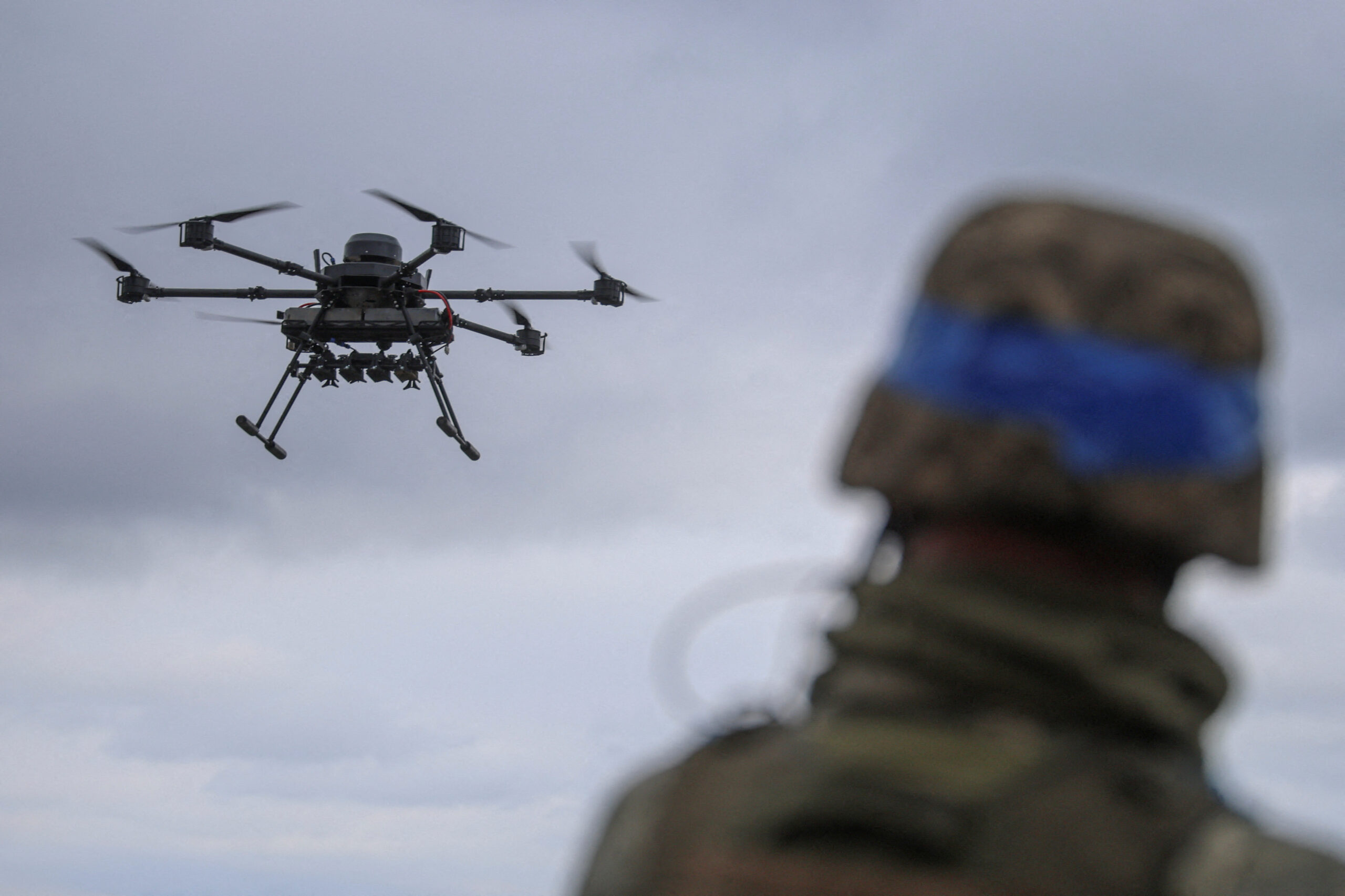
Image: A Ukrainian serviceman of the 25th Airborne Brigade looks at a Vampire, a heavy unmanned aerial vehicle, during its flight near a front line, amid Russia’s attack on Ukraine, in Donetsk region, Ukraine April 5, 2025. (REUTERS/Oleksandr Ratushniak)