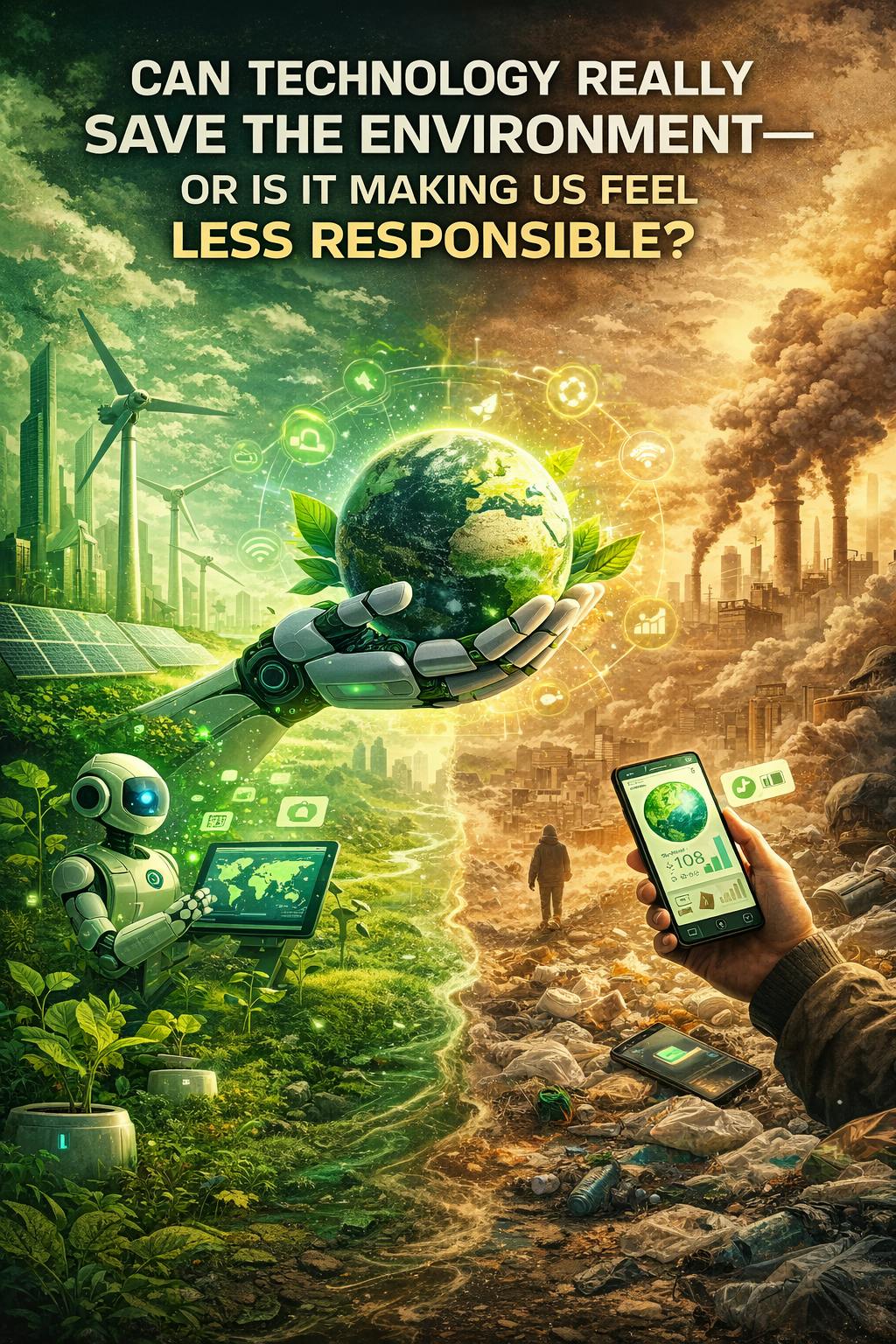
Technology often arrives with a promise. Faster solutions, smarter systems, better outcomes. When it comes to the environment, that promise feels especially comforting. Artificial intelligence predicts climate patterns, apps track carbon footprints, and startups race to build climate-focused innovations. In a world facing urgent environmental challenges, technology appears as a reassuring answer.
Yet beneath this optimism sits a quieter, more uncomfortable question: if technology is always improving, are we slowly handing over our sense of responsibility to it?
This question does not come from distrust in innovation. It comes from observing how easily responsibility shifts when solutions feel automated, distant, or abstract.
The Promise of Technology
There is no denying the role technology plays in understanding environmental problems. Data helps measure emissions, satellites monitor deforestation, and models simulate long-term climate impacts. What was once invisible or ignored is now tracked, visualized, and quantified.
Technology also brings scale. A single innovation can influence millions of users, industries, or decisions. From renewable energy systems to waste reduction tools, technological progress has made environmental action more efficient and accessible than ever before.
For many, this progress brings hope. It suggests that human ingenuity can rise to meet complex global challenges. It offers tools that feel actionable in a space often defined by overwhelming statistics and distant consequences.
This promise matters. It deserves recognition rather than dismissal.
When Awareness Turns Passive
However, progress carries an unintended side effect. When problems are framed primarily as technical challenges, responsibility begins to feel external. Solutions appear to live inside systems, platforms, and future breakthroughs rather than daily choices.
Awareness turns passive. Knowing becomes observing. Concern becomes expectation.
There is a subtle comfort in believing that innovation will eventually solve what feels inconvenient today. Apps promise to offset impact. Dashboards display sustainability metrics. Systems optimize behavior in the background. Over time, participation feels optional.
This shift does not come from indifference. It comes from trust—perhaps too much trust—in systems designed to operate without constant human attention.
The Comfort of Delegation
Delegating responsibility feels efficient. Technology excels at reducing friction, and friction often forces reflection. When decisions become automated, the discomfort that once demanded conscious choice disappears.
Environmental responsibility, however, thrives on friction. It requires pause, restraint, and long-term thinking—qualities that do not scale easily. When systems absorb responsibility, individuals may remain informed yet disengaged.
This does not mean technology causes neglect. It means technology can unintentionally make neglect easier by creating emotional distance between action and consequence.
Technology as a Tool, Not a Substitute
Technology is powerful, but it is not moral. It does not decide values or priorities on its own. It reflects the intentions embedded within it. Used thoughtfully, it supports better decisions. Used passively, it creates separation.
Environmental responsibility cannot be fully automated. No algorithm can replace awareness. No system can generate care where attention is absent. Technology can amplify intention, but it cannot originate it.
When tools replace engagement rather than support it, progress risks becoming performative rather than meaningful.
Speed Versus Depth
Modern technology also reshapes how attention works. Speed becomes a virtue. Efficiency becomes a goal. Environmental issues, by contrast, unfold slowly. Their consequences accumulate quietly, often without dramatic turning points.
This mismatch matters. A culture trained for speed struggles to stay engaged with problems that demand patience. Technology accelerates response, but depth requires slowing down—something systems are rarely designed to encourage.
Writing about this tension becomes an attempt to reclaim depth in a fast-moving environment.
Why This Question Matters to Me
I do not write as an environmental expert or technical authority. I write out of curiosity and reflection, trying to understand the world I am participating in. Watching responsibility subtly shift—from people to platforms, from habits to systems—made this question difficult to ignore.
Writing helps slow these assumptions. It creates space to examine where optimism turns into comfort, and where convenience quietly replaces care. It allows uncertainty to exist without demanding immediate solutions.
In a technology-driven culture, asking reflective questions often feels inefficient. Yet reflection is where responsibility begins.
Reframing Progress
Perhaps the question is not whether technology can save the environment, but how it should support human responsibility rather than replace it. Progress does not require surrendering agency. It requires alignment between tools and values.
Technology works best when it encourages awareness rather than abstraction. When it invites participation rather than delegation. When it complements human judgment instead of substituting it.
Environmental solutions must remain grounded in attention, intention, and accountability—qualities that cannot be coded but can be supported.
A Thought to Leave With
Technology may help us act faster, measure better, and solve smarter. But responsibility still begins with attention. Without that, even the most advanced tools risk becoming excuses rather than solutions.
If technology can help us move faster, perhaps the deeper challenge is whether it can also help us care longer—and more consciously—about the world we are shaping.