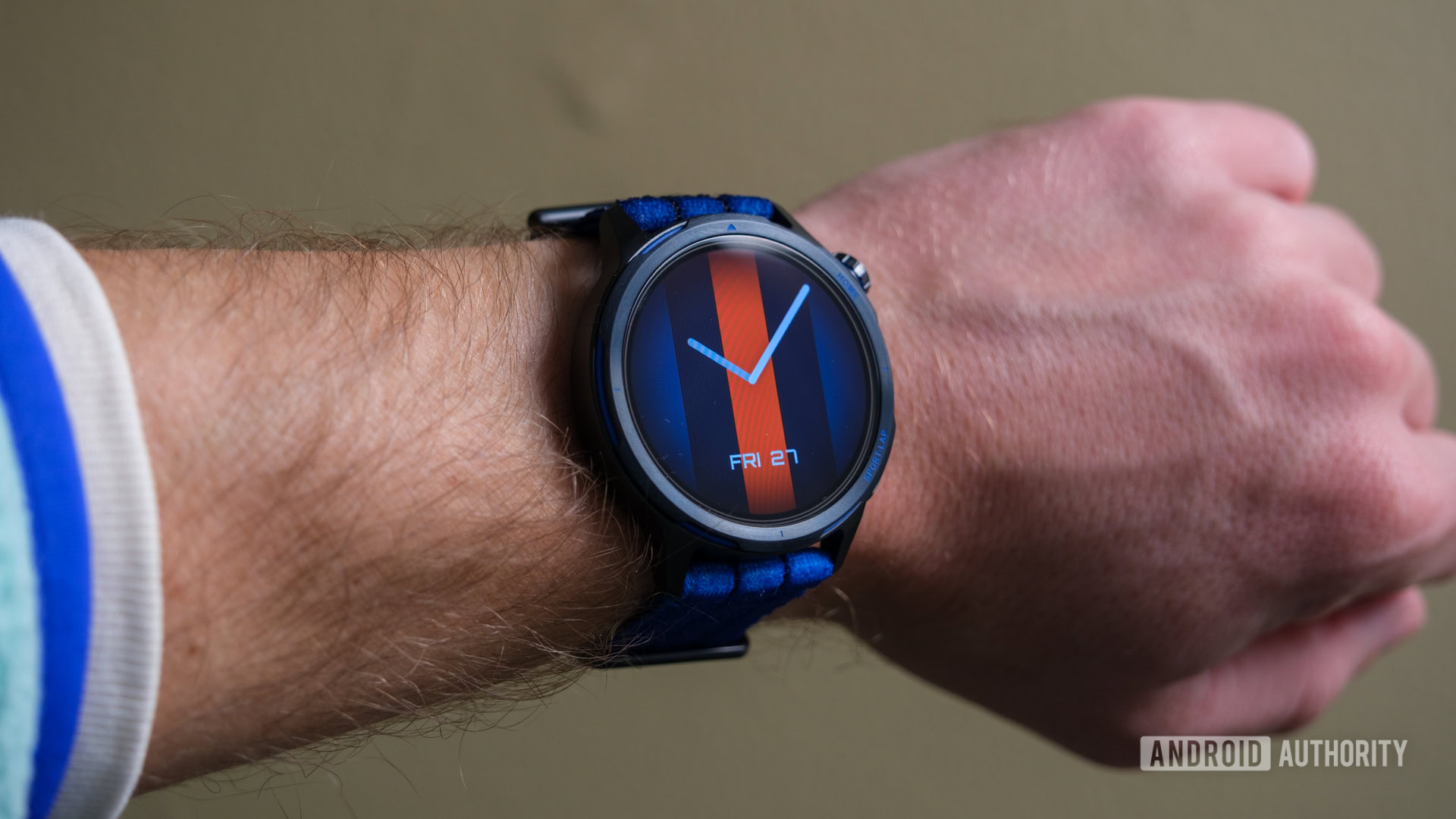
There’s a lot to like about the HUAWEI Watch GT Runner 2. This new model is smaller than its predecessor yet lasts just about as long. It features an updated antenna design and a remarkably thin case, making it a very real competitor to the likes of Coros and Garmin.
I’m pretty committed to the Garmin running watch I wear every day. Usually, it’s the Forerunner 970, but sometimes I’ll switch it up with the trail-ready Fenix 8 or the bright, colorful Instinct 3 AMOLED. The thing is, though, I know that a lot of Garmin running watches are expensive, and that can make them hard to recommend. So, when a more affordable alternative comes along, I’m more than happy to check it out.
This time around, that means strapping on the sequel to a smartwatch I reviewed nearly four years ago. HUAWEI finally decided to upgrade its Watch GT Runner, and after a few runs with it, I can’t believe this is the same watch. Here’s what makes the Watch GT Runner 2 so much better, but why the same flaws might keep you from buying one.
I’m so much happier with a smaller watch

Ryan Haines / Android Authority
The biggest thing (pun intended) that the HUAWEI Watch GT Runner needed to fix in my eyes was, well, its size. It originally came in a single 46mm case, which was made even bigger by having large arms on both sides to hold the 22mm quick-release band. And yes, I know that HUAWEI’s first running-focused watch was built on the bones of its Watch GT 3, but even that watch offered some size flexibility with a smaller 42mm case.
So, now that HUAWEI has dropped its new design to a 43mm case, I’m about as happy as can be. As soon as I took it out of the box, I marveled at just how much smaller it was. It feels like a slightly larger Coros Pace 3 (which had a 42mm case), and is only a few grams heavier with its AirDry woven strap. The thing is, though, the HUAWEI Watch GT Runner 2 is built a whole lot tougher than either its predecessor or the Pace 3. It trades a plastic frame for a titanium one and pairs it with a fiber-reinforced plastic back panel.
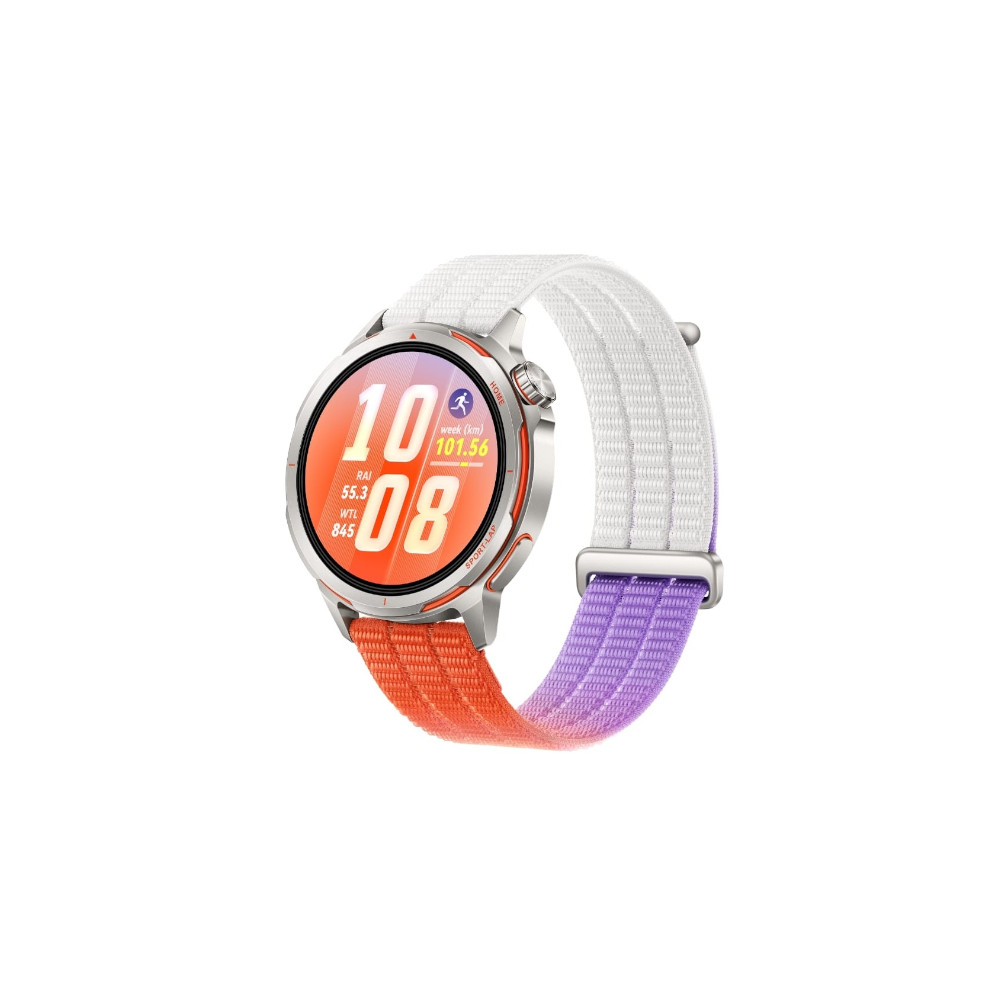
Also, thank goodness the Watch GT Runner 2 comes in more than one color. The previous version came in a single gray-and-yellow finish, which felt sporty but was impossible to wear casually. Now, the running watch comes in very subtle shades of Dusk Blue and Midnight Black, both of which blend in nicely for everyday wear. There’s also a brighter Dawn Orange version that’s meant to incorporate the colors of sunrise and sunset — the two times of day when most runners are out and about.
Despite the HUAWEI Watch GT Runner 2’s overall slimming, it’s still a pretty robust little wearable. It still has room for a 1.32-inch AMOLED face in its 43mm case, and it still has the same resolution (466 x 466) as its predecessor. HUAWEI also found space for the usual array of sensors and added an ECG sensor, too. Mix in an IP69 rating — yes, one that covers pressurized jets — and 5 ATM pressure resistance for diving, and there aren’t many places the Watch GT Runner 2 can’t go.

Ryan Haines / Android Authority
There is, however, one slight inconvenience with HUAWEI’s design. After using several Coros watches with a rotating crown as the main control, I feel like the Watch GT Runner 2 is backwards. Instead of using the crown to navigate and make your selections, you have to use both the crown and the button below it. Although rotating the crown does, as expected, move the menus up and down, you actually have to press the other button to make a selection. Press the crown instead, and you’ll head right back to the watch’s home screen. Oh, but if you’re in an activity, you’ll control starting and stopping by pressing the crown. Make that make sense.
Tracking data is good, but not quite Garmin-level

Ryan Haines / Android Authority
Of course, looking the part is only one piece of building a reliable running watch — you have to back it up with performance. So, I strapped my HUAWEI Watch GT Runner 2 on one wrist and my ever-reliable Garmin Forerunner 970 on the other, and I set out for some morning miles. I didn’t have anything crazy in mind, just my usual five-mile loop, which I figured would be far enough to give me an idea of how HUAWEI’s updated sensors would fare.
After all, from the way HUAWEI talks about it, the updated 3D floating antenna should be enough to catch up to Garmin on its own. The idea is that the new antenna is 20% more accurate than the previous one by combining GPS data with existing mapping data to work out where you’re most likely running, even if you lose signal in a tunnel. On top of that, the watch has the usual systems, including GPS, BDS, GALILEO, QZSS, GLONASS, and NavIC — all good stuff.

Ryan Haines / Android Authority
And then, to make the map even stranger, the HUAWEI Watch GT Runner 2 becomes straight as an arrow once I’m on a straight section of the promenade. Even my Forerunner 970 knows that I didn’t run that straight, bouncing between pedestrians and four-legged friends along the way, so I’m not sure how HUAWEI came up with that result. The difference in corners above tells me everything I need to know, though: Garmin still tracks more accurately than HUAWEI.
Switching metrics, I’m inclined to say that the HUAWEI Watch GT Runner 2 handled the rest of its data a little better. It’s still not perfect — I have no idea what’s going on from minute five of my run to minute seven — but the two lines are pretty much synced up after that point. Garmin’s spikes are a little sharper while HUAWEI’s curve is a little smoother overall, but the result is pretty much the same. On Strava, my Garmin-powered miles show an average heart rate of 139 beats per minute, while HUAWEI’s tracking shows 138 beats per minute. Considering one watch costs twice as much as the other, I’ll take that discrepancy all day long.
I don’t dig quite as deeply into cadence — there’s only so much you can draw from the way you swing your wrist — but it’s interesting to see HUAWEI skew lower. Both graphs average around 92 rotations per minute, suggesting that Garmin spends more time at the bottom of its fluctuations.
Garmin’s tracking might grab the headlines, but HUAWEI’s training options are no joke.
Where HUAWEI’s data tracking gets even more interesting, though, is when you use it to inform your training. The Watch GT Runner 2 supports more than 100 activity types and includes an advanced marathon training mode with event assistance. Basically, this means you can look up an upcoming race on your watch, and HUAWEI Health will build a training plan to help you peak in time for race day. It’ll incorporate your existing runs, sleep data, and recovery to determine how you should train.
Also, HUAWEI’s marathon guidance includes fueling reminders at set intervals along your run, which I certainly could have used during my first few races. Metrics like these are, of course, more useful to beginner runners still learning how to handle the challenge of 26.2 miles, but I could still see some benefit from them while trying to fine-tune my training.
One thing I have to give HUAWEI credit for, at least since I last strapped on one of its watches, is that activities now sync natively with Strava. Previously, you had to hop through a whole series of hurdles with HealthSync and pay for an additional service if you planned to sync activities for more than a week. So, while HUAWEI’s app might not play well with just about anything else, at least it has that going for it.
One thing you don’t want to worry about while training for a marathon, though, is battery life. And, when I noticed just how much smaller the HUAWEI Watch GT 2 Runner is than its predecessor, I’ll admit I was nervous. After all, bigger is almost always better when it comes to longevity. However, HUAWEI’s solution for my concern was simply to adopt a Silicon-Carbon battery. Despite its smaller, lighter case, the Watch GT Runner 2 has an extra 85mAh of battery capacity, bringing the total to 540mAh and promising the same two weeks of light usage.
In my experience, that estimate is just about right, too. I’ve only had to charge my watch once since it arrived a few weeks ago, though I’ll admit I haven’t worn it for every run. If you do, HUAWEI says you can expect about 32 hours of activity tracking, which is still more than most people will log in a week. And, when your watch eventually needs a recharge, the magnetic USB-A charger gets it back up to speed in about the time it takes to shower and eat breakfast in the morning.
And then there’s the HUAWEI of it all…

Ryan Haines / Android Authority
Unfortunately, for all the things the Watch GT Runner 2 gets right, its biggest flaw will keep it off most people’s wrists: it’s a HUAWEI product. In the US, that pretty much means it’s dead on arrival, as you have to jump through enough hoops to wear one that it’s probably not even worth it. The launch price of £349 in the UK means it’s somewhere closer to $400 stateside, and that’s before you even go through taxes and the additional cost to import one.
Anyway, if you do decide that you really, really want the HUAWEI Watch GT Runner 2, you’ll also have to contend with the fact that both Android and iOS support come with some caveats. Yes, you can pair the watch with either platform, but don’t expect to find HUAWEI Health in either the App Store or Google Play. Instead, HUAWEI provides instructions for downloading and installing its companion app via TestFlight on iOS or as an APK for Android.
Once done, I’ll admit the app itself works fine, and you can easily sync your activities to Strava, but the software could also use some fine tuning. HUAWEI Health keeps prompting me to start a training plan to burn belly fat, which is ambitious but unnecessary given that I already run upwards of 40 miles per week. That hasn’t stopped HUAWEI from suggesting it, though — my first pop-up after the five-mile run above wasn’t congratulatory so much as encouraging me to burn more.
One more US-based issue to consider with the HUAWEI Watch GT Runner 2 is that you can’t actually make yourself an American user. If you do, you’ll find several app features are missing, making it much harder to set up your watch properly. Instead, you’ll want to set yourself as being from the United Kingdom for full functionality.
I can’t figure out what falls into Health Plus and what doesn’t.
Last, but certainly not least, I don’t like the way HUAWEI handles its Health Plus subscription. While you’re entitled to a free trial with your watch purchase, there’s no clear way to tell what the platform covers and what it doesn’t. I stumbled into a paywall several times while trying to find new faces for my watch, right up to the point where I gave up and stuck with the default design because I don’t want to pay extra.
HUAWEI Watch GT Runner 2 review verdict: Should you buy it?

Ryan Haines / Android Authority
Like its predecessor, the HUAWEI Watch GT Runner 2 is a pretty good Garmin alternative at a pretty reasonable price of £349 (~$470). It combines a much-improved design that incorporates more premium materials with pretty good tracking and a very bright AMOLED face. Factor in HUAWEI’s new marathon training modes, and it’s easy to see where this wearable could find a niche. I like that it’s smaller and comes in more colors than before, and that it uses new battery technology to keep it going for two weeks between charges.
However, the Watch GT Runner 2 still suffers from the same problems that made the original model a non-starter in some regions, particularly the US. It’s still a bit tricky to pair with both Android and iOS, and that’s before considering the potential headaches of importing from a banned brand. Mix in a HUAWEI Health experience that’s a bit clunky and definitely paywalled, and most of the benefits of a cheaper non-Garmin watch suddenly feel less than clean-cut.
The HUAWEI Watch GT Runner 2 is a big improvement that can stay on your wrist several times longer than a Galaxy Watch or an Apple Watch.
That said, if you’re outside of the US and you want to try something new and have the patience to deal with the occasionally unorthodox setup and software, I really did like my time with the Watch GT Runner 2. It’s comfortable, well-sized, and can stay on your wrist several times longer than a Galaxy Watch or an Apple Watch.
You won’t get nearly the same battery life from any of the above as you will with the Watch GT Runner 2, but you will get better reliability for US-based functions, app compatibility, and carrier support. Essentially, the best way to choose between them is to look at the phone in your hand and match it to the same smartwatch. Though if you have either the OnePlus 15 or Motorola Razr, you can pretty much take your pick from either Android-based option or try the OnePlus Watch 3 ($269.99 at Amazon), which now comes in a smaller 43mm case.
On the Garmin side, the HUAWEI Watch GT Runner 2 sits closest to the Forerunner 165 ($249.99 at Garmin) and Vivoactive 6 ($299.99 at Amazon). Both Garmin models are more affordable, with the former focusing mainly on running while the latter is more of an everyday wearable. It offers a slimmer, simpler design, colorful cases, and battery life that’s almost as good as the Watch GT Runner 2. If you opt for the Forerunner 165, you’re still getting an AMOLED display, though features like music storage cost extra.
Updated design • Impressive battery life • Revamped GPS antenna
MSRP: £349.99
Solid Garmin alternative for runners.
HUAWEI upgraded almost every aspect of its Watch GT Runner 2.
Positives
- Premium design
- Gorgeous display
- Accurate tracking
- Solid battery life
- Reasonable price
Cons
- Buttons feel backwards
- HUAWEI Health is clunky
- Limited availability
Thank you for being part of our community. Read our Comment Policy before posting.