Hadlee Simons / Android Authority
There aren’t many options on the market if you want a smaller flagship Android phone. Samsung and Google are the top picks in this regard, but the Xiaomi 15 was another notable if flawed choice.
Now, Xiaomi has announced the Xiaomi 17 for global markets, and it continues to be a pocket-friendly flagship phone. Is it worth buying, though? That’s what I decided to find out in my hands-on.
A small phone, but an iPhone clone

Hadlee Simons / Android Authority
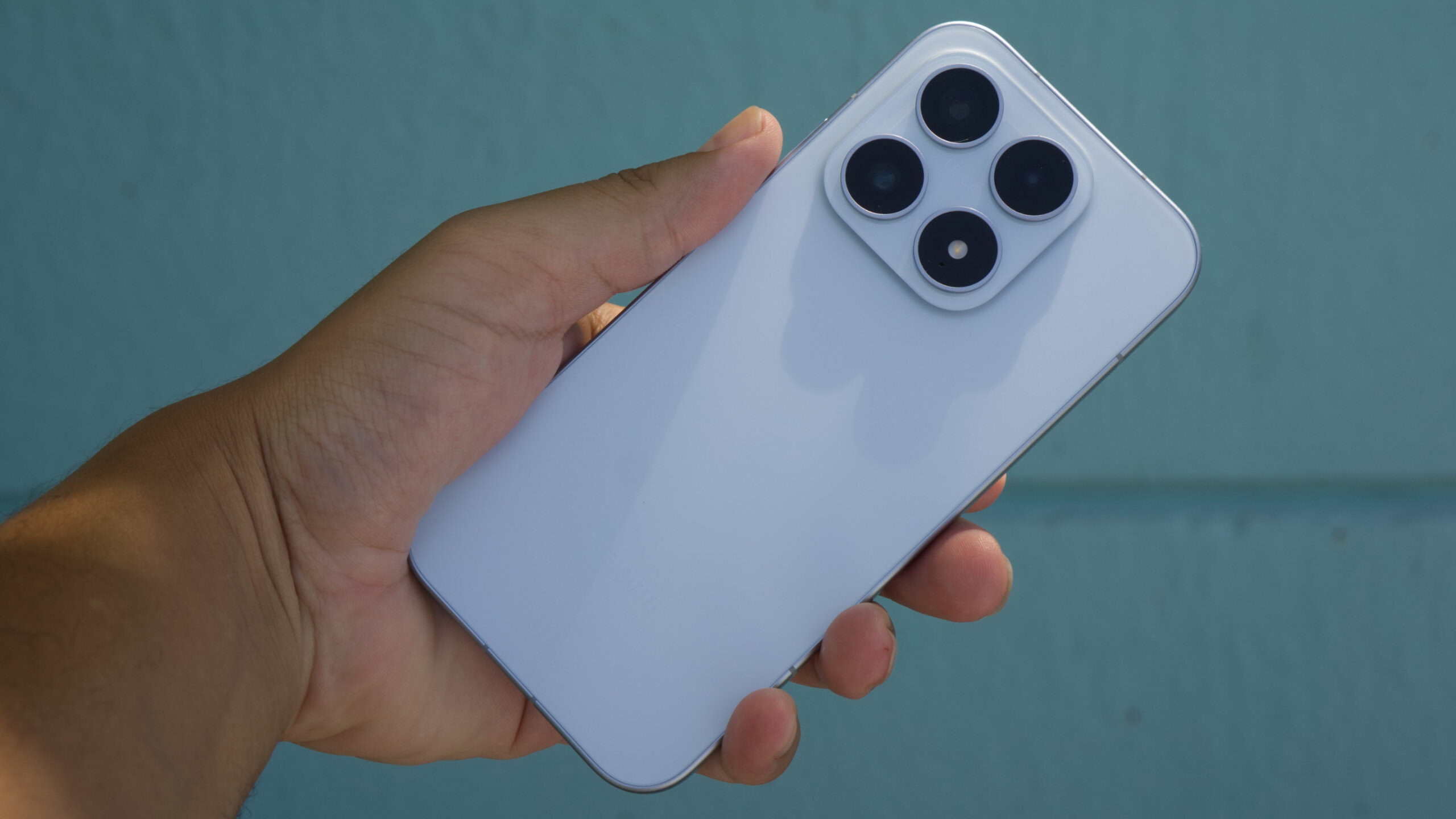
The Xiaomi 17 isn’t a sub-six-inch smartphone as some enthusiasts have been pining for, but it’s still reasonably compact thanks to a 6.3-inch display. It’s a little bigger than the Galaxy S26, but slightly smaller than the Pixel 10. This is a refreshing change from the Galaxy S23 Ultra I’m currently using as my primary phone.
However, there is an elephant in the room here. This phone is as close to an iPhone clone as we’ve seen from any major Android brand in recent years. I absolutely hate the fact that most Android OEMs have copied Apple’s flat edges and curved corners, but we’ve at least seen manufacturers distinguish themselves with different rear camera designs.
The Xiaomi 17 looks as close to an iPhone as I’ve seen from a major brand in recent times, and that’s not a great thing.
However, the Xiaomi 17’s rear camera bump also seems inspired by the iPhone 16 series. It’s not a 1:1 clone job, as the lenses form a square rather than a triangle, but the total package certainly seems derivative. I’m disappointed that Xiaomi is taking this approach in 2026. That’s aside from the fact that Xiaomi went from the Xiaomi 15 series to the Xiaomi 17 series purely to match Apple’s naming convention.
Otherwise, you can expect a metal frame and a glass back. The latter is thankfully a matte glass design, which means it isn’t prone to fingerprint grease. Xiaomi’s base flagship packs an IP68 rating and the firm’s Shield Glass protection on the front. We’ve asked about rear protective glass and will update our article as soon as Xiaomi gets back to us.
Who says smaller phones can’t have big batteries?

Hadlee Simons / Android Authority
The good news is that the Xiaomi 17 has some hefty performance and battery capacity upgrades compared to last year’s phone. Starting with performance, the new phone is powered by the Snapdragon 8 Elite Gen 5 processor. We weren’t able to conduct GPU stress tests as Xiaomi has temporarily blocked 3DMark ahead of the phone’s launch, but Geekbench and PCMark still give us a rough idea of what to expect.
GeekBench 6 scores show that the Xiaomi 17 maintains a small but notable advantage over the Dimensity 9500-toting OPPO Find X9 Pro. However, the OnePlus 15 decisively beats it, ostensibly due to the Xiaomi 17’s more constrained form factor and the OnePlus phone’s performance focus. Meanwhile, the Xiaomi 17 enjoyed a huge advantage over both OPPO and OnePlus’s phones in the PCMark test, suggesting better system-wide performance.
I had no issues with real-world performance, though. Swiping through menus, multitasking, launching apps, and taking photos were all smooth experiences. Games like War Thunder Mobile and GRID Legends also ran well out of the box, with some headroom for turning up the visuals.
Don’t want to miss the best from Android Authority?


The Xiaomi 17 ships with a 6,330mAh battery rather than the Chinese model’s 7,000mAh battery. But this is still a humongous size for a smaller phone. In fact, it’s actually a bigger battery than the global Xiaomi 17 Ultra.
What does this mean for real-world usage, though? I put it to the test on a day trip to Johannesburg. My day started at 2:30 AM, and I used the phone for tasks like calling an Uber to and from airports, taking meeting notes via Google Keep, listening to music, chatting on WhatsApp, and as a mobile hotspot for several hours. I had roughly 10% juice left by the time I boarded my homeward-bound flight at 7:00 PM. Not bad at all. It doesn’t hurt that the Xiaomi 17 supports 100W wired charging via USB-PPS, as well as 50W wireless charging.
The Xiaomi 17 does have plenty of bloat, including first-party apps, third-party apps (e.g. LinkedIn, Spotify, Facebook), and just over half a dozen games. However, you’ll also have to deal with ads in the pre-installed first-party apps.
Camera downgrades on paper

Hadlee Simons / Android Authority
The standard Xiaomi 17 is a clear step down from the Xiaomi 17 Ultra in terms of camera hardware, but do you wanna know the crazy part? It’s also technically worse than the Xiaomi 15. Yep, this is almost the same situation that the OnePlus 15 found itself in.
You’ve still got a triple 50MP rear camera setup this generation, featuring a 50MP 1/1.31-inch main camera, a 50MP 2.6x telephoto camera, and a 50MP ultrawide lens. However, the main camera sees a slight drop from f/1.6 to f/1.7 aperture, while the ultrawide also drops from f/2.2 to f/2.4.
I didn’t spend enough time with the phone to definitively say whether these hardware downgrades make a notable difference to image quality. However, I thought the phone took some great shots most of the time. That main camera is still pretty large in 2026 compared to Samsung and OnePlus flagships, and I thought it offered a pleasant level of natural bokeh without going overboard on the sharpening.
I love a good telephoto camera, and the Xiaomi 17 still offers a capable 2.6x lens. I would’ve liked to see a 3x or 3.5x camera, in line with many other brands, as I appreciate long-range zoom. Nevertheless, I was pleased with the photos I took, as they maintained a similar color profile as the main shooter as well as a healthy level of detail and wide dynamic range. And yes, this camera takes macro shots as well. The ultrawide snapper takes solid shots during the day, although it’s clear that these snaps often don’t match the other cameras in terms of contrast. Detail also takes a big dive when the sun goes down, and you don’t have to pixel-peep to see this disparity.
I also appreciate the Leica color profiles, but I’m disappointed to see that Xiaomi still hasn’t brought 4K/120fps video capture to its base flagship.
Is the Xiaomi 17 worth buying?

Hadlee Simons / Android Authority
The Xiaomi 17 starts at €999 (~$1,181), and you’re getting plenty of horsepower and a huge battery in a pretty compact package. It certainly looks like a solid alternative to the identically priced Galaxy S26.
In saying so, I think people intrigued by this phone might want to keep an eye out for a discounted Xiaomi 15 instead. The battery isn’t as large, and the processor is a year old, but the rest of the package is still very similar to the new phone.
The base Galaxy S26 is also worth considering, especially if the Xiaomi 17 isn’t available in your market. Samsung’s base model has a much smaller battery, dated camera hardware, and measly 25W charging speeds, but has seven years of updates, a powerful chipset, and a similarly small form factor.
I also have to send a special shoutout to the POCO F8 Ultra, which has a recommended price of €829.99 (~$980). That makes it significantly cheaper than the Xiaomi 17. The POCO flagship misses out on the Leica touches (e.g., color profiles) and features a larger design, but offers the same chip and a slightly bigger battery than the Xiaomi 17. It even includes a 50MP 5x camera and a subwoofer on the back.
Thank you for being part of our community. Read our Comment Policy before posting.