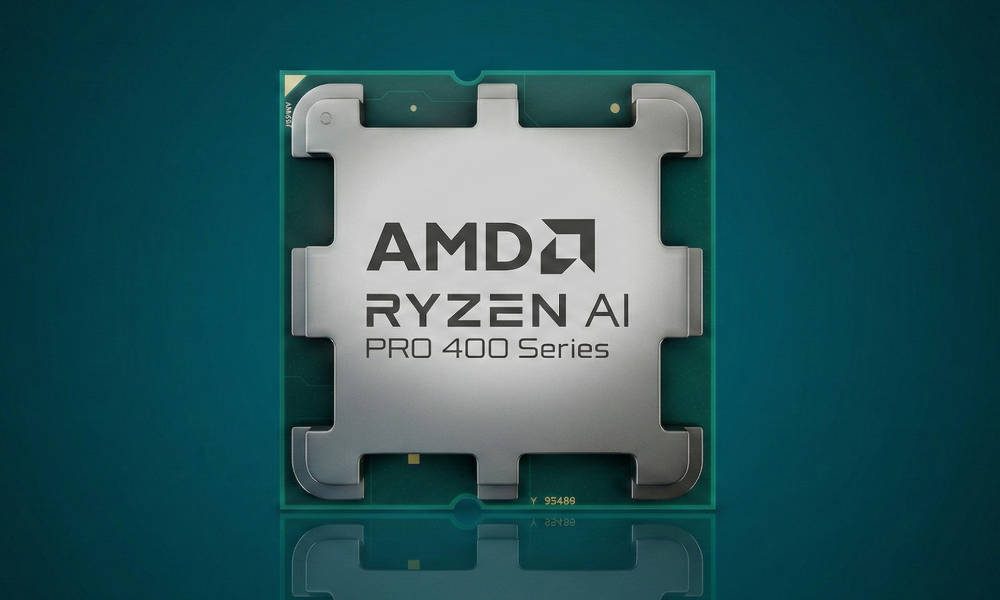
Within the framework of MWC 2026, AMD has made it clear that its commitment to PCs with artificial intelligence is no longer a promise for the future, but rather a fully deployed strategy. The Ryzen AI 400 family represents precisely that consolidation: a platform designed to bring local AI to the professional environment with a coherent proposal on both laptop and desktop. It is not simply about adding an NPU to an existing processor, but about articulating a complete range under a common architecture, oriented to the commercial market and with a very clear discourse around productivity, efficiency and business management.
In strictly technical terms, the Ryzen AI 400 They rely on three well-defined pillars: Zen 5 architecture for the CPU, RDNA 3.5 integrated graphics, and an NPU based on XDNA 2.. This combination is not trivial: Zen 5 brings improvements in IPC and efficiency compared to previous generations, while RDNA 3.5 introduces a relevant evolution in integrated graphics performance, especially in mixed loads where CPU and GPU share memory. The third element, the NPU, is the true differentiating axis of this generation. On a laptop it can reach up to 60 TOPS and on a desktop up to 50 TOPS, figures that not only exceed the threshold of Copilot+ PC equipment, but also place AMD in the direct conversation about the real performance of local AI.
But beyond the silicon, the key to the Ryzen AI 400 is how AMD has built a coherent and scalable platform around those blocks. The architecture is designed to Deploy across laptops, mobile workstations, and desktopsa, maintaining a common set of capabilities. This is where AMD PRO Technologies come into play, adding layers of security, remote management and long lifecycle support, critical aspects in corporate environments. It is not just about offering more TOPS or more cores, but about articulating a business ecosystem where local AI, platform stability and IT administration coexist under the same technical framework.
Mobile platform
The laptop segment is where AMD deploys the full potential of the architecture. The most ambitious models, such as Ryzen AI 9 HX PRO, up to 12 cores and 24 threads, with frequencies boost up to 5.2 GHz and even 16 RDNA 3.5 compute units on the iGPU. Added to this is the NPU up to 60 TOPS and support for LPDDR5 memory at 8533 MT/s, configurations that clearly place these chips in the high-end professional range. It is no coincidence that AMD emphasizes its role in mobile workstations with ISV certifications and support for professional applications optimized for local AI, where the combination of CPU, GPU and NPU can make real differences in creative, scientific or engineering workflows.
Beyond the numbers, what is interesting is the approach: AMD does not present these mobile Ryzen AI 400s as simple fast processors, but as the heart of a new generation of ebusiness teams capable of running AI loads directly on premiseswith advantages in privacy, latency and data control. The message is clear: AI is no longer just a cloud thing. In corporate environments, where security and predictability are critical, having up to 60 TOPS on the device itself opens the door to new applications without depending on external services.
| Model | Cores/Threads | Boost max. | GPU | NPU (TOPS) | Hidden |
|---|---|---|---|---|---|
| Ryzen AI 9 HX PRO 475 | 12 / 24 | Up to 5.2 GHz | Radeon 890M (16 CUs) | Up to 60 | 36 MB |
| Ryzen AI 9 HX PRO 470 | 12 / 24 | Up to 5.2 GHz | Radeon 890M (16 CUs) | Up to 60 | 36 MB |
| Ryzen AI 9 PRO 465 | 10 / 20 | Up to 5.0 GHz | Radeon 880M (12 CUs) | Up to 55 | 34 MB |
| Ryzen AI 7 PRO 450 | 8 / 16 | Up to 5.1 GHz | Radeon 860M (8 CUs) | Up to 50 | 24 MB |
| Ryzen AI 5 PRO 440 | 6 / 12 | Up to 4.8 GHz | Radeon 840M (4 CUs) | Up to 50 | 22 MB |
| Ryzen AI 5 PRO 435 | 6 / 12 | Up to 4.5 GHz | Radeon 840M (4 CUs) | Up to 50 | 14 MB |

Desktop solutions
The arrival of Strix Point to the desktop through the Ryzen AI 400 series represents an important strategic move by AMD. For the first time, the architecture Zen 5 with RDNA 3.5 graphics and the XDNA 2 NPU with up to 50 TOPS lands on the AM5 platform in APU format, transferring to the desktop environment a philosophy that until now was clearly associated with the laptop: high efficiency, high level of integration and strong focus on local AI acceleration. Of course, the jump is not complete. While the mobile variants can reach configurations of up to 12 CPU cores and 16 graphics computing units, the desktop versions are limited to a maximum of 8 cores and 8 CUs, confirming that AMD has opted for a balanced positioning between consumption, thermal dissipation and internal product segmentation. Initially, furthermore, the launch is aimed at the OEM channel, not the DIY market.
Inside this new family We first find the standard Ryzen AI 400 linecomposed of the models 450G, 440G and 435G, along with their respective 35-watt GE variants. At the top is the Ryzen AI 7 450G, with 8 cores and 16 threads, frequencies of up to 5.1 GHz and Radeon 860M graphics with 8 computing units. One step below are the Ryzen AI 5 440G and 435G, both with 6 cores and 12 threads, although differentiated by cache and maximum frequency. The “GE” versions maintain the same internal configurations, but reduce the TDP to 35W to facilitate their integration into compact or low-consumption equipment. In all cases, the XDNA 2 NPU is maintained with up to 50 TOPS, which allows support for advanced Copilot+ PC functions and acceleration of artificial intelligence workloads directly on premises.
En parallel, AMD displays the range Ryzen AI PRO 400which replicates the technical specifications of the standard models but adds the set of AMD PRO technologies aimed at business environments. This includes advanced security features such as Memory Guard, remote management capabilities, guaranteed platform stability and extended support cycles – key elements in large-scale corporate deployments. In terms of CPU, GPU and NPU there are no differences compared to their non-PRO equivalents: a Ryzen AI 7 PRO 450G is, in essence, the same silicon as the conventional 450G. Segmentation, therefore, is not technical but strategic, and responds to validation, support and administration needs specific to the professional market.
| Model | Cores/Threads | Boost/Base Frequency | TDP | Hidden Total | Graphics | CUs | NPU (TOPS) |
|---|---|---|---|---|---|---|---|
| Ryzen AI 7 450G | 8 / 16 | 5.1 / 2.0 GHz | 65W | 24 MB | Radeon 860M | 8 | 50 |
| Ryzen AI 5 440G | 6 / 12 | 4.8 / 2.0 GHz | 65W | 22 MB | Radeon 840M | 4 | 50 |
| Ryzen AI 5 435G | 6 / 12 | 4.5 / 2.0 GHz | 65W | 14 MB | Radeon 840M | 4 | 50 |
| Ryzen AI 7 450GE | 8 / 16 | 5.1 / 2.0 GHz | 35W | 24 MB | Radeon 860M | 8 | 50 |
| Ryzen AI 5 440GE | 6 / 12 | 4.8 / 2.0 GHz | 35W | 22 MB | Radeon 840M | 4 | 50 |
| Ryzen AI 5 435GE | 6 / 12 | 4.5 / 2.0 GHz | 35W | 14 MB | Radeon 840M | 4 | 50 |
| Ryzen AI 7 PRO 450G | 8 / 16 | 5.1 / 2.0 GHz | 65W | 24 MB | Radeon 860M | 8 | 50 |
| Ryzen AI 5 PRO 440G | 6 / 12 | 4.8 / 2.0 GHz | 65W | 22 MB | Radeon 840M | 4 | 50 |
| Ryzen AI 5 PRO 435G | 6 / 12 | 4.5 / 2.0 GHz | 65W | 14 MB | Radeon 840M | 4 | 50 |
| Ryzen AI 7 PRO 450GE | 8 / 16 | 5.1 / 2.0 GHz | 35W | 24 MB | Radeon 860M | 8 | 50 |
| Ryzen AI 5 PRO 440GE | 6 / 12 | 4.8 / 2.0 GHz | 35W | 22 MB | Radeon 840M | 4 | 50 |
| Ryzen AI 5 PRO 435GE | 6 / 12 | 4.5 / 2.0 GHz | 35W | 14 MB | Radeon 840M | 4 | 50 |
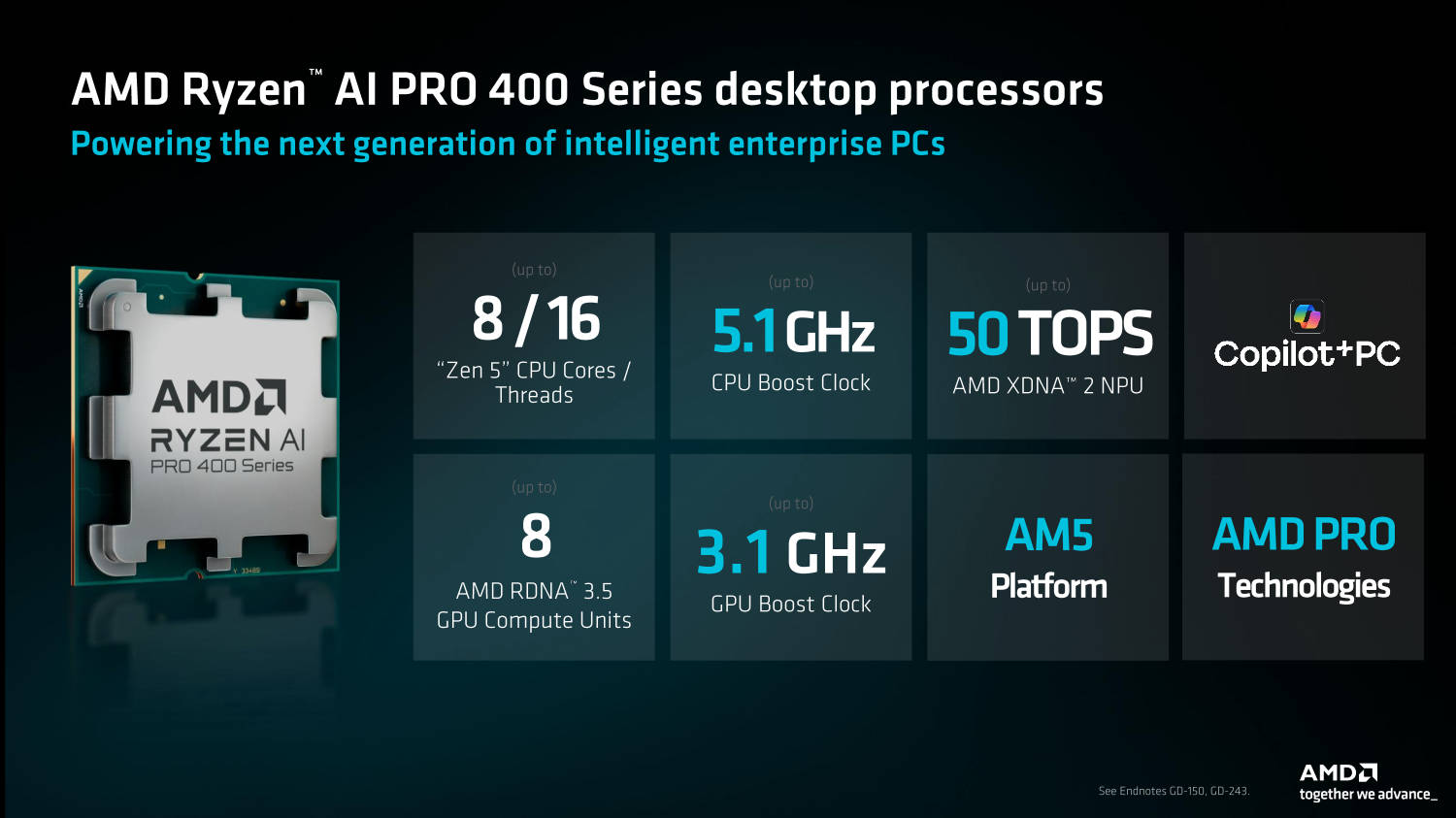
One of the aspects where AMD especially insists is on the business component. AMD PRO technologies integrate full memory encryption con Memory Guard, dedicated secure processorsupport for Microsoft Pluton and a management ecosystem compatible with common IT tools. Added to this is a platform stability commitment of more than 18 months and up to 60 months of software support after the final release, elements that are as important as performance in the corporate environment.
As a whole, the Ryzen AI 400 do not simply seek to compete in specifications, but consolidate a strong presence in the professional market at the height of the AI PC boom. With more than 200 commercial designs planned and availability starting in the second quarter of 2026, AMD plans an orderly and ambitious expansion of its portfolio. More than an isolated leap, what we see is the construction of a platform that aspires to become a standard within the AI-powered business PC.
More information