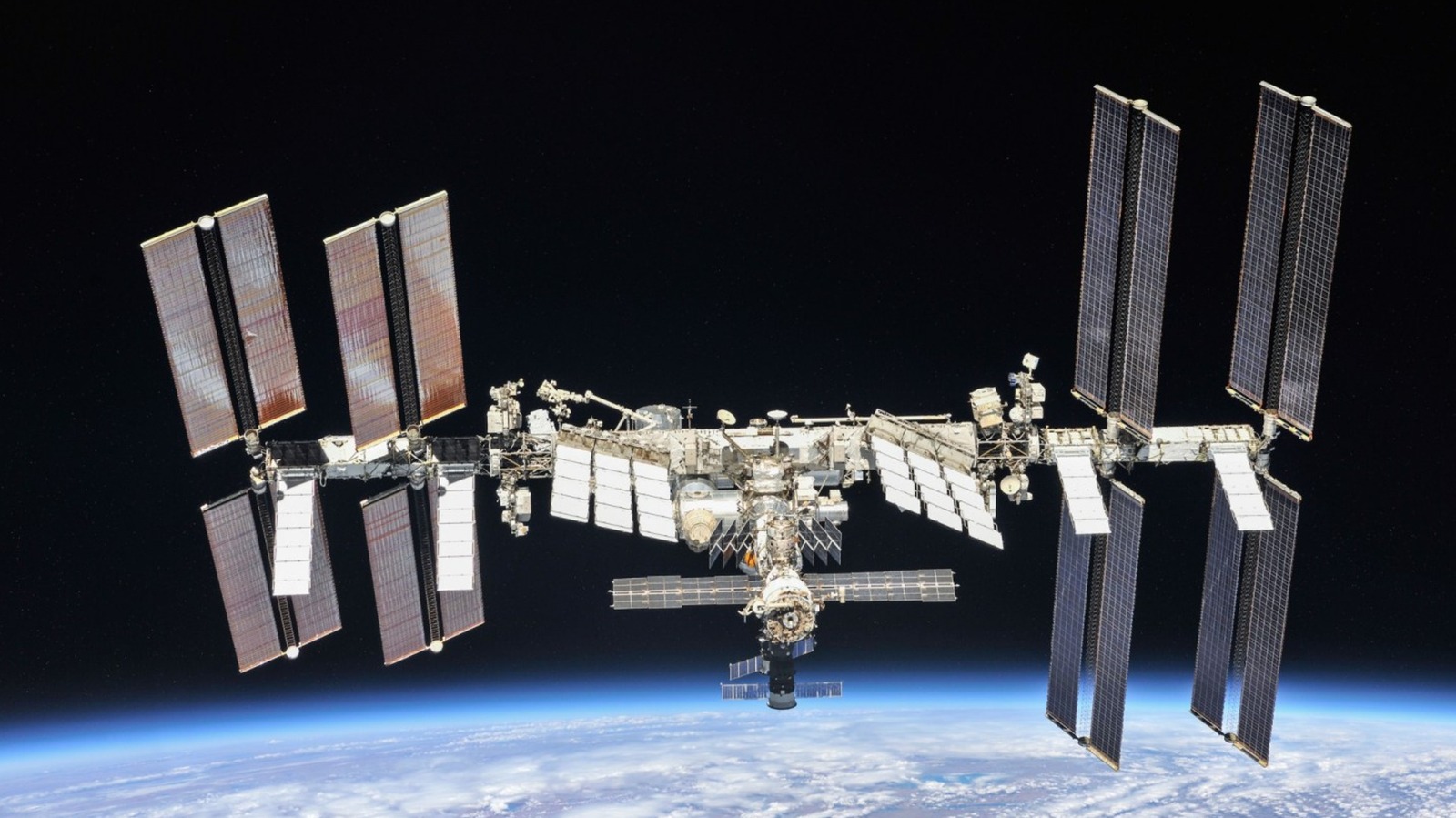
The International Space Station (ISS) is the crown jewel of humanity’s space exploration efforts. The station stretches one football field in length and is home to a rotating crew of about seven astronauts who perform countless science experiments. However, the ISS was recently host to an accidental case study of sorts that demonstrates humans might not be as ready for interplanetary travel as we thought.
Recently, the official NASA account on X revealed that on January 7, astronaut Mike Fincke experienced a medical emergency. While Fincke didn’t elaborate on the details, he did state that it “required immediate attention” but was quickly handled by the “quick response and the guidance of our NASA flight surgeons.” After that harrowing event, Fincke returned to Earth earlier than scheduled on January 15. According to outlets such as CNN, Fincke’s splashdown marked the first time any NASA astronaut had to cut their tenure at the ISS short due to medical reasons.
If this news sounds familiar, that’s because on January 7, NASA reported that an ISS spacewalk was postponed because of a “medical concern with a crewmember.” It probably goes without saying the medical emergency that forced the ISS crew to scrap the spacewalk and the issue that hit Fincke are one and the same.
In space, nobody can operate on your appendix
NASA has strict health requirements for astronauts in order to minimize risks while in space, but Mike Fincke’s recent emergency highlights that no amount of testing can predict or prepare for every eventuality. We don’t know if Fincke stubbed his toe and it got infected, or if he suffered from a nasty case of appendicitis. Was his emergency preventable, or was Fincke a ticking time bomb that just so happened to go off while he was in orbit? Either way, it’s lucky that he was able to get a timely ride home, unlike Suni Williams and Butch Wilmore from the 2024 Starliner debacle.
While NASA thinks it can start launching colonists to MARS around the 2030s, unless engineers can invent a faster engine, astronauts will be in for the long haul and sequestered in their shuttles for at least seven months. If a medical emergency occurs, they are on their own and will have to wait several months to visit a hospital — assuming they even can turn around. And if a person critical to the mission, like a pilot or doctor, experiences a medical emergency, it might as well be game over for everyone else.
Crewmembers on the ISS have to contend with serious health problems such as motion sickness and muscle loss on a daily basis — and have the medical supplies and techniques to mitigate most of them. But Fincke demonstrates that even people who prepare for every spaceborne eventuality can be helpless in the face of the human body’s failings.