The Russian army in Ukraine is facing a growing communications crisis
The problems began in early February when Elon Musk imposed restrictions on unauthorized Russian access to Starlink satellites operated by Musk’s SpaceX company that provide high-speed internet. The move came following talks between Musk and recently appointed Ukrainian Defense Minister Mykhailo Fedorov.
Starlink made headlines in 2022 as a crucial tool for the Ukrainian military during the initial phase of the Russian invasion. More recently, Russia has acquired thousands of Starlink internet terminals and incorporated them as an important element of the invading army’s communications infrastructure.
Efforts to disable unauthorized Russian terminals operating in Ukraine had an immediate impact, with Ukrainian officials reporting a sharp drop in Russian bombardments and drone attacks on front line positions. In one incident on the Zaporizhzhia front, twelve Russian soldiers were reportedly killed by friendly fire after a Starlink terminal failure.
Ukraine appears to have benefited from Russia’s sudden loss of connectivity. In the first five days following the Starlink cutoff, Ukrainian forces reportedly liberated more than two hundred square kilometers of territory, representing an area roughly equivalent to the Russian army’s gains throughout the whole month of December. This trend has continued into early March.
While there is still some debate over the eto which the areas reclaimed by Ukraine had previously been under Russian control, the advances provided a boost to Ukrainian morale while strengthening the country’s position. According to the Institute for the Study of War, this battlefield success owed much to the disruption caused by Russia’s loss of Starlink services.
With no domestically produced alternative to Starlink technology, Russian units are now scrambling to find alternative ways to communicate. Some have sought to revive access to the Starlink system, with the Ukrainian authorities warning that Russians are now attempting to pressure the families of Ukrainian prisoners to register terminals.
Russia’s own satellite communications system, which is run by Gazprom Space Systems, has been used in a limited capacity during the war. However, it is regarded as far less reliable than Starlink and is not seen as a viable alternative.
The fallout over the loss of Starlink has sparked a scandal in Russia, with many questioning why the army allowed itself to become so dependent on a communications system owned and controlled by an American company. Critics have attacked this development as both a national humiliation and a strategic blunder which left the Russian military dangerously vulnerable.
Eurasia Center events

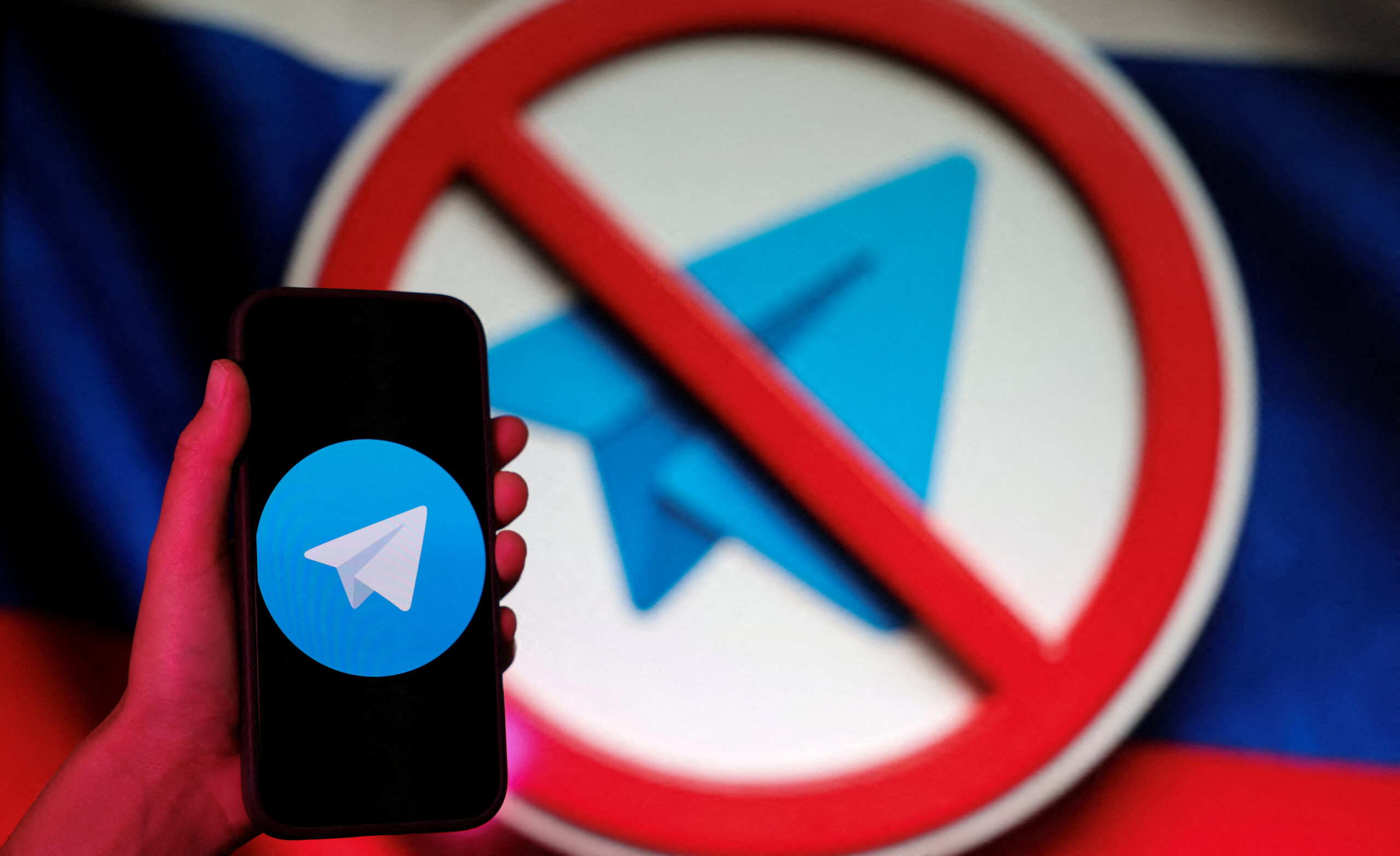
Russia’s recent communication woes are not only due to external restrictions. Days after Musk agreed to cut Starlink access, the Kremlin moved to slow down the hugely popular messenger app Telegram, citing the application’s failure to comply with Russian data laws.
This was widely seen as a significant step toward closing one of the few remaining uncensored communications channels in Putin’s Russia. Telegram serves as a leading news platform among Russian audiences with over 93 million users in the country.
The decision to restrict Telegram sparked a rare backlash Russia’s , with pro-war bloggers particularly vocal in their criticism. The limitations further undermined connectivity between Russian forces fighting in Ukraine, with many soldiers complaining that the loss of Telegram would hamper their ability to share battlefield information and conduct fundraising activities.
Recent measures against Telegram are part of a much larger effort by Putin to exert greater control over all digital communications. The end goal appears to be the establishment of a “sovereign internet” inside Russia sealed off from foreign influence.
Since the start of the full-scale invasion, Russia has banned Instagram, Facebook, YouTube, WhatsApp, and X. Meanwhile, the Kremlin is now actively pushing Russians to use the new state-controlled MAX app, which contain extensive tracking capabilities for surveillance and is now pre-installed on all phones in Russia.
As the war in Ukraine has progressed, Russia has also restricted internet usage through the widespread implementation of mobile internet blackouts. Putin recently signed a law expanding the ability of state bodies to restrict connectivity, essentially handing the security services a kill switch to the internet inside Russia.
Putin’s readiness to target Telegram despite the challenges this creates for the Russian army in Ukraine has led to speculation that he may be prioritizing domestic regime stability over military success. Some have suggested that he could be preparing for a new and politically risky mobilization; others believe the Kremlin fears unrest as the economic situation in Russia worsens.
Whatever the true motives behind recent efforts to t Telegram in Russia, the Kremlin’s actions do not project confidence. On the contrary, they hint at a regime seeking to silence critics and prevent any potential grassroots discontent from gaining traction.
Katherine Spencer is a program assistant at the ’s Eurasia Center. Marc Goedemans
The views expressed in UkraineAlert are solely those of the authors and do not necessarily reflect the views of the , its staff, or its supporters.

The Eurasia Center’s mission is to enhance transatlantic cooperation in promoting stability, democratic values, and prosperity in Eurasia, from Eastern Europe and Turkey in the West to the Caucasus, Russia, and Central Asia in the East.
Image: A person poses for a photo while holding a smartphone next to a screen showing the crossed logo of Telegram messaging app against the backdrop of the Russian state flag, in this illustration taken February 12, 2026. (REUTERS/Ramil Sitdikov/Illustration/File Photo)