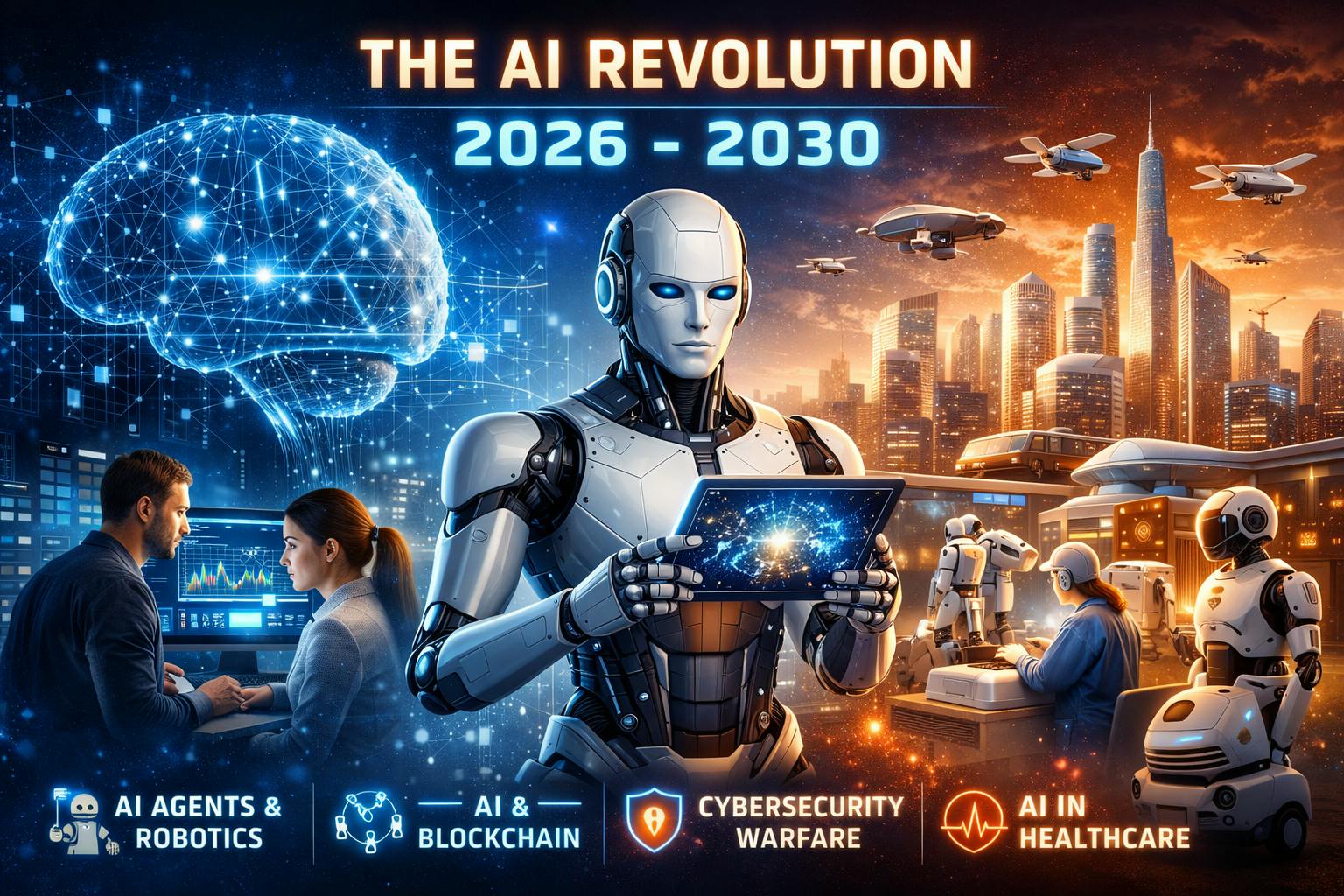
Artificial Intelligence is rapidly evolving from a powerful tool into a foundational technology shaping the global economy. Experts believe that the period between 2026 and 2030 will mark one of the most transformative phases in AI development, as systems become more autonomous, integrated, and capable of handling complex decision-making tasks.
From automated business operations to advanced cybersecurity systems, AI is expected to redefine how industries operate and how humans interact with technology.
AI Agents Will Replace Simple Automation
One of the most significant developments expected in the coming years is the rise of autonomous AI agents. Unlike traditional AI systems that respond to commands, these agents will be capable of planning, reasoning, and executing multi-step tasks independently.
Businesses are already experimenting with AI agents that can manage customer support, conduct research, generate reports, and even run marketing campaigns. By 2030, many organizations may rely on AI systems to handle operational workflows that previously required entire teams.
AI and Robotics Will Reshape Physical Work
AI’s integration with robotics is expected to accelerate dramatically. Industries such as logistics, manufacturing, healthcare, and hospitality are increasingly adopting intelligent machines capable of performing repetitive or high-precision tasks.
Warehouses are deploying autonomous robots to manage inventory, while hospitals are experimenting with AI-assisted surgical tools and robotic assistants. Service robots in hotels, airports, and retail spaces could also become a common sight before the end of the decade.
Cybersecurity Enters the AI Arms Race
The cybersecurity landscape is also changing rapidly as artificial intelligence becomes both a defensive tool and a weapon.
Security researchers warn that attackers are increasingly experimenting with AI-generated malware capable of modifying its own code, allowing it to evade traditional detection systems. At the same time, cybersecurity companies are deploying AI-driven monitoring systems designed to detect suspicious behavior patterns rather than relying on fixed malware signatures.
This dynamic is creating what experts describe as an AI-versus-AI cybersecurity battlefield.
AI and Blockchain Could Merge in Web3 Systems
Another emerging trend is the intersection of AI and blockchain technology. Developers are exploring ways to integrate machine learning models into decentralized systems to automate financial services, manage decentralized organizations, and improve blockchain security.
AI-powered trading algorithms, automated DeFi risk monitoring, and smart contract auditing systems are already being tested. These innovations could significantly reshape the Web3 ecosystem over the next several years.
Healthcare May See the Biggest AI Breakthroughs
Artificial intelligence is also expected to accelerate progress in medicine and biotechnology. Researchers are using AI models to analyze medical data, identify disease patterns, and even design new pharmaceutical compounds.
AI-assisted diagnostics could help doctors detect conditions such as cancer and heart disease earlier, while personalized treatment plans may become more common as machine learning systems analyze patient data at scale.
Governments Are Preparing AI Regulations
As AI technology grows more powerful, governments around the world are beginning to introduce regulatory frameworks aimed at managing risks while encouraging innovation.
Potential regulations include transparency requirements for AI systems, safety standards for high-risk applications, and rules governing the use of generative AI content. Policymakers are also debating how to address ethical concerns surrounding automation and data privacy.
The Road Toward Artificial General Intelligence
While the timeline remains uncertain, many researchers believe AI systems will continue progressing toward Artificial General Intelligence (AGI) — machines capable of performing a wide range of intellectual tasks at or beyond the human level.
Whether AGI emerges before or after 2030, the developments expected over the next few years will likely define the trajectory of this technology for decades to come.
The Bottom Line
Artificial Intelligence is moving from experimental innovation to global infrastructure. Between 2026 and 2030, AI is expected to reshape industries, transform the workforce, and redefine the relationship between humans and machines.
The coming years may ultimately determine how society adapts to one of the most powerful technological revolutions in modern history.