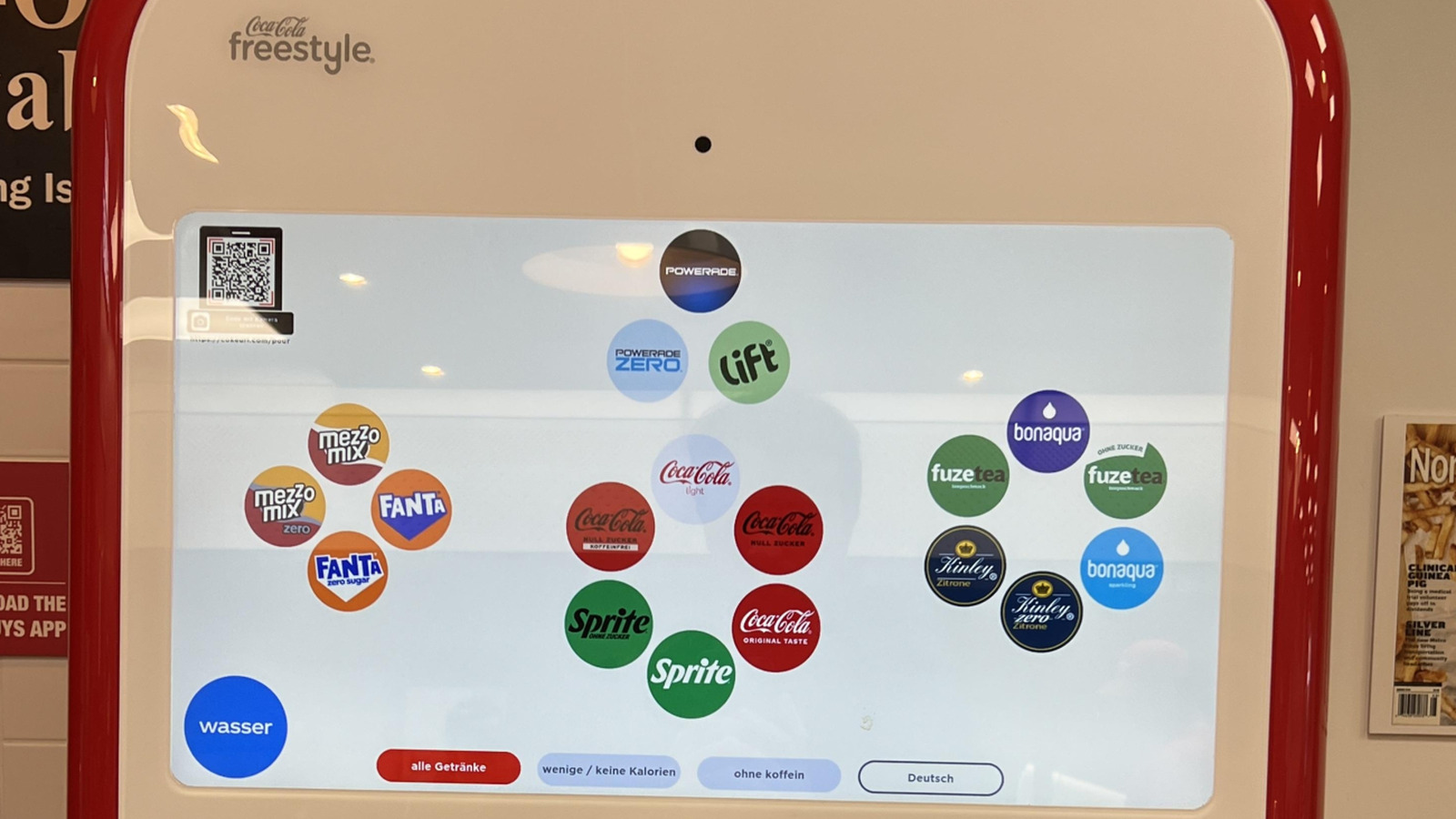
There’s no denying the Coke machines with a touchscreen, known as Coca-Cola Freestyle, are awesome, as they allow you to mix and match over 100 drinks. Coke even includes functionality to pour your concoction touch-free using an app. But if you look closely, sitting right above that touchscreen is a tiny hole, and within is a small camera lens.
As reported by Fortune, these cameras are embedded with “future capability for motion sense and facial recognition,” but they don’t appear to be in use currently. There are cameras in everything these days, including at Costco gas pumps to help avoid card skimmers. But why would a soda fountain used for pouring drinks need a camera? Based on patent applications by former employees of the drinks giant, we can surmise it’s all about customer sentiment research.
This aligns with a project Coke previously undertook with the MIT Senseable City Lab to parse the huge amount of data being recorded by the more than 15,000 Coca-Cola Freestyle machines around the U.S. The cameras were not used for this, but information like time, location, and user preference was collected to provide detailed insight on consumer behavior.
Using Coke Freestyle machines to collect data
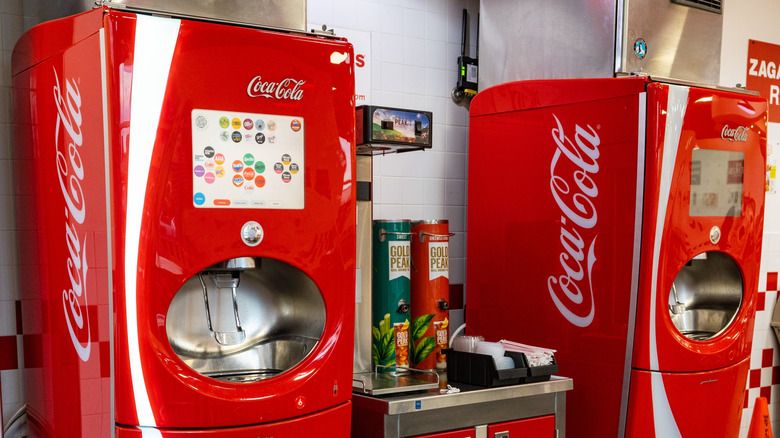
There are no reports of these Coca-Cola Freestyle machine cameras being in use as of this writing. Most of the data collected by these machines appears to be about user interactions, like what consumers are drinking, when they’re making purchases, and what is being mixed. So while there’s no indication that Coke is using these cameras for facial recognition, it’s still creepy to imagine machines silently monitoring and watching us.
Like the new AI that can track you in surveillance videos without even seeing your face and the “WhoFi” system that can track your body using Wi-Fi. Though the Freestyle cameras are off, it remains unclear what exactly Coca-Cola is doing with all that data — aside from discovering new flavor combinations that are popular, like Orange Vanilla Coke. The company is said to have invested more than $1 billion into the design of its Freestyle machines, but chances are, that cost will ultimately be recouped through the collection, handling, and sale of data.