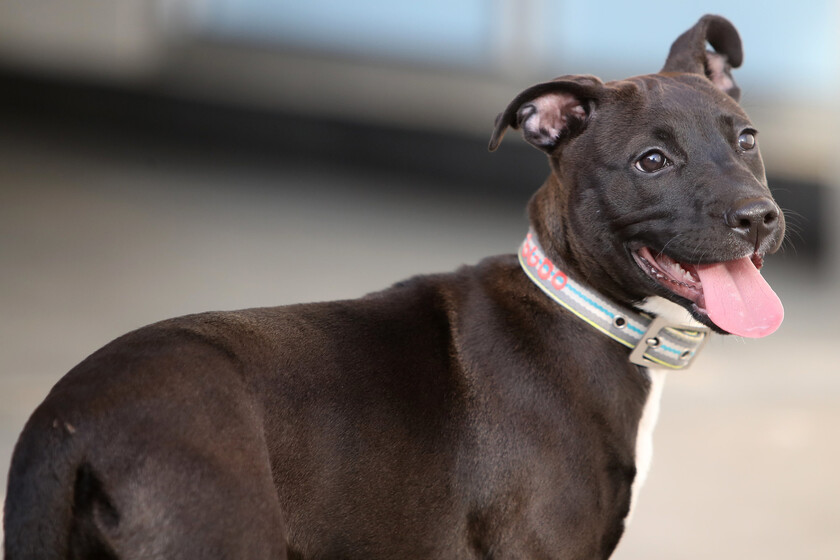
Paul Conyngham is not a biologist. He is not a veterinarian either. He is an engineer from Sydney with almost two decades of experience in the field of data science and AI. In 2024, her dog Rosie received a terrible diagnosis: she had mast cell cancer, the most common skin cancer in dogs and practically untreatable with conventional methods. After trying everything, Conyngham decided to take an alternative route: he opened ChatGPT and started asking questions.
ChatGPT as a starting point. OpenAI’s AI model acted as Conyngham’s research assistant. It helped him make a plan in a field he knew absolutely nothing about, and it was the chatbot that suggested he explore immunotherapy treatments. He also pointed out the existence of the Ramaciotti Center for Genomics at the University of New South Wales (UNSW), and there began a fascinating journey.
$3,000 to sequence a tumor. At that research center Conyngham contacted Associate Professor Martin Smith, one of its leaders. Conyngham paid $3,000 to sequence the DNA from Rosie’s tumor, which Smith found strange: They typically don’t support sequencing requested by individuals because interpreting the data is extraordinarily difficult. But Conyngham assured him that he had nothing to worry about and told him that he was a data analyst and that he was going to analyze it with the help of ChatGPT.
The ChatGPT a AlphaFold. With that sequencing data in hand, Conyngham used a variety of AI tools—not just ChatGPT—to identify the relevant mutations. Then he went a step further and used AlphaFold, Google’s DeepMind program that predicts the three-dimensional structure of proteins. That allowed him to model which of those mutations could be driving the tumor. From this data he identified candidate drugs to help in the treatment of cancer and presented himself to the UNSW researchers with his homework done.
First obstacle: bureaucracy. The research team identified an immunotherapy drug that seemed promising, but its manufacturer refused to supply it for this type of application. It was a hard blow for Conyngham, but then Smith told him about mRNA vaccines and asked him if he wanted to explore that avenue. Of course, said Conyngham. Actually manufacturing the vaccine was only half the problem, because administering it required ethical approval permission, which allows experiments involving living beings. After preparing a 100-page document over the next two months, Conyngham won that approval.
Vaccines in two months. A division of UNSW led by Professor Pall Thordarson, manufactured the vaccine from the half-page formula that Conyngham had generated. They just needed to find someone to administer it, and that’s how Conyngham managed to contact Rachel Allavena, a professor of canine immunotherapy at the University of Queensland. He traveled ten hours with Rosie and showed up there for his first injection in December.
The tumor reduced by half. Researchers from UNSW and the University of Queensland have confirmed that one of Rosie’s tumors had shrunk by half. Allavena explained how even the shine of her coat had also recovered and the dog seemed happier and healthier. Conyngham confirmed it: her dog was losing energy, but six weeks after treatment they were in a park and Rosie jumped the fence to chase a rabbit she had seen.
But. Although the story is extraordinary, there is no total and miraculous cure here (at the moment). One of the tumors responded to the vaccine, but another larger one did not. Additionally there have been no controlled trials or sample size beyond one animal or long-term data. Conyngham himself commented how “I have no illusions that this is a cure, but I do believe that this treatment has bought Rosie significantly more time and quality of life.”
And Conyngham is no ordinary. It is also important to note that Conyngham had a very special profile: his 17 years of experience in data science and machine learning (machine learning) were crucial for his research to move forward. His technical knowledge allowed AI to enter a field he didn’t know but could understand, and the chatbot and other tools accelerated the process. But those who finally made it possible were the immunologists, RNA engineers and veterinary oncologists who participated in the process.
Does this work for other cases? Smith asked a logical question after this singular success. “Why aren’t we rolling this out for all humans with cancer?” The short answer is clear: clinical trials take years, cost hundreds of millions of dollars, and require clear evidence that in this case is simply null. One of his colleagues, David Thomas, is already working on similar mRNA treatments for human patients, and believes there is something revolutionary here: “what is striking is the idea of citizen science where someone from the street with a technical profile can use their skills in the scientific process.”
The second vaccine is already underway. What this process has shown is that it is possible to dramatically compress the time between the idea and the experimental treatment. Thordarson noted that what Conyngham did—generating an mRNA formula without training in biology—demonstrates that AI is helping to democratize this process. In fact, the work is not over: UNSW is already working on the genetic sequencing of the tumor that did not respond to treatment and the objective is to design a second vaccine aimed precisely at treating said tumor.
Image | Ed Oswalt
In WorldOfSoftware | What the AI pioneers awarded today with the Nobel Prize say now about AI and its risks