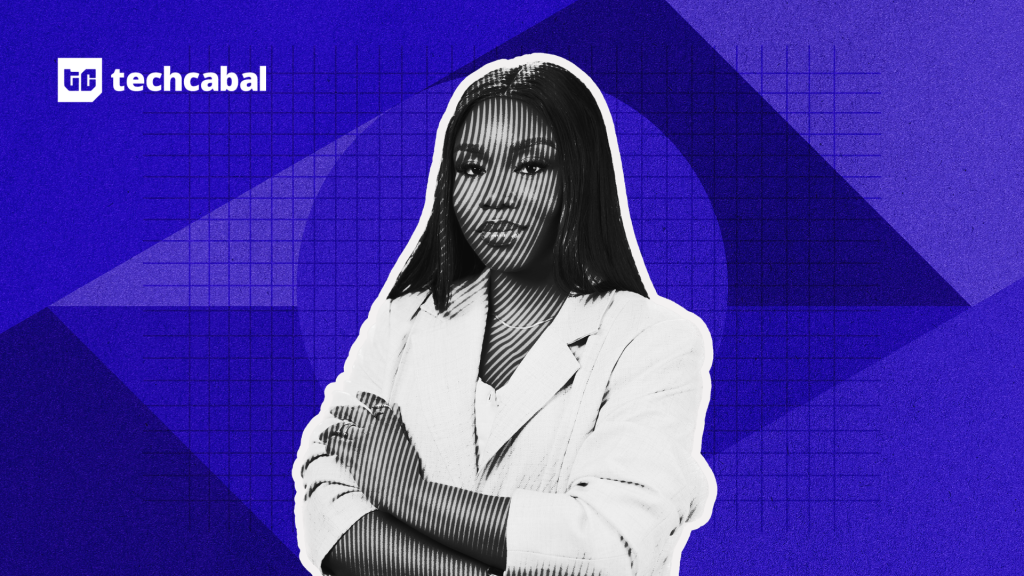
Cassandra Collins took a pay cut to enter the tech ecosystem. It was 2020, just after the COVID-19 lockdown, and she had a choice: stay on as content director for a popular influencer at ₦150,000/month, or take a customer support job at a crypto startup called Busha for ₦80,000/month.
She took the 80k job.
Six years later, Collins is Marketing Manager at Pesa, a remittance company. She manages teams, runs influencer campaigns across continents, and on the side operates a fashion business. The path from an 80k customer support associate to a marketing manager was not linear. But it was intentional in one specific way: she said yes to every opportunity that made sense, even when it looked like a detour.
“I saw the bigger picture,” she says. “They (Busha) were offering me a MacBook, which was exciting six years ago. I was going to work fully remotely. And I was willing to let go of the 70k difference.”
The microbiology degree nobody expected her to use
Collins did not grow up dreaming of working in tech. She grew up in hospitals. Her grandmother worked at Lagos University Teaching Hospital, the tertiary hospital affiliated with the University of Lagos College of Medicine, and young Collins spent her summer holidays there, trailing behind her, inhaling agar fumes from the labs. She wanted to be a microbiologist and get a doctorate. At 15, she wrote the Unified Tertiary Matriculation Examination (UTME) examination, a standardised test in Nigeria for prospective undergraduates seeking admission into tertiary institutions and chose microbiology. At 19, she had completed her tertiary education at Ajayi Crowther University.
Then she did her industrial training at LUTH. It was jarring. The gap between what she thought the work would be and what it actually was killed the dream. “I knew at that point that this could not be my future,“ she says.
But she does not regret the degree. “Having a science background gave me a good foundation,” she says. “The idea was that it allows you to make any switch later in life. Just do it first, and you can make any switch.” It is pragmatic advice shaped by a pragmatic reality: in Nigeria, your degree is rarely a career prophecy. It is a survival strategy.
At 19, Collins had a choice. She could rush into the job market and start grinding. Or she could explore. She chose exploration. She said she worked at a company called 3C. She competed for Miss Nigeria. She opened a smoothie and healthy food business with a physical location in Egbeda. She dabbled.
“As a young person in Nigeria, there isn’t a path that has been set out for us,” she says. “You have to find your own path by yourself. And if you’re not a nepo baby and you want to make something out of your life, you must take every legit, morally upright opportunity that comes your way. If you don’t like it, drop it after. But take it first and find out.”
The entry-level job that changed everything
When the lockdown hit in 2020, Collins’ smoothie business shut down. Legal issues with the lease, physical location problems, everything collapsed at once. She needed more income than what she was earning as a content director for a social influencer.
A friend working at Busha, a crypto fintech company, told her they had an opening for customer support. Collins had briefly done customer support after university. She did not love it. But it was available. She took it.
The interview went well. The offer came: ₦80,000 per month. She was leaving a ₦ 150,000-per-month gig. She said yes anyway.
What Busha gave her was not glamorous. It was customer support in a startup during a volatile time for crypto in Nigeria. But it gave her something else: proximity. She was inside a tech company. She was learning how startups worked. She was building a skill set she did not yet know she needed.
While at Busha, she started freelancing as a social media manager on the side. She worked with fashion brands and small businesses in Lagos. She was head of socials for Melody, a popular fashion brand on Twitter. She was building a portfolio without calling it that.
Eighteen months into Busha, someone reached out from YouTube. He was starting a company called Mainstack and wanted her on board as a community manager. She said no at first. She did not want to leave Busha before hitting a year. Seven months later, he came back with a part-time offer. She said yes.
She was now juggling two startups. “No one should be doing that,’ she says. “Startup culture is crazy. You’re doing so much.” But the Mainstack role was corporate marketing, not customer support. It was the pivot. From there, she moved to Grey as lead social media manager, then to Pesa in the same role. In April 2025, she was promoted to marketing manager.
Her tech trajectory: customer support associate → community manager → social media lead → marketing manager. Each step was built on the one before it. None of it was accidental. All of it required saying yes first, then figuring it out.
The crisis that became the benchmark
In February 2021, Collins was still at Busha, still in customer support. On a Friday evening, the Central Bank of Nigeria announced a ban on banks facilitating crypto transactions. Users flooded the support channels. The team was lean. She worked through the weekend, non-stop. In 72 hours, she closed over 800 tickets.
“It was one of the worst times of my life,“ she says. “I never want to experience that again.”
But it taught her something. Five years into her tech career, nothing has come close to that level of chaos. “I don’t think anything can get worse than that,” she says. It became her benchmark. When startup fires happen—and they always do—she knows she has survived worse. The CBN ban gave her a reference point for pressure. It desensitised her to crisis.
That experience also taught her about the operating reality of Nigerian fintech.
The empathy advantage
Collins does not just work in marketing. She is also a content creator with a YouTube channel and an Instagram presence. She runs a fashion business. She is studying for her last Chartered Institute of Marketing exam. She wakes up at 5 am to study or go to the gym. She batch-creates content on Saturdays. She reserves Sundays for rest, sometimes. She is, by her own admission, always exhausted.
But here is the thing she has learned: these roles are not separate. They feed each other.
“Because I’m able to be on many sides of things, it gives me a very good perspective and keeps me grounded,” she says. A lot of her work now is influencer marketing. She works with creators across different countries and different continents. Because she is also a creator, she understands both sides. She knows what brands want. She knows what creators need. She can navigate the relationship from both angles.
“I consider myself very fortunate to have both POVs,” she says. “And I would actually even say that the experience I gain daily as a marketer helps me as a business owner.”
The same applies to customer support. She left that role years ago. But as a business owner, she never stopped doing it. “Do you ever stop doing customer support?” she asks. “The answer is no.” Her daily interactions with customers as a business owner inform how she thinks about users at work. She understands that how users see a product is very different from what she, as a marketer, thinks. That gap is where her empathy lives.
The cost of this approach is real. “The only thing that suffers is me as a person, mentally, emotionally, because I’m always exhausted,” she admits. But she has built a system. She compartmentalises. Mornings are for studying, the gym or her business. Work hours are sacred. After 6 pm, she is back to her fashion business, checking DMs, managing her team. Weekends are for content creation. Sundays are for rest. And from 9 pm to 5 am, she is unreachable. Sleep is non-negotiable.
“If I step out for your event on a Sunday, I love you a lot,” she says.
Why remittance marketing matters
At both Grey and Pesa, Collins has worked in remittance. It is not a glamorous sector. It is infrastructure. But it is infrastructure that matters to millions of Nigerians.
She knows this personally. When she was younger, her father lived in the UK. The only way he could send money home was through Western Union. She remembers waiting days. If money arrived on the weekend, she could not access it until Monday. There was no room for emergencies.
Now, she sits in her room in Lekki and sends pounds on her phone. The transaction goes through immediately. She uses it to pay her tuition for a UK marketing course. “Every time I make a transaction, I feel very proud,“ she says. “Not because I’m using a product from a company I work for, but because of how far we’ve come.”
In 2024, diaspora remittances to Nigeria were about $21 billion. That is how much money people are sending back home. And the companies making that possible, Collins points out, are mostly Nigerian companies built by Nigerians in the diaspora.
“People say there are so many remittance companies,” she says. “But there are so many Nigerians in diaspora who need options. And the value proposition of every business is entirely different.” She does not take sole credit for the work, but she knows it matters. “We’re truly bridging the gap and making life easier.”
The manager who sends Instagram posts
As a manager now, Collins has a philosophy: ask questions. As many as you need. “I’d rather you ask me the same question 15 times and get the job done well than second-guess and do rubbish,” she says.
Her team is mostly interns and junior staff. She does not expect them to know everything. She expects them to learn. So she sends them articles. She sends them links to Instagram posts about how to make better carousels. She sends them courses. She gives them room for creativity, reviews their work, and watches them grow.
She takes a personal interest in people’s growth. Beyond meeting KPIs, beyond hitting targets, she wants her team to be better at their jobs than they were six months ago. “That’s the only way you grow,” she says.
What comes next
Collins does not know what she will be doing in five years. She did not know six years ago that she would be here. “Five years ago, I wasn’t even doing this,“ she says. “So what will I be doing in five years? I’ll be doing something great, that I’m sure of. I just don’t know what or where.”
She thinks she might eventually leave fintech. She would like to do marketing in another industry. She is restless in a good way. She likes to do things. She is a doer.
She still has her microbiology textbook. Sometimes she reads research papers. Part of her still wonders if she will go back to the lab one day, if the opportunity arises. “I live my life in a way where I just ensure that whatever I’m doing, I am excellent at it,“ she says. “But I don’t define anything or set anything in stone. Let’s see where life takes me.“
If she could go back to 2020’s Cassandra Collins, the one about to take the 80k Busha job, what would she tell her?
“Stop being anxious. Life will sort itself out. And you’ll be really happy and fulfilled with what you do.”
The advice she gives young people now is the advice she lived: “Take every legit, morally upright opportunity that comes your way. If you don’t like it, drop it after. But take it first and find out. It’s the only way you truly find what you want to do and your calling.”
She started off writing social media captions for people because she was good at it. That skill now funds her lifestyle, many years later. The detours were not detours. They were the path.