Meta Description: Learn how social media automation and bespoke video brochures can work together to improve reach, reinforce messaging, and support stronger campaign results.
Target website: https://www.redpaperplane.com/creative-direct-mail/custom-video-brochures/quick-turn-video-mailers.html
Social media automation helps marketing teams stay visible without turning daily publishing into a full-time job. Scheduling tools, content queues, and repeatable workflows make it easier to keep campaigns active across multiple channels.
But steady output doesn’t always lead to meaningful attention. In crowded feeds, efficiency can increase volume while leaving impact unchanged.
That’s why more marketers are looking at how automation can work alongside tactile formats such as bespoke video brochures. One channel keeps the brand in motion. The other creates a more deliberate moment of engagement when a message needs to land.
For teams running solution-oriented campaigns, the better question isn’t whether social automation or physical media works best in isolation. It’s how both can work together so reach, recognition, and recall reinforce each other instead of competing for budget.
Why Automation Alone Doesn’t Guarantee Better Reach
Automation is highly effective at solving process problems. It helps teams publish on schedule, maintain momentum, and avoid the drop-off that happens when content depends entirely on manual effort.
That operational value is exactly why platforms like are useful to modern marketing teams. Scheduling and recycling content can improve consistency, but software alone can’t make a message feel more significant.
That distinction matters because social media is crowded by design. More brands are publishing more often, and every platform is shaped by distraction, short attention spans, and algorithmic competition.
The harder challenge is building message retention. A post may earn impressions without earning recall, and a campaign may look active without becoming memorable.
The common thread is simple: reach becomes more valuable when it compounds over time.
Automation supports that compounding effect well. It can keep strong assets moving, extend the life of evergreen posts, and help teams maintain visibility between launches, promotions, and live campaigns.
Still, there’s a limit to what automated reach can do on its own. When the goal is deeper consideration, premium positioning, or a stronger emotional response, a campaign often needs a touchpoint that feels more deliberate than another appearance in the feed.
Why Video Still Plays a Central Role in Campaign Performance
Video remains one of the strongest bridges between digital and physical channels because it can communicate emotion, demonstration, and narrative more clearly than static messaging alone. That’s one reason it continues to play such a central role in modern campaign planning.
For many teams, the creative investment has already been made. They’re already producing short social clips, teaser edits, executive messages, product demos, or customer-facing explainers that help introduce a problem and point toward a solution.
That creates a useful strategic advantage. Instead of building a separate campaign asset from scratch, marketers can adapt one core story across multiple touchpoints.
A short cut of the video may warm the audience on social media. A longer or more immersive version can then support a premium physical experience when the audience is ready for a deeper interaction.
This is one reason the connection between social automation and video-led direct mail is stronger than it may first appear. Social helps establish familiarity. Video helps carry the same message into a richer, more controlled format.
That thinking also fits naturally alongside ’s article How to Create Stunning Social Media Videos Using AI Tools. Even when the production approach varies, the larger point remains the same: strong video content becomes more valuable when it can travel across channels without losing its clarity.
What Is a Bespoke Video Brochure?
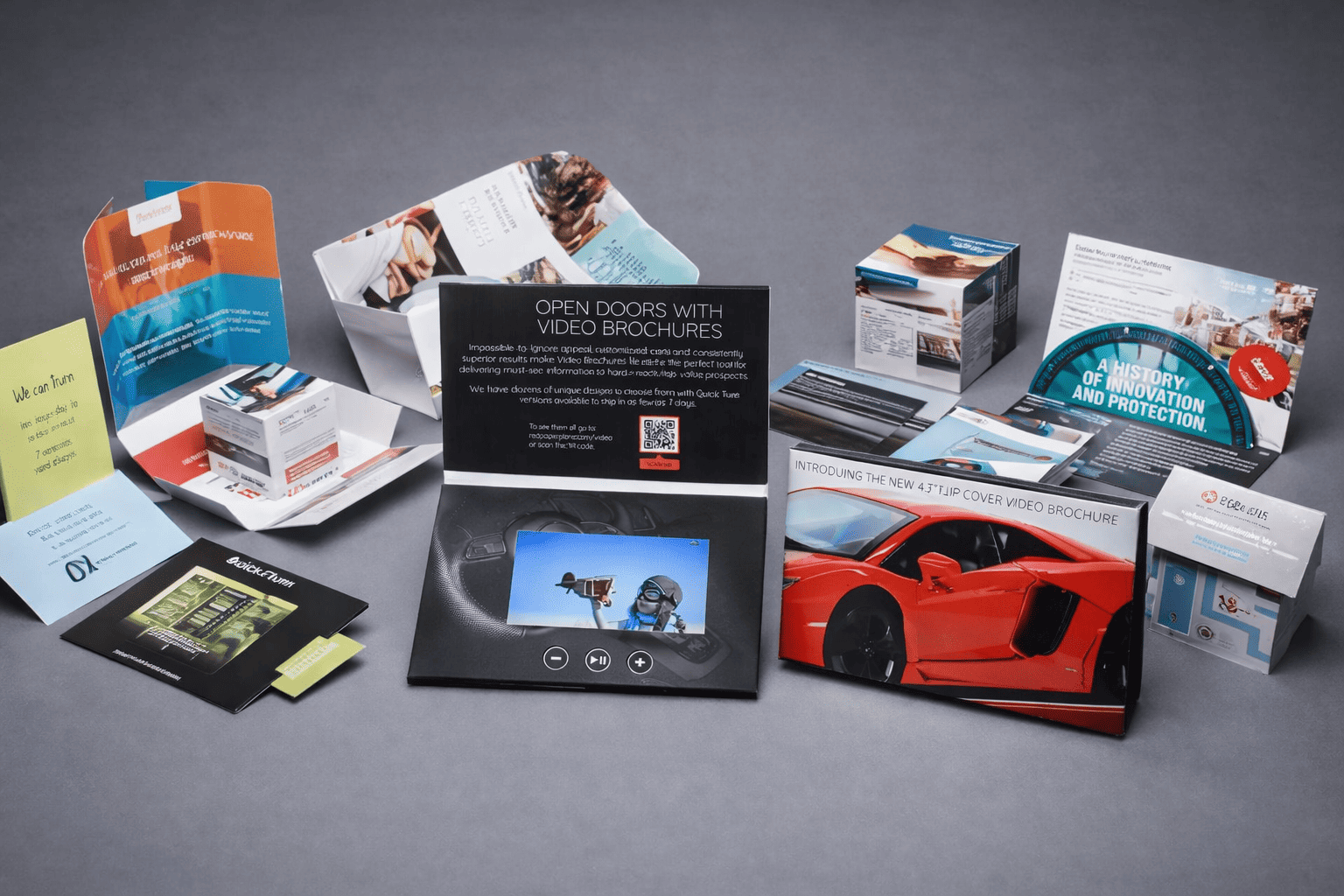
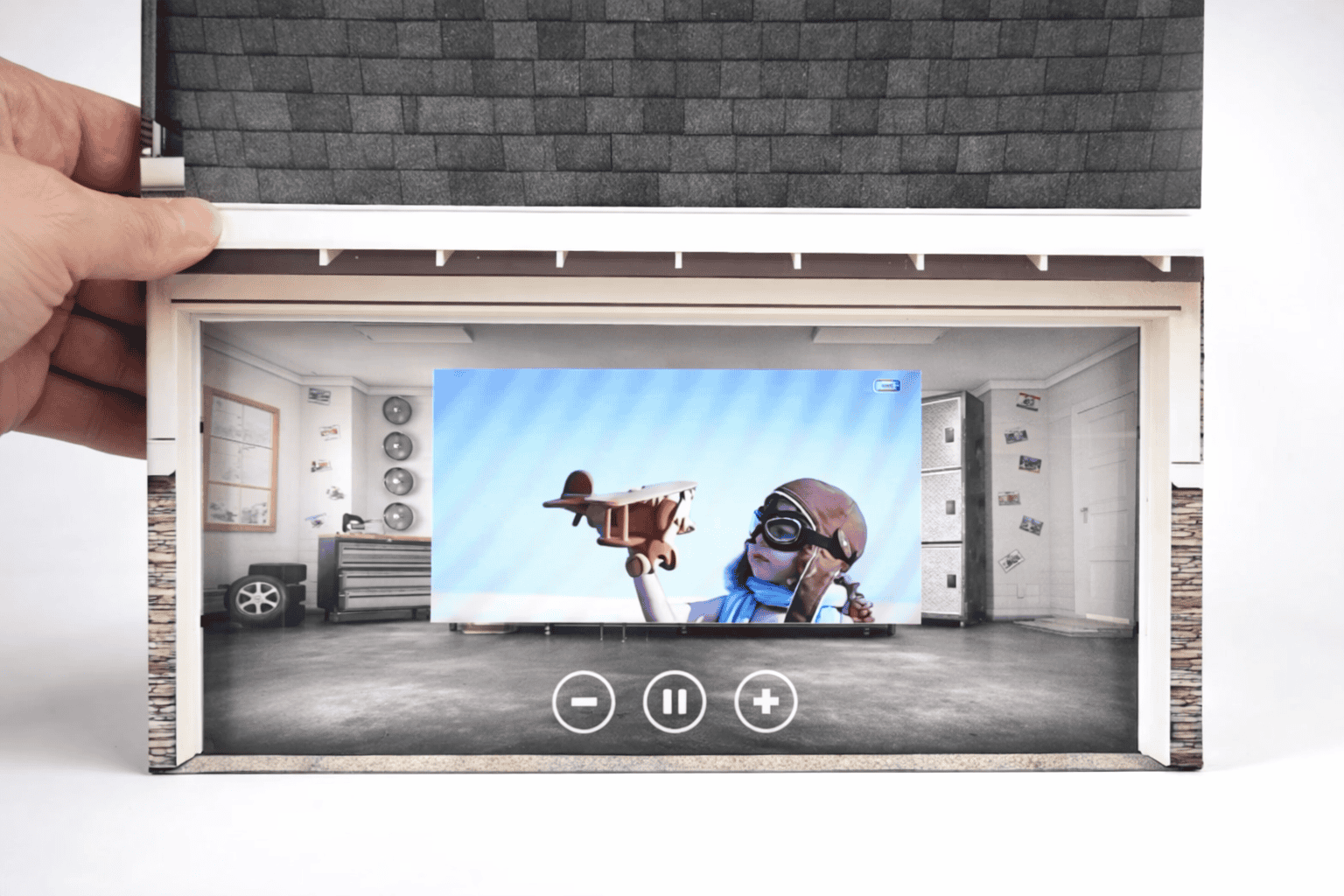
A bespoke video brochure is a printed piece, usually a folded card or bound booklet, with a built-in screen and speaker. When the recipient opens it, the video plays automatically.
The format combines the tactile impact of print with the clarity and engagement of motion and sound. Instead of asking the audience to click away, search for a landing page, or remember a social post later, the campaign places the message directly in front of them.
Unlike a standard direct mail piece, a video brochure is designed to create an experience rather than simply deliver information. The recipient isn’t just reading a message but watching and hearing it in a format that naturally holds more attention than a postcard or flyer.
Bespoke versions take that further. The print design, video content, screen size, packaging, finish, and sequencing can all be tailored to the campaign, audience, and brand.
That level of control is especially useful for high-value outreach, product launches, executive communication, donor engagement, and account-based marketing. In those contexts, the format can make the interaction feel more intentional and more difficult to ignore.
It also changes the pace of the experience. Social content is usually consumed in motion, surrounded by interruptions, comments, ads, and competing updates. A video brochure slows the moment down and gives the message its own space.
That shift in context is often what makes the format memorable. The same core video may perform well online, but the physical presentation changes how it is received.
Where Bespoke Video Brochures Fit Best
A bespoke video brochure isn’t a mass-mail format for every campaign. It’s a deliberate investment, which is exactly why it works best when applied selectively.
The strongest use cases usually involve high-value audiences, visually important messages, or moments when timing and memorability matter more than raw scale. That makes the format especially relevant for account-based marketing, premium sales outreach, event follow-up, executive introductions, launch campaigns, and donor communications.
That budget question is a fair one, and it should be addressed directly. A bespoke format earns its place when the value of attention is high, the audience is difficult to engage with through digital channels alone, or the outcome of a single successful interaction is worth significantly more than the cost of the piece.
In practical terms, that means the format is usually better suited to selective outreach than to broad, undifferentiated volume. It works best when a team already knows which contacts matter most and has a clear reason for elevating the experience.
The format also works well when the message is easier to understand through demonstration than description. A complex service, a visually led product, a premium launch, or a personal executive message may all benefit from a format that shows rather than merely tells.
Social media is fast, scroll-based, and interruption-heavy. A video brochure creates a slower and more deliberate interaction.
That contrast is often where the value lies. Instead of asking someone to click through, save a post for later, or remember a message in passing, the campaign puts the content directly in their hands.
A Smarter Way To Combine Both Channels
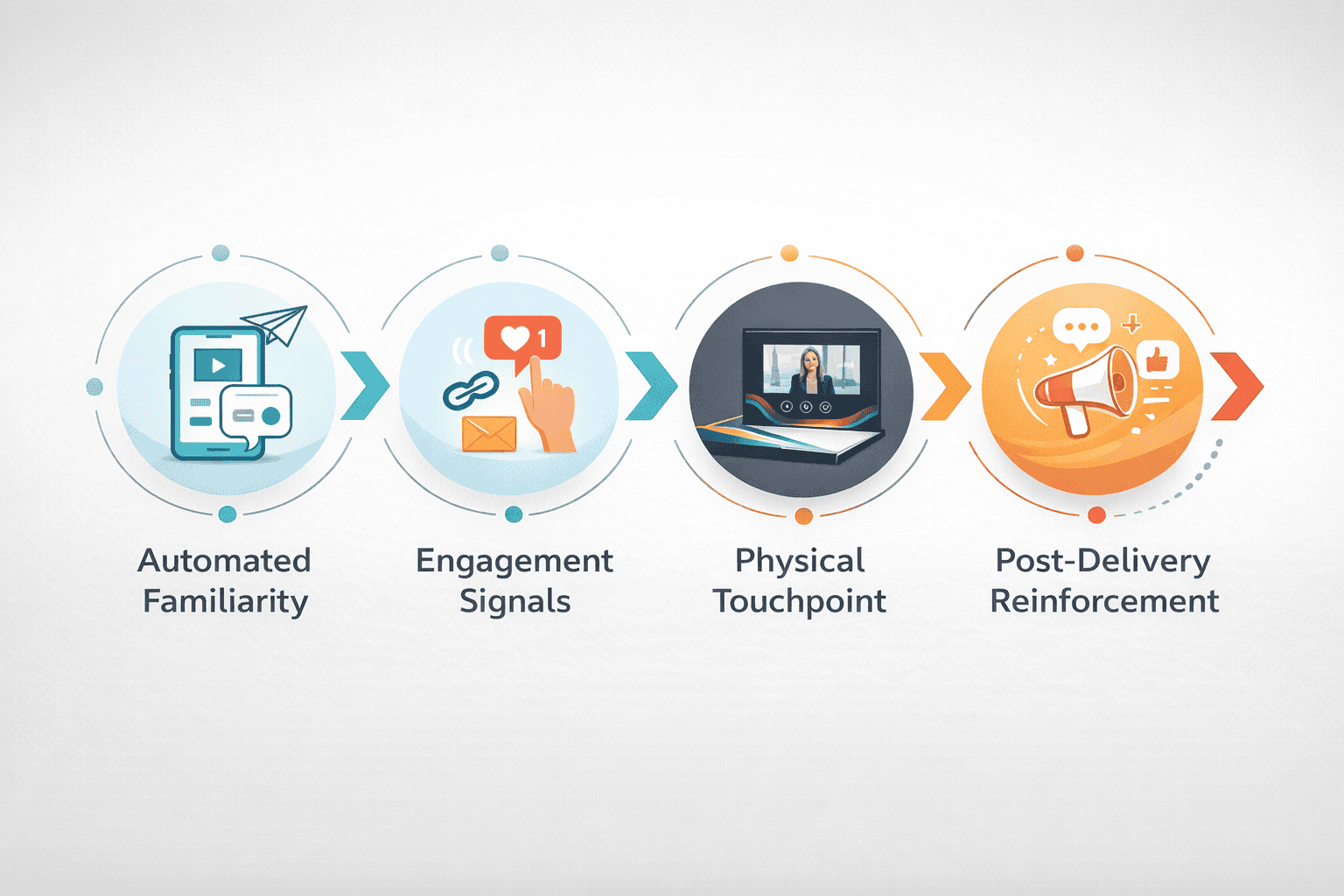
The strongest campaigns do not treat automation and premium print as unrelated tactics. They use them in sequence, with each channel doing a different job.
Start With Automated Familiarity
The first stage is broad but disciplined exposure. Automation helps maintain content cadence across relevant platforms while reducing manual workload.
This stage is useful for publishing short video clips, teaser edits, educational posts, campaign previews, event reminders, customer proof, thought-leadership snippets, and evergreen posts that keep the brand visible between larger pushes. Content that performs well here usually introduces a problem, highlights a useful insight, or previews a larger story without asking for too much commitment too early.
Warming content works best when it feels useful on its own. A short lesson, a quick demonstration, a myth-busting post, or a concise customer example can all build familiarity without sounding like a hard sell.
At this point, the objective isn’t immediate conversion. It’s consistency, recognition, and audience warming.
Use Engagement Signals To Identify the Right Audience
As content runs, audience behaviour becomes more informative. Marketers can begin to identify which contacts are repeatedly engaging, which accounts fit a strategic target list, and which prospects may warrant a more premium follow-up.
The most useful engagement signals are usually the ones that show repeated intent rather than one-off curiosity. Repeat video views, link clicks across multiple posts, saves, shares, comments, DM responses, webinar registrations, and visits to high-intent pages can all help show which contacts are moving from passive awareness to active consideration.
Email behaviour can also add useful context. Repeated opens, clicks on related follow-up content, and sustained interaction across multiple messages often tell a stronger story than a single social action on its own.
Viewed together, these signals help separate casual reach from genuine interest. Someone who watches one clip and moves on is different from someone who sees several related posts, clicks through to supporting content, engages again later, and opens follow-up emails within the same campaign window.
This is where a tactile format becomes more efficient. Instead of sending a premium mail piece too broadly, teams can reserve it for the people most likely to benefit from a higher-attention experience.
That same logic echoes the thinking behind Turning Social Media Engagement Into Consistent Leads and Sales. Engagement becomes commercially useful when it’s interpreted as a pattern rather than admired as a vanity metric.
Deliver a Physical Touchpoint That Advances the Message
The video brochure shouldn’t simply repeat what appeared on social. It should move the story forward.
That could mean showing a fuller product demonstration, presenting a more personalized executive message, supporting a funding pitch, or introducing a campaign narrative in a more immersive way. The key advantage is control, because the experience isn’t shaped by competing posts, platform distractions, or low-attention viewing habits.
Timing matters here. In many campaigns, a physical piece lands best after a contact has already had enough automated exposure to recognize the brand and understand the theme, but before attention has cooled.
In practice, that often means sending the mailer after a short run of repeated content engagement, event interaction, or multi-touch follow-up rather than waiting until the audience has gone quiet. The physical touchpoint works best when it feels like a meaningful next step instead of a random interruption.
A useful rule of thumb is to send when recognition is already present but curiosity is still active. At that stage, the brochure can deepen the message and create a stronger sense of momentum.
Reinforce the Campaign After Delivery
Once the physical piece has landed, automation still has an important role to play. Follow-up social content, email sequences, and remarketing can all reinforce the campaign theme and extend recall.
This is where sequencing matters. The brochure creates the moment of emphasis, but the surrounding content helps make that moment easier to remember and easier to act on.
A prospect who receives a tactile video piece and then sees related messaging online is more likely to connect those touchpoints into one coherent story. That coherence is often what turns a campaign from interesting into persuasive.
Why This Approach Works Better Than Channel Isolation
Marketers often evaluate channels in isolation: social for scale, print for impact, and video for engagement. In practice, stronger campaigns are usually built by combining these strengths rather than separating them.
Video already acts as a connective asset between multiple environments. The same message can be shortened for automated social publishing, adapted for email, expanded for landing pages, and then delivered in a more controlled physical format when the audience warrants deeper attention.
That reduces creative fragmentation. It also improves message consistency because the campaign can build around one central narrative and let each format do a different job.
This is particularly helpful when teams are trying to balance efficiency with memorability. Social automation keeps the message moving, while tactile video introduces a moment of focus that digital distribution alone may not create.
It also helps solve a common campaign problem: the gap between visibility and significance. A brand may be seen many times online without ever feeling especially important. A high-touch physical format can close that gap by changing the perceived weight of the message.
When a campaign is planned this way, the physical touchpoint doesn’t replace digital activity. It elevates it.
What Should Be Automated, and What Should Stay Human
A disciplined campaign depends on knowing where automation should stop. Scheduling, queue management, publishing cadence, asset recycling, and baseline reporting are all sensible areas for automation.
Audience selection, premium direct outreach, creative hierarchy, personalization decisions, and high-stakes follow-up still benefit from human judgment. That balance matters because premium formats lose value when used mechanically.
A bespoke video brochure works best when it signals relevance, care, and clear purpose. It should feel earned by the campaign rather than inserted as a gimmick.
A practical way to think about this is to let automation handle repeatability and let people handle significance. Systems create consistency, but marketers still need to decide when a contact has crossed the threshold from general audience member to high-priority prospect.
That distinction is easy to overlook when dashboards are full of activity. Not every click deserves escalation, and not every contact should receive a premium mailer.
The most effective teams use automation to narrow the field and human judgment to choose the moment. That’s what keeps the campaign scalable without making it feel mechanical.
Building a Practical Workflow From Social Visibility to High-Touch Outreach
For teams trying to operationalize this approach, a simple workflow is often enough. Start by mapping the campaign theme and deciding what the audience needs to understand first.
Then build a short sequence of automated content that introduces the challenge, reframes it, and shows a better way forward. That sequence can include a mix of short clips, thought-leadership posts, customer examples, evergreen content, and supporting resources.
From there, define the escalation threshold. That threshold might be based on repeated video consumption, link-click patterns, event registrations, form activity, or a combination of signals indicating growing interest.
Once a contact qualifies, the physical piece should continue the same narrative rather than restart it. The video brochure can then serve as a turning point in the campaign by making the message feel more concrete, more memorable, and harder to ignore.
Follow-up content should reinforce what the recipient has already seen. This is where remarketing, email, and ongoing automated social publishing can all help sustain familiarity after the tactile touchpoint has done its work.
The best workflows aren’t overly complicated. They’re simply clear about what each channel is meant to accomplish and disciplined about when a contact moves to the next stage.
That clarity also makes measurement easier. Instead of asking whether social or direct mail performed better in isolation, teams can evaluate whether the sequence improved recognition, response quality, and downstream conversations.
Bringing It Together
Social media automation is excellent at extending operational reach. Bespoke video brochures are excellent at creating focused attention.
Combined thoughtfully, they offer a more balanced marketing system: one channel keeps the message circulating, while the other creates a higher-impact interaction when greater persuasion or memorability is needed.
For serious marketers, the advantage is not simply doing more across more channels. It’s using each channel for what it does best.
Automation helps maintain consistency. Tactile video helps the message stick.
Together, they create a stronger path from visibility to meaningful engagement.

Author Bio:
Malose Gwangwa is a B2B content writer with a focus on marketing strategy, direct mail, and customer engagement. Malose writes practical, search-informed content that helps brands turn complex topics into clear, useful insights for modern marketers.