By using this site, you agree to the Privacy Policy and Terms of Use.
Accept
World of SoftwareWorld of SoftwareWorld of Software
  • News
  • Software
  • Mobile
  • Computing
  • Gaming
  • Videos
  • More
    • Gadget
    • Web Stories
    • Trending
    • Press Release
Search
  • Privacy
  • Terms
  • Advertise
  • Contact
Copyright © All Rights Reserved. World of Software.
Reading: We knew there was water on the Moon, but not why some craters were empty. Finally we have the answer
Share
Sign In
Notification Show More
Font ResizerAa
World of SoftwareWorld of Software
Font ResizerAa
  • Software
  • Mobile
  • Computing
  • Gadget
  • Gaming
  • Videos
Search
  • News
  • Software
  • Mobile
  • Computing
  • Gaming
  • Videos
  • More
    • Gadget
    • Web Stories
    • Trending
    • Press Release
Have an existing account? Sign In
Follow US
  • Privacy
  • Terms
  • Advertise
  • Contact
Copyright © All Rights Reserved. World of Software.
World of Software > Mobile > We knew there was water on the Moon, but not why some craters were empty. Finally we have the answer
Mobile

We knew there was water on the Moon, but not why some craters were empty. Finally we have the answer

News Room
Last updated: 2026/04/10 at 7:08 PM
News Room Published 10 April 2026
Share
We knew there was water on the Moon, but not why some craters were empty. Finally we have the answer
SHARE

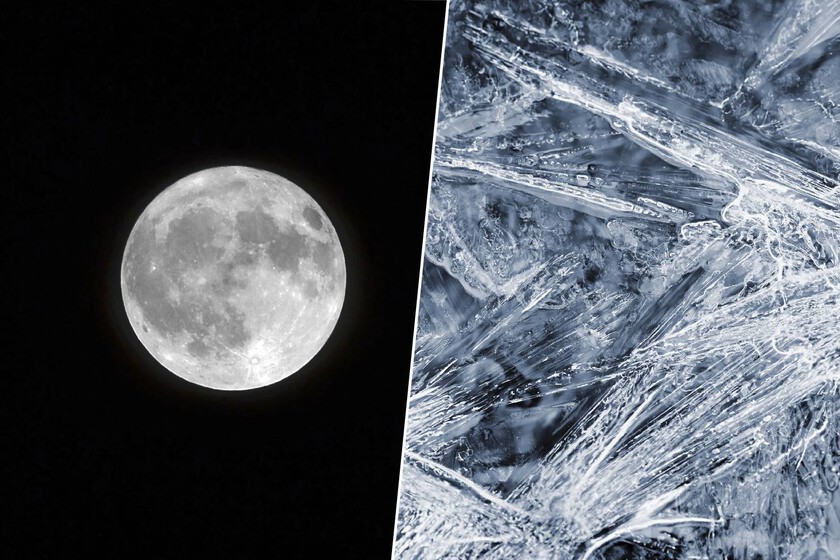
It has long been known that water exists on the Moon. However, accessing it is quite complicated. To begin with, so far only water in the form of ice has been detected. But also, it’s not clear what the best places to look are. There are some clues, but exceptions keep appearing that baffle scientists. Therefore, the study recently carried out by scientists at the University of Colorado Boulder has been very illuminating.

Frozen water hidden in the shadows. The missions that have detected ice on the Moon have located it in the depths of the craters of the lunar south pole. Mostly, in something known as cold traps. These are places that are permanently in shadow, so that the very high temperatures reached during the day, of more than 120ºC, cannot evaporate the water.

An essential resource for lunar colonization. The detection of water on the Moon was a great milestone at the time, since it would make it easier for lunar colonizers to use water to cover basic needs in the future. They could use it for drinking, but it would also be possible, for example, to separate hydrogen from oxygen through hydrolysis and use it as fuel. Let us remember that the formula of water is H2O, two hydrogen atoms and one oxygen atom.

It’s not that easy. Some craters containing ice have already been detected, such as Cabeus. We could think that all the craters of the south pole that are found in cold traps, like this one, will serve as water sources. Unfortunately, the task is not so simple. It is known that several craters in this situation do not contain water, so another pattern must be sought to help future lunar colonizers know where to look.

A question of orientation. The authors of the study just published relied on two types of data. On the one hand, the surface temperature data provided by the Diviner instrument of NASA’s Lunar Reconnaissance Orbiter (LRO). On the other hand, the results of a series of computer simulations on lunar evolution.

Studying all of this together revealed something interesting. That the orientation of the Moon has not always been the same. Its relative inclination with respect to the Earth has changed slightly over billions of years, so that what is in shadow today may not have been in the past. That’s why there are craters in cold traps that don’t have water.

The older the better. Something that these scientists have also observed when reviewing previous studies is that the oldest craters at the lunar south pole are more likely to house water. Therefore, the ideal is to look for ancient craters that are located at the south pole and in cold traps. The number of likely places to search is greatly reduced. In fact, there is already a candidate following this premise: the Haworth crater. According to the models, it has been in shadow for 3 billion years.

We will have to check it. The authors of this study are already designing an instrument, called the Lunar Compact Infrared Imaging System (L-CIRiS), to analyze this and other candidate craters for water ice. NASA plans to deploy it near the lunar South Pole at the end of 2027. It will be a good way to detect the best lunar water sources with an eye on future long-term missions on our satellite. The more the ground is prepared, the better.

Image |

WorldOfSoftware | The “hidden” side of the Moon has been a mystery for decades: China already has a chemical map to shed light
Sign Up For Daily Newsletter

Be keep up! Get the latest breaking news delivered straight to your inbox.
By signing up, you agree to our Terms of Use and acknowledge the data practices in our Privacy Policy. You may unsubscribe at any time.
Share This Article
Facebook Twitter Email Print
Share
What do you think?
Love0
Sad0
Happy0
Sleepy0
Angry0
Dead0
Wink0
Previous Article An asteroid as big as a house passed Earth last night: should we be worried? An asteroid as big as a house passed Earth last night: should we be worried?
Next Article Cry til you laugh: Chris Pirillo vibe codes his job-search frustrations into brutally honest apps Cry til you laugh: Chris Pirillo vibe codes his job-search frustrations into brutally honest apps
Leave a comment

Leave a Reply Cancel reply

Your email address will not be published. Required fields are marked *

Stay Connected

248.1k Like
69.1k Follow
134k Pin
54.3k Follow

Latest News

20 percent say AI has taken over parts of their job: Survey
News
TSMC sets 2nm wafer price at ,000, far below earlier 50% increase speculation · TechNode
TSMC sets 2nm wafer price at $30,000, far below earlier 50% increase speculation · TechNode
Computing
Sorry, Verizon customers: You’ll be paying more for YouTube Premium, too
News
Rethinking Battery Integration in Commercial Electric Vehicles | HackerNoon
Computing

You Might also Like

An asteroid as big as a house passed Earth last night: should we be worried?
Mobile

An asteroid as big as a house passed Earth last night: should we be worried?

4 Min Read
Microsoft expands support for Windows 10 Enterprise 2016 LTSB
Mobile

Microsoft expands support for Windows 10 Enterprise 2016 LTSB

3 Min Read
ServiceNow will integrate native AI across its product portfolio
Mobile

ServiceNow will integrate native AI across its product portfolio

5 Min Read
to be the first city in Europe with an “astroport”
Mobile

to be the first city in Europe with an “astroport”

6 Min Read
//

World of Software is your one-stop website for the latest tech news and updates, follow us now to get the news that matters to you.

Quick Link

  • Privacy Policy
  • Terms of use
  • Advertise
  • Contact

Topics

  • Computing
  • Software
  • Press Release
  • Trending

Sign Up for Our Newsletter

Subscribe to our newsletter to get our newest articles instantly!

World of SoftwareWorld of Software
Follow US
Copyright © All Rights Reserved. World of Software.
Welcome Back!

Sign in to your account

Lost your password?