April 2026 will be remembered as a pivotal month for the artificial intelligence sector, as OpenAI unleashed a trifecta of announcements that have sent ripples across the developer and enterprise landscapes. The company, known for its relentless pace of innovation, introduced a new premium subscription tier, issued a critical security warning for macOS users, and launched a highly anticipated lightweight model, GPT-5.3 Instant Mini. This series of developments not only redefines the value proposition for power users but also underscores the growing complexities of security and accessibility in the age of advanced AI. For professionals building on the OpenAI stack, these changes represent a new chapter of opportunities and challenges, demanding a close examination of how to best leverage these powerful tools while mitigating potential risks.
The New Frontier: Unpacking the $100 OpenAI Pro Plan
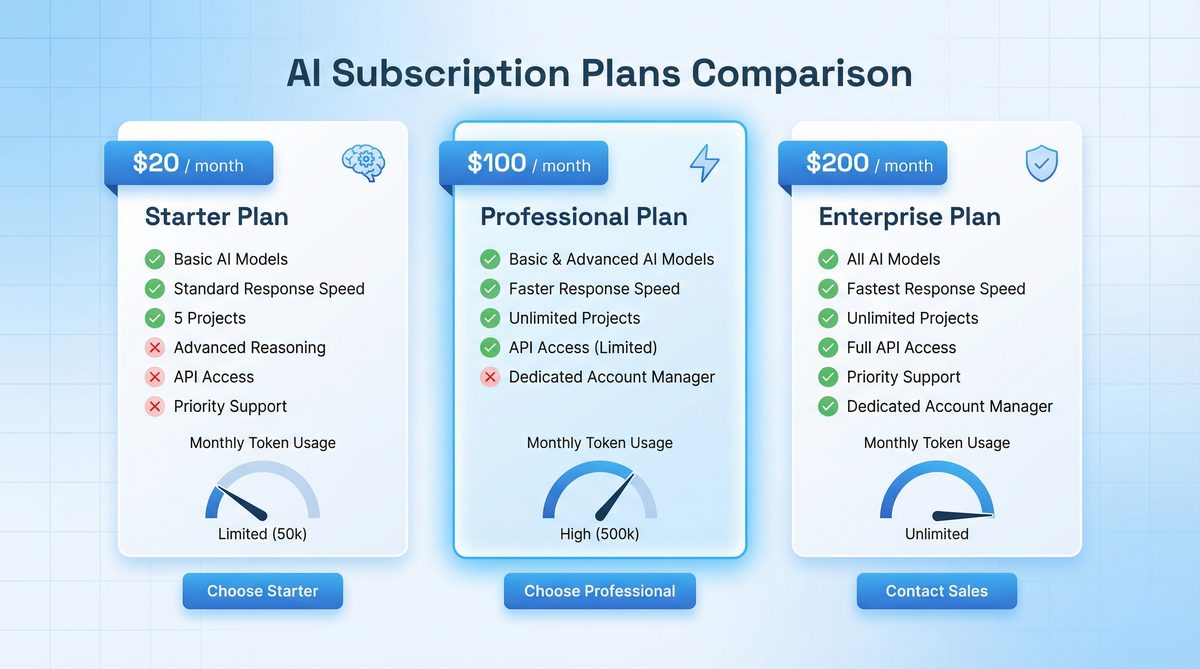
OpenAI has officially segmented its user base with the introduction of a new, feature-rich $100 per month ‘Pro Plan’. This offering is meticulously designed to cater to the needs of professional developers, researchers, and small to medium-sized enterprises that require more than what the standard plans provide but are not yet at the scale of requiring a full enterprise-level commitment. The move signals a maturation of the AI market, where a one-size-fits-all approach is no longer sufficient to meet the diverse demands of a rapidly growing user community. The Pro Plan is positioned as the definitive toolkit for serious AI practitioners who depend on consistent, high-throughput access to OpenAI’s most advanced models.
What’s Inside the Premium Tier?
The $100 Pro Plan is far more than a simple increase in API rate limits. It represents a comprehensive package of benefits aimed at accelerating professional workflows. Subscribers gain priority access to the latest models, including the newly released GPT-5.3 series, ensuring they are always at the cutting edge. The plan includes a substantial monthly credit for API usage, which OpenAI claims will cover the vast majority of professional development and testing needs. Furthermore, Pro members will experience significantly higher rate limits and concurrent connections, virtually eliminating the bottlenecks that can stifle rapid prototyping and large-scale data processing. Another key feature is access to dedicated support channels, promising faster response times and more in-depth technical assistance than what is available to free or lower-tier users. Early reports also indicate that Pro subscribers will have access to exclusive beta features and developer previews, giving them a head start on integrating next-generation capabilities into their applications. A detailed breakdown of the cost-benefit analysis is crucial for any team considering this upgrade, and a comprehensive analysis can help determine the return on investment. For those looking to understand the financial implications, a deep dive into the various tiers is essential. We have prepared a complete overview of the costs associated with different usage levels. 99+ Dynamic ChatGPT Prompts to Create Energizing Workout Plans for Every Fitness Goal
Target Audience: Who is the Pro Plan For?
The primary audience for the Pro Plan consists of three core groups: independent developers building AI-powered applications, academic and corporate researchers pushing the boundaries of AI, and small to medium-sized businesses integrating AI into their core operations. For developers, the plan’s higher rate limits and priority access are critical for building and scaling production-ready services. Researchers will benefit from the ability to run more extensive experiments and process larger datasets without interruption. For businesses, the Pro Plan offers a predictable and cost-effective way to power internal tools, customer support bots, and other AI-driven solutions without the overhead of a full enterprise license. It strikes a balance between the accessibility of consumer-grade plans and the robust infrastructure of enterprise solutions, filling a much-needed gap in the market.
Market Impact and Competitive Landscape
OpenAI’s introduction of the Pro Plan is a strategic move that is likely to reshape the competitive dynamics of the AI platform market. By offering a compelling mid-tier option, OpenAI is directly challenging competitors like Anthropic, Google, and Cohere to refine their own pricing and feature sets. This could trigger a wave of innovation in how AI platforms are packaged and sold, with a greater emphasis on specialized plans tailored to specific user segments. The Pro Plan’s focus on developer-centric features and priority access could also create a ‘flywheel effect,’ attracting top talent to the OpenAI ecosystem and further solidifying its market leadership. The long-term impact will depend on how competitors respond and whether the value proposition of the Pro Plan proves to be as substantial in practice as it appears on paper. It forces a re-evaluation of what constitutes a ‘premium’ offering in the AI space, moving beyond simple API access to a more holistic suite of tools and support.
Critical macOS Security Alert: Protecting Your Local AI Development
In a move that highlights the growing importance of security in the AI development lifecycle, OpenAI issued a critical security alert for developers using its libraries on Apple’s macOS. The vulnerability, if exploited, could allow a malicious actor to gain unauthorized access to local development environments, potentially exposing sensitive data, proprietary code, and model credentials. This announcement serves as a stark reminder that as AI models become more powerful and integrated into local workflows, the attack surface for developers expands, necessitating a more rigorous approach to security. The alert was accompanied by a detailed technical write-up and immediate patching instructions, demonstrating OpenAI’s commitment to proactively addressing security concerns within its community.
The Nature of the Vulnerability
The security flaw, designated CVE-2026-0412, resides within a specific component of the OpenAI Python library responsible for managing local caching of model data on macOS. According to the advisory, the vulnerability is related to an insecure handling of file permissions in the library’s cache directory. Under certain conditions, a local attacker or a malicious script could manipulate this directory to execute arbitrary code with the user’s privileges. This could lead to the theft of API keys stored in environment variables, unauthorized access to private code repositories, or the injection of malicious code into ongoing AI projects. The vulnerability affects all versions of the library prior to the patched release and is particularly concerning for developers who work in multi-user environments or frequently run scripts from untrusted sources.
Official Mitigation and Patching Steps
OpenAI has released a patched version of its Python library and is urging all macOS users to update immediately. The recommended course of action is to run a simple command: pip install --upgrade openai. This will fetch and install the latest, secure version of the library. In addition to updating, OpenAI recommends that developers review the permissions of their local cache directories and ensure that no sensitive information is being stored in an insecure manner. The company has also published a guide on best practices for securing local AI development environments, which includes recommendations on using virtual environments, managing API keys securely, and regularly auditing project dependencies. Following these guidelines is crucial for maintaining a secure posture. The broader topic of securing development environments is complex, and this incident highlights its importance. The Complete Developer Guide to OpenAI Codex 2026: API Setup, Use Cases, and Best Practices
Broader Implications for Local AI Security
This macOS-specific vulnerability is symptomatic of a larger trend: as AI development becomes more decentralized, the security of local environments becomes paramount. The convenience of running powerful models and tools on a personal machine comes with the responsibility of securing that machine against a new class of threats. This incident will likely spur a greater focus on ‘secure by default’ configurations in AI development tools and a push for more integrated security scanning and dependency management solutions. It also serves as a wake-up call for the developer community to adopt a zero-trust mindset, even within their own local environments. The era of treating the local machine as an implicitly trusted space is over, and the principles of production security must now be applied to every stage of the development lifecycle.

GPT-5.3 Instant Mini: The Dawn of High-Speed, On-Device Intelligence
Perhaps the most exciting announcement of the month was the launch of GPT-5.3 Instant Mini, a new lightweight model optimized for speed and on-device deployment. This model is OpenAI’s answer to the growing demand for real-time AI that can run efficiently on mobile devices, edge servers, and other resource-constrained environments. Instant Mini is not simply a smaller version of its larger sibling; it is a completely re-architected model designed from the ground up for low-latency inference. This breakthrough has the potential to unlock a new wave of applications that require instantaneous responsiveness, from real-time language translation and augmented reality overlays to intelligent on-device assistants that can operate without a constant internet connection.
Architecture and Performance Benchmarks
GPT-5.3 Instant Mini is built on a novel architecture that prioritizes computational efficiency without a catastrophic sacrifice in performance. OpenAI has not released all the technical details, but early benchmarks indicate that the model achieves response times that are an order of magnitude faster than the full GPT-5.3 model, with only a marginal reduction in accuracy for many common tasks. This is achieved through a combination of advanced quantization techniques, knowledge distillation from the larger model, and a more streamlined network structure. The model is small enough to be bundled directly into mobile applications, enabling a new class of offline-first AI features. The trade-offs between speed, size, and intelligence are at the heart of modern AI research, and Instant Mini represents a significant step forward in optimizing that balance. The landscape of compact, efficient models is evolving rapidly. GPT Model Trust Study Reveals Surprising Insights into AI…
Use Cases and Integration Potential
The potential applications for GPT-5.3 Instant Mini are vast and varied. In the mobile space, it can power highly responsive chatbots, intelligent text prediction, and real-time content summarization directly on the user’s device, enhancing privacy and reducing reliance on network connectivity. For the Internet of Things (IoT) and edge computing, Instant Mini can enable smart devices to perform complex analysis and decision-making locally, reducing latency and bandwidth costs. Augmented reality applications can use the model to provide real-time information overlays and interactive experiences. In the automotive sector, it could power next-generation in-car assistants that respond instantly to voice commands. The ability to run a powerful language model with such low latency opens up a new frontier for human-computer interaction.
Developer Access and API Changes
OpenAI has made GPT-5.3 Instant Mini available through a new, dedicated API endpoint optimized for low-latency requests. Developers on the new Pro Plan will have priority access and higher rate limits for this endpoint. The integration process is designed to be straightforward, with the client libraries handling much of the complexity of interacting with the new model. OpenAI has also released a set of guidelines and best practices for designing applications that can take full advantage of Instant Mini’s speed. This includes recommendations on structuring prompts for faster processing and managing state in real-time conversational applications. The launch of this new model and its dedicated API is a clear indication that OpenAI is serious about supporting the development of a new class of high-speed, interactive AI experiences.
Access 40,000+ AI Prompts for ChatGPT, Claude & Codex — Free!
Subscribe to get instant access to our complete Notion Prompt Library — the largest curated collection of prompts for ChatGPT, Claude, OpenAI Codex, and other leading AI models. Optimized for real-world workflows across coding, research, content creation, and business.
Access Free Prompt Library
Conclusion: Navigating OpenAI’s Evolving Ecosystem
The April 2026 announcements from OpenAI paint a clear picture of the company’s forward-looking strategy: a multi-tiered approach to serve a diverse user base, a serious commitment to the security of its development ecosystem, and a relentless pursuit of models that are not only more powerful but also more accessible and efficient. The introduction of the Pro Plan provides a much-needed bridge for professionals, while the macOS security alert serves as a crucial lesson in the shared responsibility of securing the AI pipeline. Finally, the launch of GPT-5.3 Instant Mini opens the door to a new generation of real-time, on-device AI applications. As we navigate this rapidly evolving landscape, it is clear that staying informed and adaptable is no longer just an advantage; it is a necessity for anyone serious about building the future with artificial intelligence.