
It is a legal masterstroke that could be a landmark in the European technological landscape. On May 13, Boris Siegenthaler, the founder of the Swiss cloud host Infomaniaformalized the transfer of the majority of the voting rights of his company to a public utility foundation. This decision effectively makes the company, which has a turnover of 56 million Swiss francs, totally elusive by investment funds or American giants.
Why was such a decision necessary?
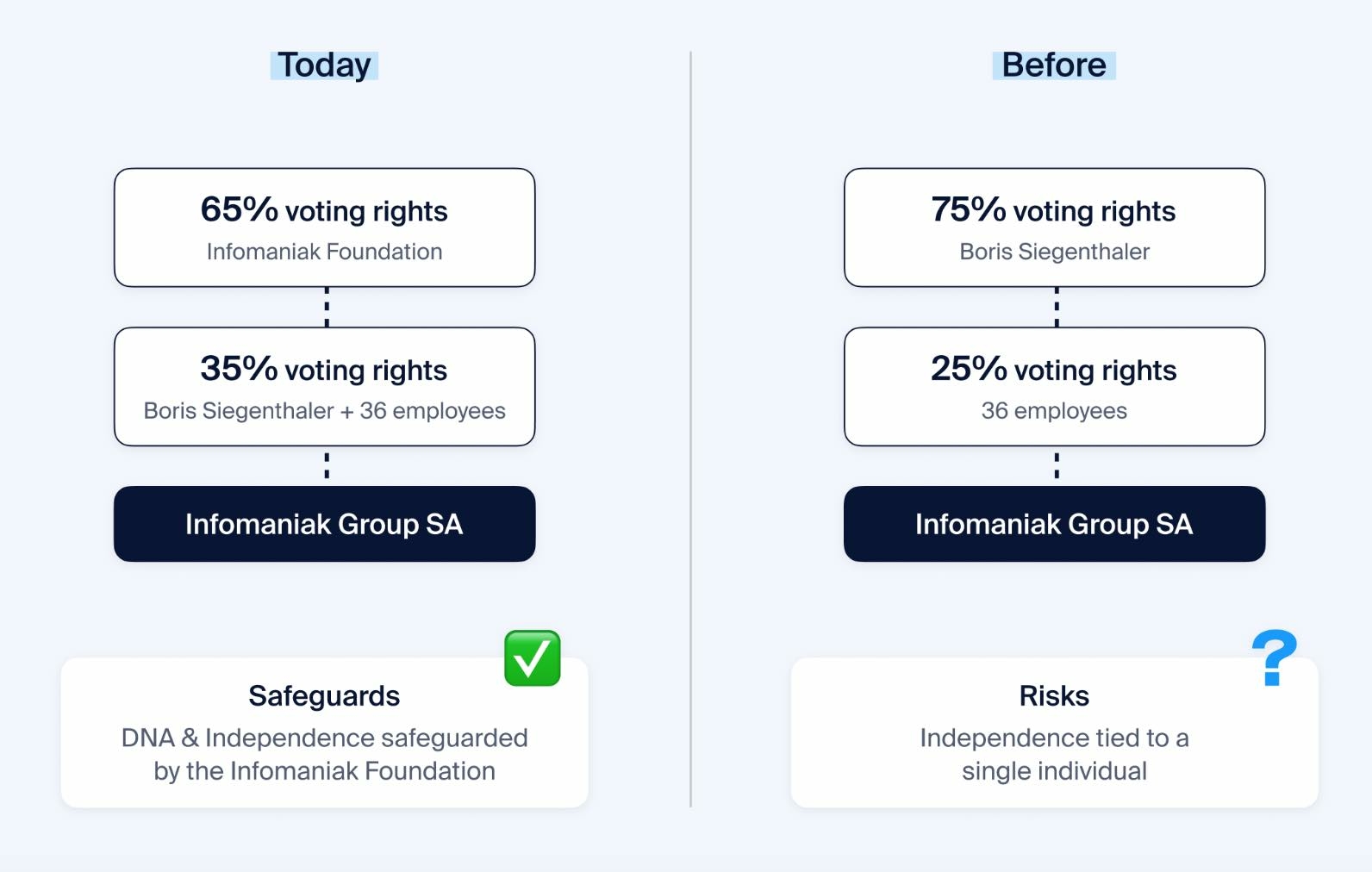
Boris Siegenthaler’s initial plan was a transmission progressive of the company to its employees, 36 of whom were already shareholders at 25%. But this model had significant flaws, notably the financial risk linked to the buyout of shares in the event of multiple departures of employees.
Above all, the question of inheritance void in the event of the founder’s disappearance, his heirs would be exposed to pressure from foreign investors. Faced with consolidation in the cloud sector and threats to digital sovereigntyit became urgent to find a definitive anchor to perpetuate the company’s mission.
How does this legal shield work in practice?
The mechanism is based on the creation special class sharesnon-transferable, which give the Infomaniak Foundation permanent blocking power. Even if new investors enter the capital to finance the growth of the company, the foundation will always retain the majority of voting rights.
Everything is framed by a “Charter of participations” signed before a notary. This document sets in stone nine fundamental principles, including absolute protection of private life and a strict ban on using customer data to train AI models without explicit consent.
What are the guarantees for the future and customers?
This model, inspired by industrial giants like Bosch or Rolexis a first in the European cloud. The foundation acts as a silent guardian company values. It does not intervene in operational management, which remains in the hands of the current management team, but ensures that the founding principles are never weakened.
For customers, this is the assurance that their data will remain under Swiss jurisdictionbeyond the reach of extraterritorial laws like the Cloud Act. It is also the guarantee that ecological commitments will be kept and that the economic model will never be sacrificed on the altar of short-term profitability imposed by external shareholders.