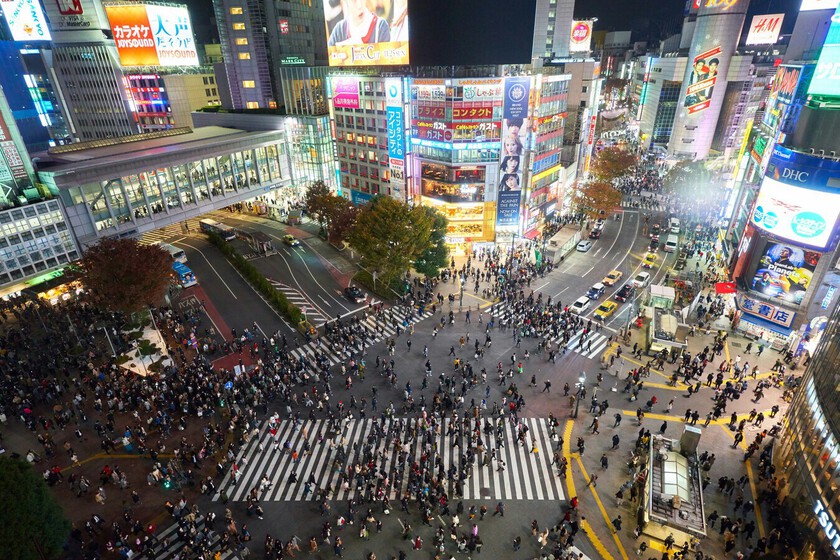
No matter which guide you use, if you are looking for the iconic places in Japan, Shibuya, one of the most dynamic districts in Tokyo, will surely be among them. The neighborhood is known for its neon lights, its skyline and (above all) its very famous Shibuya sukuranburu kōsaten intersection, through which thousands of tourists pass every day. If you search #sibuyacrossing on TikTok you will find more than 70,000 videos, most of them from foreigners.
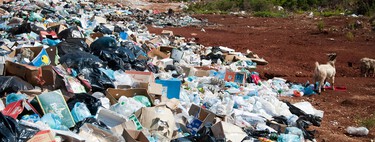
The local authorities have grown tired of this crowd leaving their streets full of garbage and have decided to make a clean break. As? With special patrols and sanctions.
What has happened? That the government of the Shibuya district, in Tokyo, wants to get rid of people who throw garbage in its streets. And it has decided to do it in the most effective (and emphatic) way possible: using the police and with sanctions that will be imposed on the spot and offenders must pay either in cash, with a credit card or by means of a QR code. It is not a more or less diffuse idea or a political proposal that still needs to be debated and processed.
The measure has already been introduced as an amendment to the ordinance for the ‘Joint Creation of a Clean Shibuya’, a regulation from 1997. Now, and after a grace period that began in April, the authorities have begun to issue fines. They have even promoted a campaign with a name that leaves little room for interpretation: “If you throw garbage, you lose money.”
Proof of how seriously the police take it is that on their first day alone they processed a dozen sanctions.
What fines and how are they applied? The fines amount to 2,000 yen, about 10.7 euros, and will be applied immediately so that offenders can pay them in cash or by pulling a card. As if the threat of sanctions were not enough, the district has decided to mobilize a patrol of several dozen agents (up to 50) who will be in charge of roaming the area in search of offenders.
As the objective is to eliminate dirt, the focus has not only been placed on pedestrians. The same rule contemplates fines of 50,000 yen (270 euros) for positions of takeaway or vending machines that do not install trash cans nearby.
Is the problem that serious? No data has been released on the amount of garbage that is collected every day on the streets of Shibuya, but there are several characteristics in the area that explain why the government has decided to resort to fines. The first is that public containers are not plentiful. In 2013 the authorities removed the bins and encouraged people to manage their waste responsibly.
The idea was not only to avoid collapsed bins, but, as the BBC recalls, to improve security. In general, in the country it is not unusual to find areas where containers are scarce for fear that they will be used in terrorist attacks. This lack of buckets has not gone unnoticed by the millions of tourists who visit the country each year. In 2025 the issue appeared in a government survey on the problems faced by foreign tourists. It was cited by 20% of respondents.
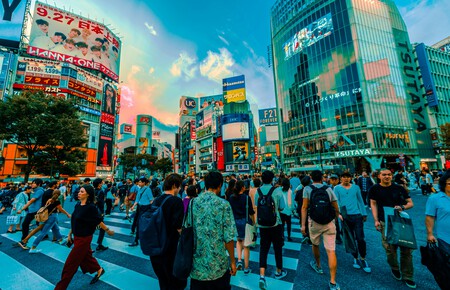
Is it the only explanation? No. Shibuya is an important (and above all busy) tourist hub. According to the Japan National Tourism Organization (JNTO), during peak hours between 1,000 and 2,500 people cross its famous crossing every two minutes. “It is one of the most emblematic places in Tokyo,” the agency points out before remembering that just with the number of people who accumulate there, including residents and visitors, a stadium could be filled in a short time.
Although just under 250,000 people reside in the district, this avalanche of passers-by is much better understood if one takes into account that Japan has been experiencing a true tourist boom for years. It is estimated that last year alone 42.7 million foreigners visited the country, a relevant figure for three reasons: it represents a year-on-year increase of almost 16%, it is the first time that the figure exceeds 40 million and, above all, it marks a historical record.
Fines only for tourists? No. Fines for littering the ground apply to both visitors and local people, although it is not unreasonable to think that the measure has been adopted largely with foreigners in mind. And not only because it is centered on a tourist hub. Sanctions are immediate, can be paid by card or QR, and enforcement officers will speak multiple languages, including English, Chinese and Korean.
“Shibuya is an international area visited by many Japanese and people from all over the world. We ask all visitors, regardless of their nationality, to respect the city’s rules,” emphasizes Ken Hasebe, district leader. The authorities carried out a survey, carried out last year, which shows that 52% of the people caught throwing garbage were foreigners.
Does it only happen there? No. Shibuya is not the only point in Japan where the tourist avalanche has generated tensions with the local population. In fact, you don’t have to go back very far in time to find two other towns that also decided to adopt measures to avoid the overcrowding, dirt and traffic problems generated by tourism.
One is Fujikawaguchiko, which in 2024 installed a barrier to cover its views of Mount Fuji. The reason? The hordes of tourists seeking selfie perfect. The other is Fujiyoshida, which recently canceled its cherry blossom festival to spare residents the inconvenience caused by the thousands of foreigners the event attracts. The country has even decided to charge for climbing Fuji to prevent it from becoming a huge public landfill.
Images |Timo Volz (Unsplash) and Jezael Melgoza (Unsplash)
In | Antarctica was practically the last corner of the Earth immune to touristification. That’s ending