
The Californian company Twelvein partnership with giants like Alaska Airlines and Microsoft, officially launched its factory AirPlant One in Moses Lake, Washington.
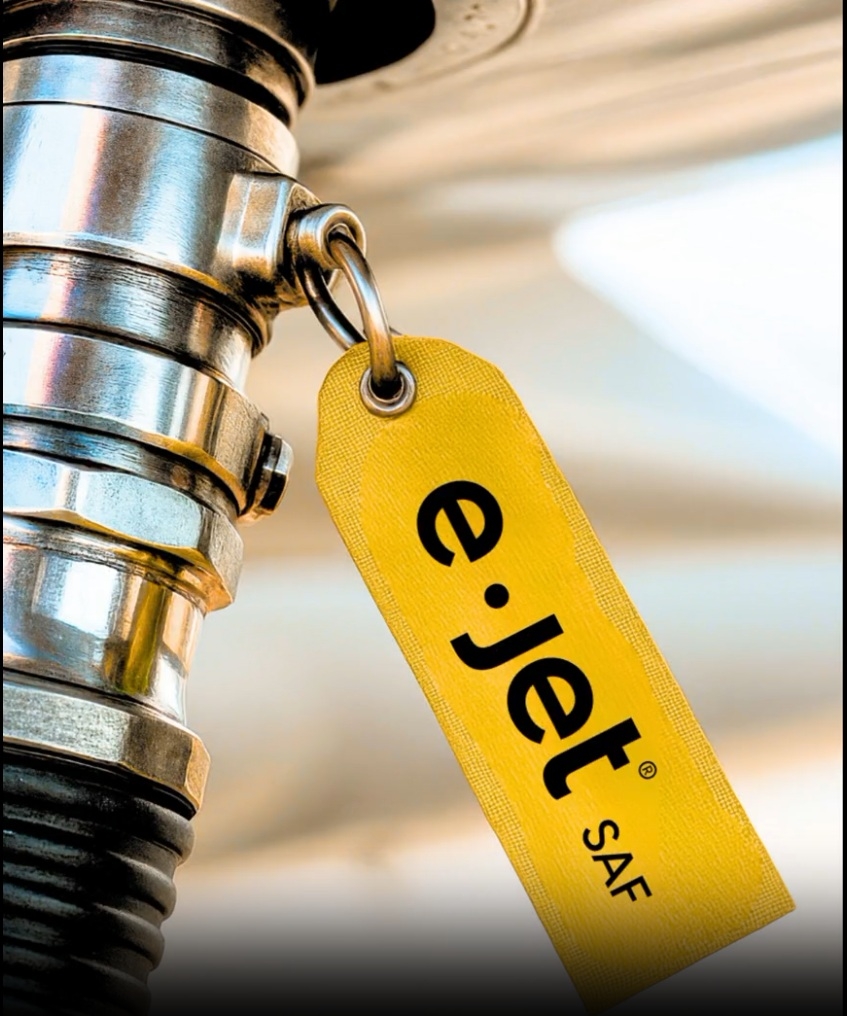
Its project is to produce on a commercial scale a synthetic aviation fuelbaptized What’s upfrom captured CO2, water and renewable electricity.
This fuel is chemically identical to fossil kerosene, compatible with current aircraft, and can reduce emissions by 90% over its life cycle.
How does this new factory turn air into fuel?
It all starts from the process Power-to-Liquid (PtL), or conversion of electricity to liquid. At the heart of the factory AirPlant One is a system based on an electrolyzer.
This usesrenewable electricity to break down water molecules and captured carbon dioxide. The atoms thus released are then recombined to form liquid hydrocarbon molecules which constitute the basis of synthetic kerosene.
The result is a fuel that is chemically perfectly identical to its petroleum-derived counterpart. It meets international certification standards (ASTM D7566) and can be used directly in current aircraft.
No need to modify engines or airport infrastructure. This so-called compatibility drop-in is a major strategic advantage because it removes one of the biggest obstacles to the adoption of alternative fuels which often require costly adaptations.
Alaska Airlines has already planned to use this new fuel on its commercial flights.
What are the concrete advantages of this synthetic kerosene?
The first and most obvious advantage is ecological. Twelve’s E-Jet fuel promises reduction of greenhouse gas emissions over its entire life cycle up to 90% compared to conventional kerosene.
This is a considerable step forward for an aviation sector in search of viable solutions for its decarbonization. Unlike many sectors of sustainable aviation fuel (SAF), which are based on biological raw materials (used oils, agricultural waste), PtL does not compete with agricultural land and offers much greater industrial capacity.
The second advantage is economic and geopolitical. The cost of producing the E-Jet is anchored on long-term power purchase contracts and not on the oil market volatility or OPEC decisions.
Twelve says it can offer airlines price predictability over a decade !
For carriers whose fuel budget represents several billions, this is an invaluable promise of stability. In addition, we are witnessing the birth of a sovereign industrial sector capable of producing its own fuel from local resources.
Beyond airplanes, what are the other applications of this technology?
AirPlant One produces kerosene but also another strategic product:E-Naphtha. Naphtha is a fundamental and versatile chemical substance in the petrochemical industry used to manufacture thousands of everyday products: plastics, packaging, solvents, synthetic fibers, etc.
Twelve’s E-Naphtha is a direct alternative, created from the same conversion process of captured carbon dioxide.
This diversification opens up an immense field of application. Twelve has already collaborated with leading brands like Mercedes-Benz for automotive components, PANGAIA for sunglasses and Procter & Gamble for Tide laundry detergent ingredients.
The company is thus inaugurating a new era, that of eChemicals or electronic chemicals, providing an alternative to decarbonize entire supply chains.
Can this innovation really be a game-changer for the industry?
The opening of AirPlant One proves that the production of synthetic kerosene is no longer a theoretical concept, but a viable commercial reality in the United States. Using inputs likerenewable electricity and CO2, available almost everywhere, this production model frees itself from the geological constraints of oil extraction.
The only limit becomes access to energy, a booming sector. In addition, this factory arrives at a pivotal moment. Increasingly strict regulations, particularly in Europe and Singapore, are creating structural and localized demand for sustainable fuels.
Twelve’s model, geographically flexible, is perfectly adapted to meet these new requirements. The Moses Lake plant is therefore much more than just a facility; she is the prototype of a new energy modelmore resilient, cleaner and fundamentally more stable.