

Photo by fauxels
Should your brand still be on Facebook in 2026? The short answer is yes.
With 3.07 billion monthly active users, Facebook still offers massive scale, but only for brands with a clear marketing strategy that reflects how the platform works today.
In this article, we’ll give you a crash course on Facebook marketing strategy in 2026, revealing what’s working on the platform and what’s not. We’ll also share a few real-world examples of companies that are doing Facebook well.
Facebook Marketing in 2026: What’s Changed (and What Hasn’t)
Facebook marketing in 2026 feels radically different, but its strategic role has not disappeared. The platform is now fully recommendation-driven, with AI deciding what content earns distribution. As a result, many old playbooks have stopped working, while a few fundamentals still matter as much as ever. The key is knowing which is which.
| What’s changed | What hasn’t |
| Reach is driven by AI recommendations, not followers | Facebook still offers unmatched scale |
| Creative quality is the main performance lever | People still use Facebook to be entertained and informed |
| Broad targeting outperforms narrow interest stacks | Clear business goals matter more than platform metrics |
| Organic and paid strategies are deeply connected | Strong brands still win attention more easily |
| Automation plays a larger role in optimization | Consistent testing and iteration remain critical |
In general, platforms owned by Meta Platforms now reward content that generates early engagement, watch time, and meaningful interaction. Brands that adapt to these shifts gain leverage, while those using outdated tactics see diminishing returns.
📖 Related Read: Social Media Updates You Must Know in 2026 (Updated Monthly)
Next, let’s look at the foundational elements of a strong Facebook marketing strategy in 2026.
The Foundations of a Strong Facebook Marketing Strategy
A strong Facebook marketing strategy in 2026 is built on three pillars.
The first foundation is goal alignment. Facebook can drive awareness, demand, leads, or sales, but it cannot do all of them equally well at the same time. Strategies fail when brands chase platform metrics like reach or engagement without tying them back to business outcomes.
The second foundation is audience understanding, not just targeting. With broader targeting and AI optimization now the norm, success depends less on defining perfect interest stacks and more on knowing what your audience cares about, what problems they are trying to solve, and what type of content earns their attention. Messaging and creative now do the work targeting used to do.
The third foundation is choosing the right Facebook surfaces. Feed, Reels, Groups, Messenger, and ads each serve different roles. Not every brand needs to be everywhere, but every brand needs to be intentional about where they show up and why.
Content Strategy: What Actually Works on Facebook in 2026
Facebook content in 2026 succeeds when it looks and feels like something a real person would post, not a brand trying to market.
What Works Best Right Now Is Creator-style Content
This means vertical videos shot on phones, simple visuals, subtitles, and a clear idea in the first two seconds. Think “here’s something useful or interesting” instead of “here’s our brand message.” The brands winning on Facebook publish content that could plausibly come from an employee, a founder, or a customer.
Hooks Matter More Than Topics
Two posts about the same idea can perform wildly differently. The one that works usually starts with a strong hook like a bold claim, a mistake to avoid, or a surprising insight. “We stopped doing X and here’s why” consistently beats polished announcements or feature updates.
One Idea Per Post, Not Five
Facebook rewards clarity. Content that tries to explain everything at once gets ignored. The posts that travel far focus on a single takeaway, a single lesson, or a single story.
So, how can you build an effective Facebook strategy? Let’s look at that next!
How to Build a Winning Facebook Marketing Strategy
Step 1: Decide the Single Job Facebook Is Responsible For
Most Facebook strategies break down because the platform is asked to do too many things at once. Brands try to educate, entertain, convert, and build communities with the same content, which leads to unclear signals and inconsistent results.
High-performing brands define one primary role for Facebook, such as:
- Reinforcing brand positioning
- Shaping perception
- Staying top of mind with an existing audience
That role dictates what gets posted and what does not. For example, Patagonia (a clothing brand) uses Facebook primarily to reinforce its values and point of view. Much of its content focuses on environmental issues, activism, and long-term brand belief rather than product launches or trend-chasing posts.
Step 2: Build Content That Earns Attention First
In 2026, Facebook content succeeds or fails in the first few seconds. The platform prioritizes posts that immediately signal relevance. That means content must earn attention before it tries to educate or persuade.
High-performing brands design posts around a single, clear idea and lead with a strong hook. This could be a bold opinion, a mistake to avoid, or a relatable insight that makes someone stop scrolling.
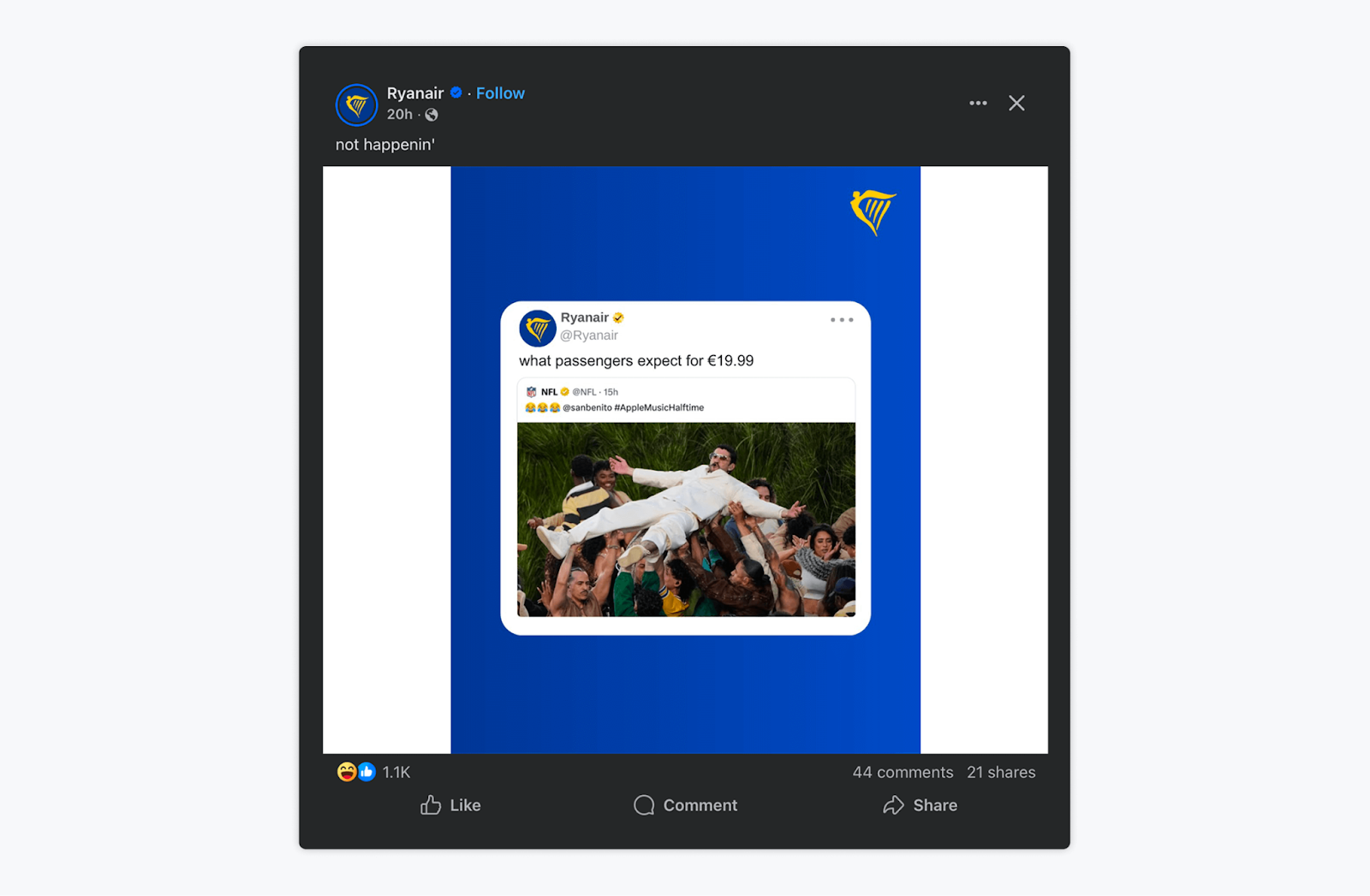
For example, Ryanair (a low-cost airline) uses simple, fast, and often humorous posts that feel native to the feed. The content is easy to understand, emotionally clear, and instantly recognizable.
📖 Related Read: We Break Down Ryanair’s Social Media Strategy–It’s Genius
Step 3: Create Fast Feedback Loops, Not Perfect Content
In 2026, Facebook favors brands that learn quickly over brands that aim for perfection. The goal is not to get every post right, but to understand what consistently earns reactions, comments, and shares.
High-performing teams publish often, review performance weekly, and adjust based on patterns rather than one-off wins or losses.
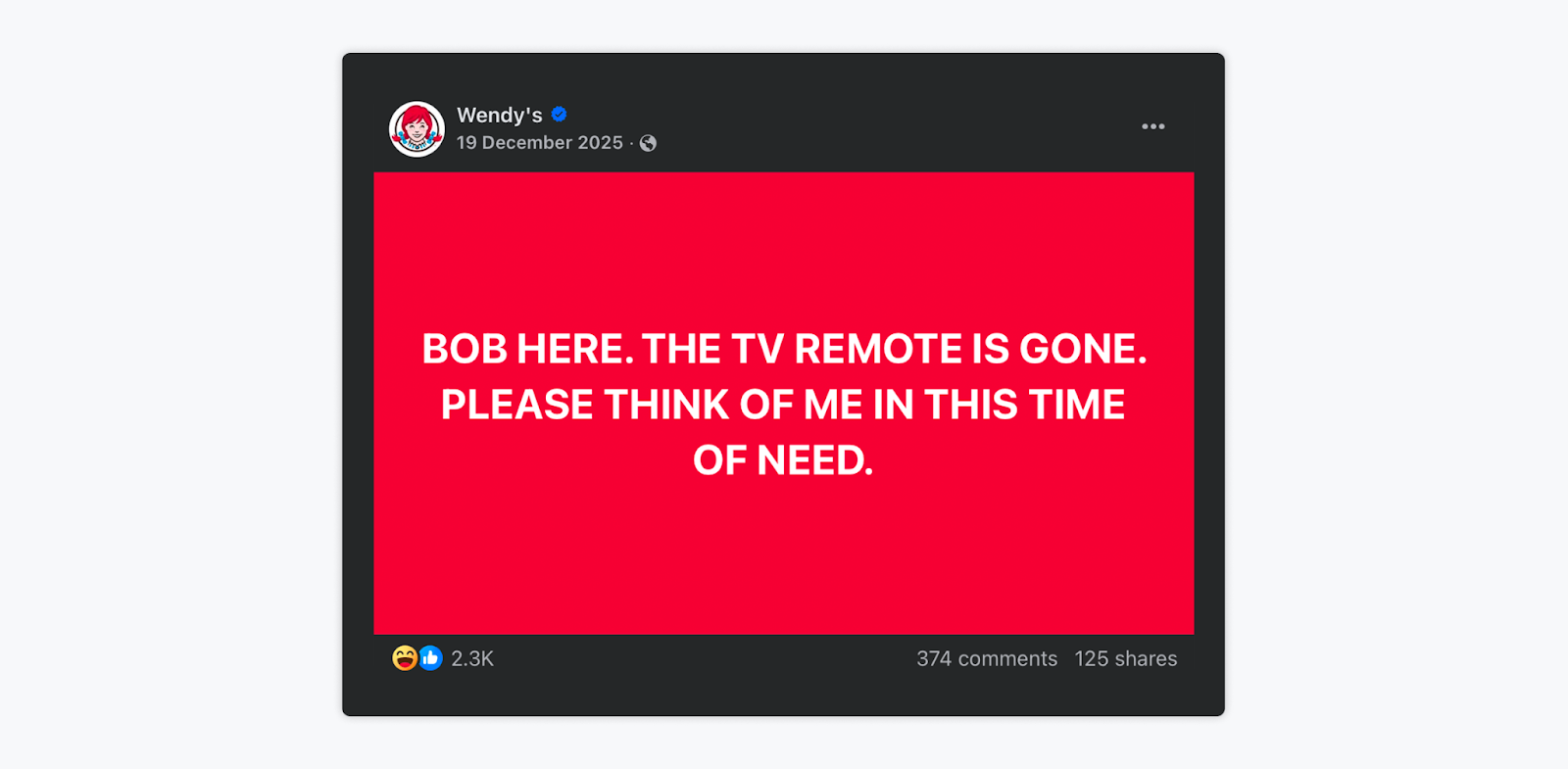
For instance, Wendy’s (a fast food restaurant) uses Facebook to experiment with tone, humor, and cultural references. Some posts are intentionally simple or reactive, designed to test what sparks conversation rather than to look polished.
Step 4: Lean Into Paid to Unlock Scale
In 2026, Facebook ads are still one of the most reliable ways to reach large, specific audiences at scale. The economics behind ads is also more than compelling: one 2025 benchmark analysis reported an overall average ROAS of 2.98, or about $2.98 returned for every $1 spent (with big variation by industry).
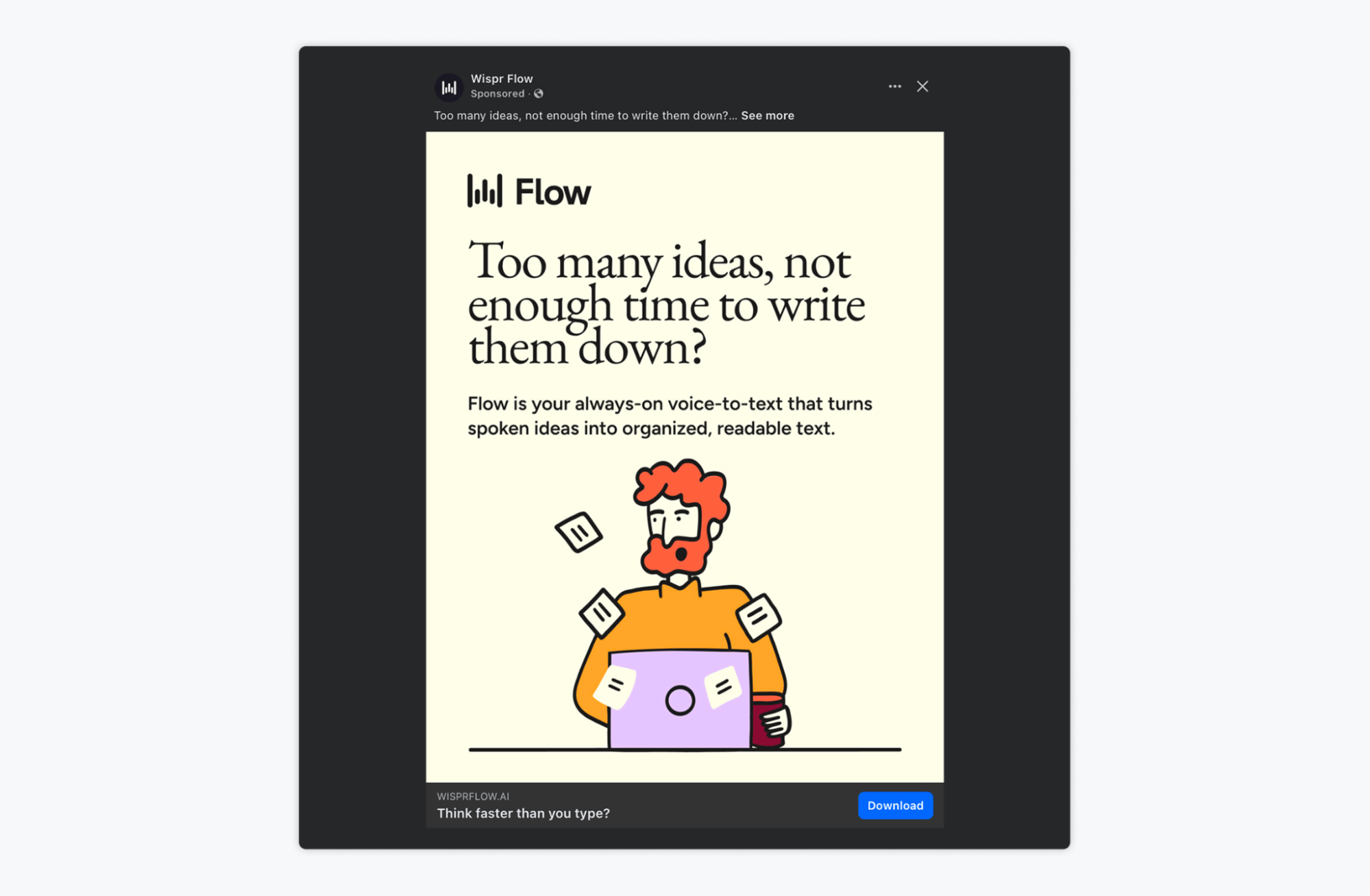
The key? Don’t choose between paid and organic—go for both. Organic content is how brands discover what resonates, while ads are how they extend that signal beyond existing reach. Companies that win use organic Facebook content as a testing and signal layer, then apply paid distribution selectively to the ideas that earn attention.
Step 5: Show Up Consistently, or Nothing Else Really Works
Last but not least, just like on any other social media platform, consistency is what ties everything together. If you do not show up on Facebook regularly, you cannot expect to grow an audience or give the algorithm enough signal to work with.
Posting consistently is what turns strategy into momentum. It allows patterns to emerge, makes testing possible, and gives both organic and paid efforts something to build on.
Social media management tools like Gain can help you turn strategy into consistent execution. Gain brings everything you need to create, preview, approve, schedule, and publish Facebook content into one place built for agencies and marketing teams.
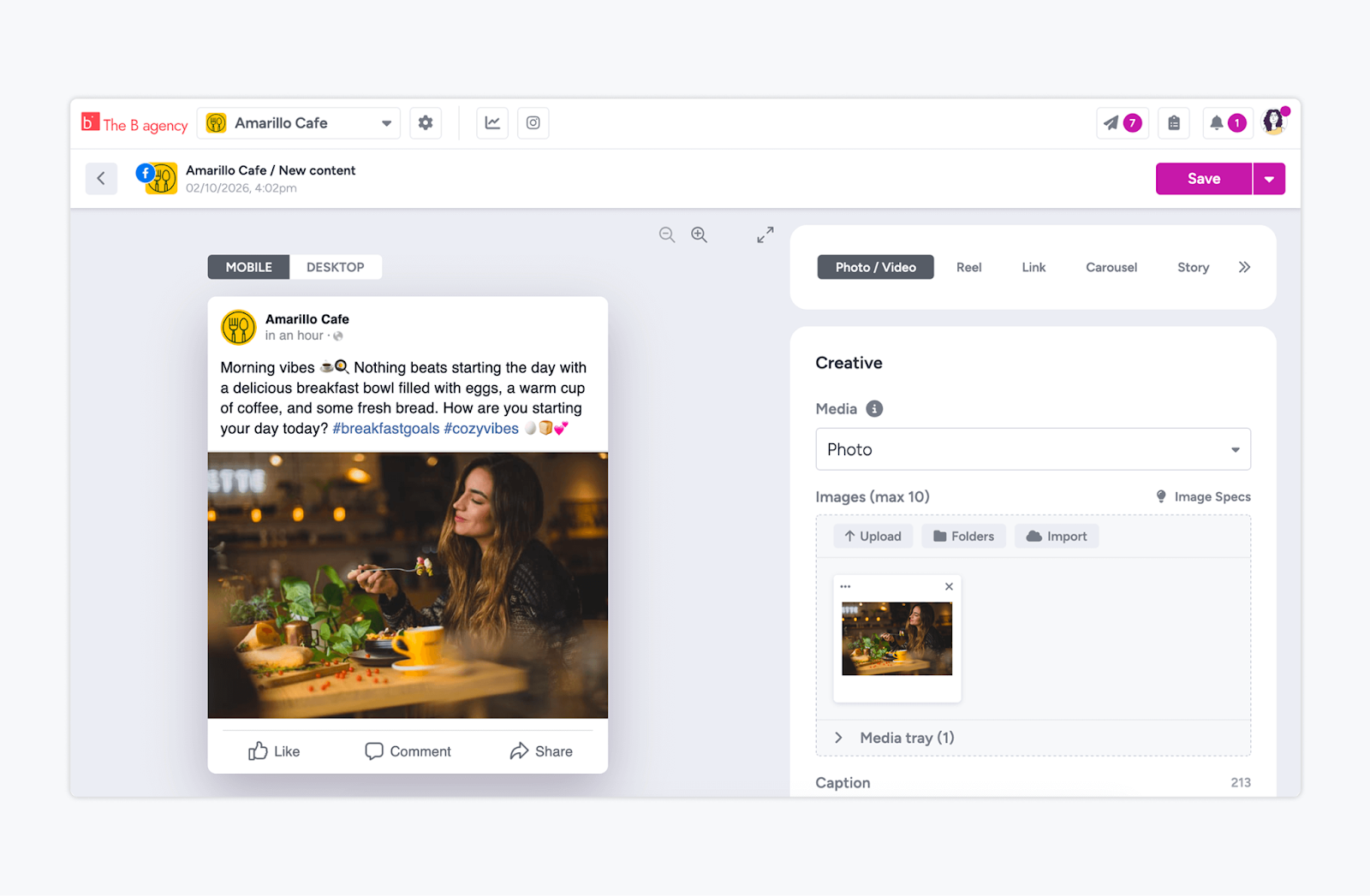
With Gain, teams can see exactly how posts will appear across formats, gather stakeholder feedback and approvals in one workflow, schedule content with confidence, and maintain a visual content calendar everyone stays aligned on.
FAQs
A Facebook marketing strategy defines how a brand uses Facebook to achieve specific business outcomes. It covers the role Facebook plays in the broader marketing mix, the type of content shared, how organic and paid efforts work together, and how success is measured.
No, not necessarily. Daily posting is not required for most brands. What matters is consistency and sustainability. Posting regularly, whether that is a few times per week or more, helps maintain visibility and gives Facebook’s algorithm enough signal to understand who the content is for.
Industries that benefit most from Facebook include e-commerce, consumer brands, restaurants, travel, and local or service-based businesses. That’s because their offerings are easy to show, easy to understand, and emotionally relatable. Facebook favors visual, story-driven content that sparks quick reactions, which aligns well with products, experiences, and services people already browse casually. These industries also benefit from impulse interest, local relevance, or repeat consideration, all of which fit naturally into how people use Facebook day to day.
The Bottom Line
The brands winning on Facebook today are not doing more. They are doing the right things consistently. Clear goals, focused content, paid amplification, and regular publishing are what make Facebook work in 2026.
Consistency, however, is an execution problem as much as a strategy one. Gain is built to solve that by bringing Facebook post creation, content approvals, scheduling, and publishing into one shared workflow.
Try Gain for free today!


