

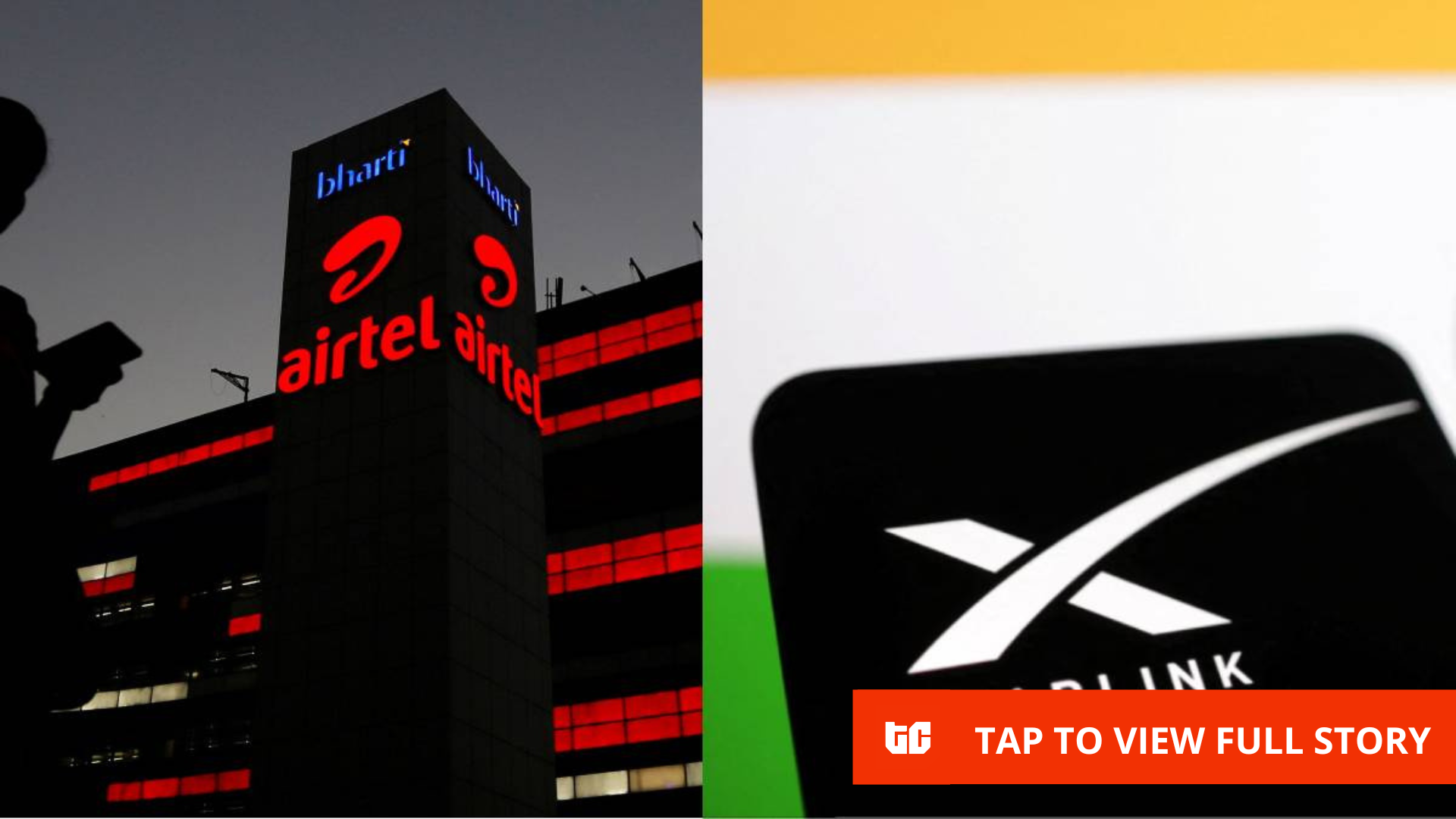
On December 17, 2025, Airtel Africa signed an agreement with SpaceX to introduce Starlink Direct-to-Cell satellite connectivity across Airtel Africa’s 14 markets, including Nigeria. The deal allows compatible 4G and 5G smartphones to connect directly to satellites when terrestrial networks are unavailable, without requiring satellite dishes or special consumer equipment.
“This is something big that has happened, and for the first time,” Dinesh Balsingh, Managing Director and Chief Executive Officer of Airtel Nigeria, said in Lagos during a press briefing on Thursday, December 18, 2025. “It’s largely because we have an unwavering commitment towards connecting every part of Nigeria.”
The partnership closes coverage gaps neither company can solve alone. Airtel has spectrum, towers, distribution, and tens of millions of users, but extending terrestrial networks into remote, insecure, or low-density regions is expensive and often impractical.
What makes this different from traditional Starlink
Starlink, the second-largest internet service provider in Nigeria, requires a satellite dish, router and a relatively high upfront cost. Airtel’s deal is fundamentally different. This is not a replacement for Starlink’s home broadband product, and it does not require customers to buy any new hardware.
“This is direct-to-cell. It’s direct to mobile,” Dinesh explained. “It has nothing to do with the broadband service that Starlink is running separately. This is when Airtel customers on mobile phones can also access satellite services.”
Under the agreement, Airtel Africa customers with compatible smartphones will be able to send text messages, use USSD services, access mobile money, and utilise select data applications, such as WhatsApp, in areas without terrestrial coverage. The service is expected to begin in 2026, initially focused on basic connectivity rather than full-scale broadband.
Behind the scenes, the service will be powered by Starlink’s 650 low-Earth-orbit satellites designed to connect directly with standard smartphones. Over time, next-generation satellites are expected to deliver significantly higher speeds, potentially up to 20 times faster than the first generation.
Targeting the places towers cannot reach
Nigeria already has relatively wide mobile coverage. Airtel says about 88% of the population is covered by its network, and roughly 99% of its sites are 4G-enabled. In urban areas and many towns, connectivity is no longer the primary problem.
The real gap lies beyond that coverage map. “This will not be a big urban play,” Dinesh said. “Urban areas are very well covered. Many small towns and villages are also well-covered. This will help us go into deep rural areas where there is no network at all, or areas where it’s extremely difficult to access and build sites.”
These include remote farming communities, desert stretches, mountainous regions, riverine settlements and offshore locations. In many of these places, building a tower requires constructing access roads, securing power, and maintaining infrastructure that may be vandalised or cut off for long periods.
Satellite connectivity offers a shortcut. Instead of waiting years for terrestrial expansion, coverage can be extended almost instantly from space.
“If you move from a location where you are connected and slip into a place where there is no physical coverage, then at least you’ve got satellite coverage,” Dinesh said. “Without that, you have zero connectivity.”
Who is this really for?
One of the toughest questions around satellite-to-mobile services is affordability. Nigeria’s deepest rural areas are also where incomes are lowest, smartphone penetration is uneven, and feature phones remain common. According to data from GSMA, only 32% of Nigerians living in rural areas owned a smartphone in 2022, indicating a 68% usage gap, with affordability the biggest challenge for many users.
Airtel answers that the service is not designed for one narrow demographic. “It serves a broad-based segment of customers,” Dinesh said. “It doesn’t just serve the urban customer who travels. It also serves the rural customer.”
While feature phones remain prevalent, Airtel says smartphone penetration in rural areas is already significant and growing rapidly as device prices fall. Social media usage, WhatsApp calling, and mobile money are increasingly common even outside cities, all services that the satellite connection is designed to support.
There are also specific use cases beyond permanent residents. Farmers travelling between towns and villages, traders sourcing produce, field workers, emergency responders, logistics operators and people working temporarily in remote locations can all benefit from being connected wherever they go.
“Our responsibility as a service provider is to ensure that every part of the country has good quality, data-capable mobile broadband service,” Dinesh said. “The ecosystem of devices will continue to evolve.”
Satellites as backup, not a replacement
Airtel is careful to frame satellite connectivity as a complement to, not a substitute for, terrestrial networks. Over the past year alone, the company rolled out about 700 new sites, expanded spectrum capacity and invested heavily in fibre and transmission infrastructure to improve quality and resilience.
When fibre is cut or vandalised, a persistent problem in Nigeria, operators already rely on microwave links as backup. Satellite adds another layer of redundancy.
“When terrestrial networks are not available, users can fall back to satellite,” Dinesh acknowledged, while stressing that vandalism is only one factor. “Beyond that, it’s also about how hard and difficult it is to connect certain locations.”
In parallel, Airtel continues to invest in home and business broadband through 4G and 5G fixed-wireless products, including outdoor routers designed to improve signal quality. The company describes its strategy as building an ecosystem that combines network capability, device access and consumer value.
Why is it suddenly viable?
A decade ago, satellite connectivity was widely seen as too expensive and technically limited for mainstream mobile use. That perception has shifted dramatically.
“Technology moves forward,” Dinesh said. “Ten years ago, maybe five to 10% of customers were using smartphones. Today, it’s over 50%. Device prices have crashed, making smartphones more affordable.”
Advances in low-Earth-orbit satellites, mass production, reusable rockets and software-defined networks have driven costs down and performance up. Companies like SpaceX have turned satellite connectivity from a niche solution into something that can integrate directly with mobile networks.
The result is a hybrid future, where fibre, towers, microwave links and satellites coexist — each used where it makes the most sense.
A broader shift in African telecoms
Airtel Africa’s Starlink deal is also symbolic. It makes Airtel one of the first mobile network operators in Africa to offer Direct-to-Cell satellite services at scale.
“This partnership reinforces our commitment to bridge the digital divide,” Airtel Africa CEO Sunil Taldar said in a statement. “Starlink’s Direct-to-Cell technology complements terrestrial infrastructure and reaches areas where deploying traditional networks is challenging.”
For Nigeria, the implications are significant. Millions of people live and work beyond the practical reach of towers and fibre. Connecting them has always been expensive, slow and uncertain. Satellite-to-mobile connectivity does not solve every problem; affordability, devices and digital skills still matter, but it removes one of the biggest barriers: physical access.
As Dinesh put it, “This is not just about technology development. It’s about enabling opportunities, expanding possibilities and ensuring no community is left behind.”


