While most AI products run inside a browser or a phone, we’re approaching the next era of AI assistants where wearable devices will run more advanced AI personal assistants. Amazon’s Bee gadget is one such product, a wearable that allows the user to record thoughts, events, and conversations, and then access the information from those voice recordings in written form in an app. The $49.99 Bee is built with privacy protections, according to the startup that Amazon acquired last year for an undisclosed sum. However, as we’ll discuss below, Bee’s privacy may not be perfect. Some risks exist, including the fact that Amazon now owns the company, and the giant retailer has been known to give Echo and Ring consumers privacy worries.
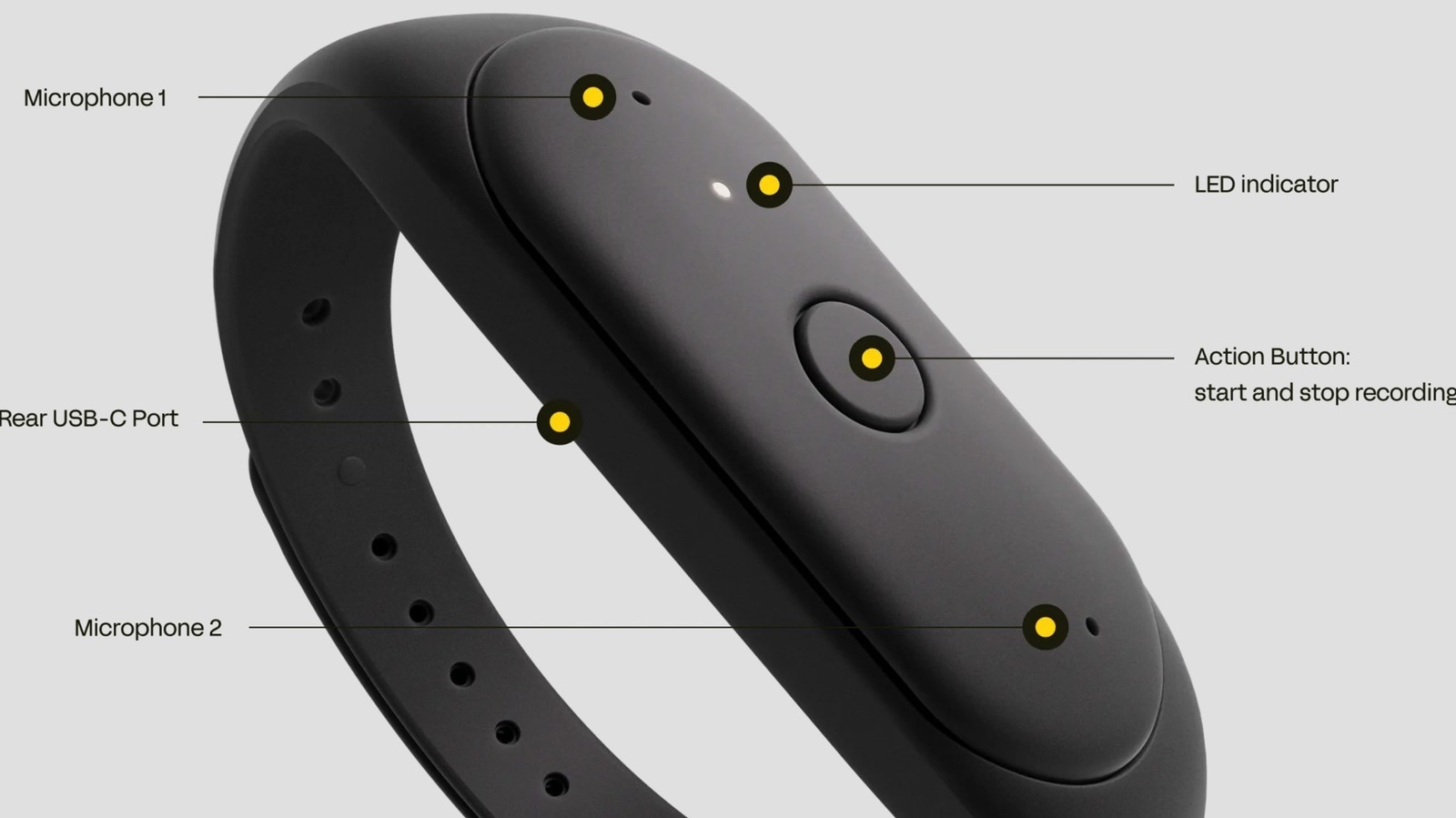
Before we explain the privacy features and potential issues, you should know exactly what Amazon’s Bee is. The device looks like a smartwatch or smart band without a screen. The wearable device can also be attached to clothes, much like the Humane Ai Pin. The Bee features an Action button in the center, which can be pressed to record and stop voice recordings. An LED turns green when the device is working. Two microphones filter noise to improve the quality of recordings. Bee can understand up to 40 different languages and offers users up to seven days of battery life per charge.
Bee has evolved since joining Amazon into a more personal AI assistant. Bee added support for Voice Notes, Actions that allow Bee to interact with the user’s email and calendar apps, and Daily Insights, which allow the AI to monitor and detail trends about how the user is feeling, “shifts in your relationships,” recurring themes across weeks, and personalized goals.
The privacy features
Bee stops recording after 15 minutes of silence if you don’t use the Action button. The transcriptions then appear in the iPhone app. Bee doesn’t support Android as of this writing. Bee says in its support pages that it never stores audio recordings. The audio is processed in real-time and discarded after that. Only the user has access to the transcripts if they don’t decide to share the data. Users can delete their account and personal data from the app’s settings menu. Everything is encrypted at rest and in transit, with Bee saying the system features a “privacy by design architecture” that can be audited by third parties.
Bee co-founder Maria de Lourdes Zollo said in a blog post on Amazon in early January that “privacy has been part of our DNA since Day 1.” She added that Bee improved the gadget’s privacy since joining Amazon. The new security layer they added ensures “only customers have access to their transcripts and summaries and no one else—not even Amazon or Bee—can access them unless customers choose to share their data.” The same blog post also explains that Bee is building “ambient AI,” or an assistant that “understands you, which means integrating into every part of your life: at home, on the go, in the moments that matter wherever they happen.”
But Zollo’s vision may sound terrifying to some users. “As you wear it throughout the day, it captures your conversations, understands your commitments, and builds a picture of your life that grows richer over time,” Zollo wrote. “Bee learns from your daily patterns continuously to provide personalized insights that can empower you throughout your daily life.” This makes it seem like Bee is always listening, though that’s not the case.
The privacy risks
Some privacy issues are immediately clear. For example, Bee might record the voices of people around the user without their explicit permission. The green LED light isn’t immediately visible, especially if the gadget is worn on the wrist. Some people may worry about the 15-minute auto-stop feature. It’s unclear if the AI will actually stop recording if it keeps hearing voices around the device owner.
Also, Bee’s privacy notice includes a few concerning elements. For example, Bee can collect sensitive data, including voice patterns, health and fitness data, and location data. Bee may share data with third-party service providers, like “AI or machine learning services,” affiliates, and during business transfers (like Amazon’s purchase). The privacy document also notes that Bee has not “sold” personal information in the previous 12 months (as of September 2025), but it has “shared” limited data with third-party advertisers so users “receive more useful and relevant ads and to measure their effectiveness.”
Finally, Amazon itself has had several privacy issues. A few years ago, reports showed that human reviewers listened to Alexa recordings to improve the service. Only after backlash did Amazon introduce an opt-out feature. In 2023, the FTC and DOJ fined Amazon $25 million for keeping Alexa recordings of kids indefinitely. Last year, Amazon removed an Echo feature that allowed users to stop voice recordings from being sent to the cloud. Earlier this month, Amazon upgraded all Prime users to Alexa Plus, Amazon’s ChatGPT-like AI assistant, without giving them an option to opt-out. Privacy issues concerning Ring security cameras also surfaced in recent years. For example, the FTC investigated Amazon in 2023 for allowing employees and contractors to access footage from Ring cameras, ordering Amazon to pay $5.8 million in refunds and improve user privacy.