Founded by Steve Jobs and Steve Wozniak, Apple officially incorporated on April 1, 1976. The company helped usher in the era of personal computing, pairing meticulous design with tight hardware–software integration and a simple promise: “It just works.” Its history has been anything but linear. There were early breakthroughs, a near-collapse in the 1990s, and a dramatic revival after Jobs returned, followed by a run of mass-market hits beginning with the iPod and accelerating with the iPhone. All told, Apple has over five decades launched category-defining products, shelved its share of misfires, and pushed some genuinely odd ideas. These are the clearest examples of each.
Apple’s best
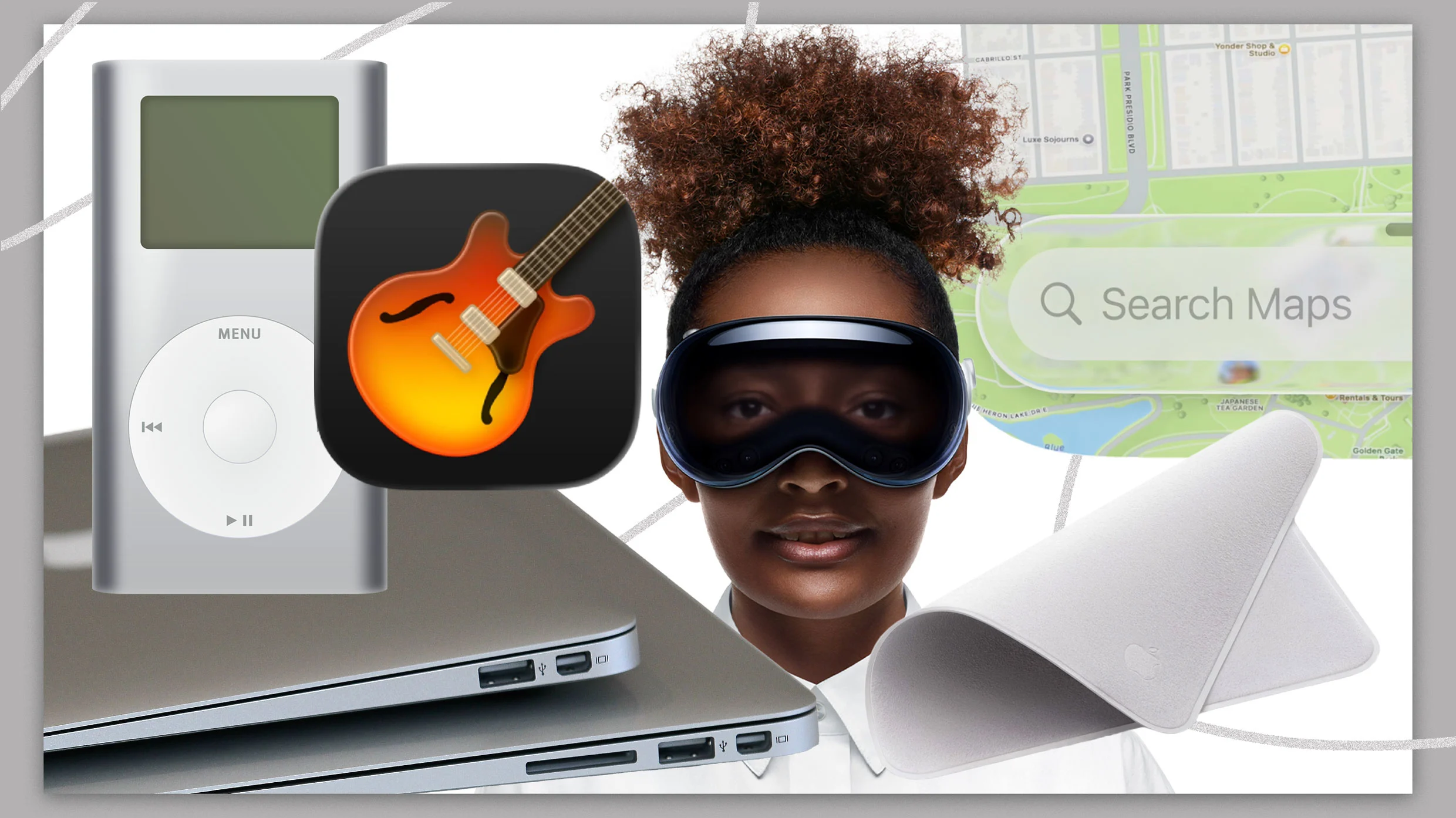
iPod Mini: While the original iPod transformed music consumption and kicked off Apple’s ascent as a consumer tech brand, 2004’s iPod Mini introduced the click wheel that we all now associate with Apple’s portable music player. It was the ultimate expression of what the iPod could be, and its lower price helped put Apple hardware into more people’s pockets.
The App Store: The iPhone gets most of the credit for the smartphone revolution, but the App Store is what really brought it to life. Being able to download apps for free or cheap transformed the iPhone from a neat gadget into a real computing platform, and it foreshadowed Apple’s pivot from a hardware company to services business.
iPad 2: If Apple’s goal with the iPad was to provide a minimal sheet of glass that turns into anything—an e-book reader, a video player, a gaming machine—the second-gen iPad was the first product to nail it. The dramatically thinner design helped it become Apple’s most-used tablet, even for years after the arrival of newer models.
2010 MacBook Air: Steve Jobs pulling the original MacBook Air from an envelope is an all-time great product reveal, but the 2010 revisions are what brought the concept to the masses. With a much lower starting price of $999 for the 11-inch model (versus $1,799 for the original 13-incher) and speedy solid state storage as a standard feature, it established the Air as Apple’s mainstream laptop for years to come.
M1 chip: Announced in 2020, the M1 was Apple’s first Mac chip designed in-house. Built on a 5-nanometer process with 16 billion transistors, it powers the MacBook Air, 13-inch MacBook Pro, and Mac mini. The result was a noticeable jump in speed and efficiency, with machines that ran faster, cooler, and longer on a single charge.
iMessage: Apple’s real innovation with iMessage was to automatically supersede standard text messaging among iPhone users. With no effort, the limitations of regular texting—tiny images, barely-watchable videos, group chat size limits—went away, and Android users were sadly singled out, giving Apple a built-in marketing advantage that persists today.