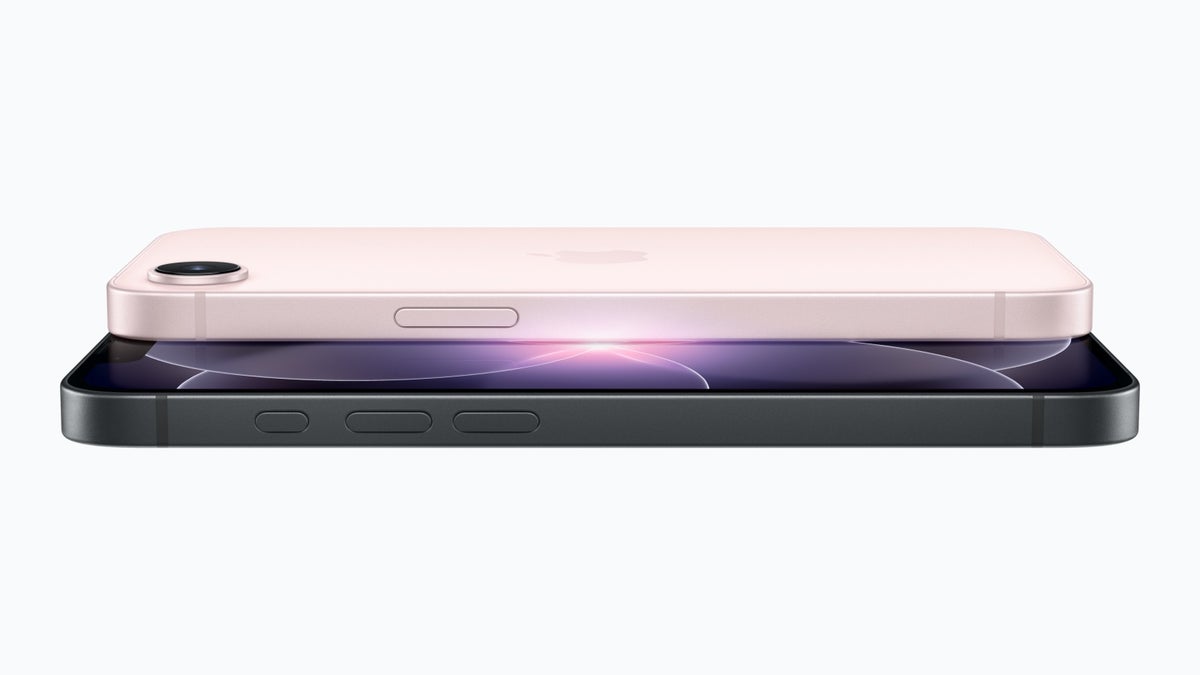
In line with more rumors and reports over the last few months than I can count on my fingers and toes, Apple has formally unveiled a new low-cost handset. The iPhone 17e is (unsurprisingly) not quite as affordable as the third-gen
iPhone SE was when it made its commercial debut back in 2022, but because this is 2026, it’s actually impressive that the budget-friendly 6.1-incher with Apple A19 power has been able to retain the $599 starting price of its 2025-released predecessor.
What’s even more remarkable (and, as far as I know, was predicted by no one ahead of yesterday’s announcement) is that the iPhone 17e offers double the internal storage space of last year’s iPhone 16e in an entry-level configuration, which essentially means that Apple has somehow managed to reduce its prices when almost everyone else in the industry is doing the opposite.
Here’s a comparison Android enthusiasts aren’t going to like
- iPhone 17e – $599 with 256GB storage; $799 in a 512GB variant.
- Samsung Galaxy S26 – $899.99 with 256GB storage; 1,099.99 with 512 gigs.
- Samsung Galaxy S25 FE – $649.99 with 128GB storage; $709.99 in a 512GB configuration.
- Samsung Galaxy A56 5G – $499.99 with 128GB storage; $549.99 in a 256GB variant.
- Google Pixel 10 – $799 with 128GB storage; $899 with 256GB.
- Google Pixel 10a – $499 with 128GB storage; $599 with 256GB.
- OnePlus 15R – $699.99 in a 256GB variant; $799.99 with 512GB storage.
Before I go any further, allow me to quickly address the elephant in the room. Yes, the iPhone 17e keeps the ugly and outdated notch alive, and yes, that’s extremely disappointing to see in the year of our lord and savior 2026, especially after so many (although not all) reports of late called for a change to a more modern, iPhone 16-inspired design.
But I believe this is the result of a deliberate choice Apple had to make between bumping up the base storage and moving to a Dynamic Island screen cutout after the company decided the $599 price was not going up, and there’s a pretty good chance that time will prove this was in fact the right call.
Would I have preferred a no-notch $599 iPhone 17e with 256GB storage? Of course. And while we’re dreaming with our eyes open, why not throw in a secondary camera and a 120Hz refresh rate-capable screen and forget the “vanilla” iPhone 17 is even a thing?
Back in the real world, however, Apple had to decide what corners to cut and, let’s be honest, what potential upgrades to save for the iPhone 18e, and clearly, winning comparisons like the one above was deemed more important for the Cupertino-based tech giant than pleasing the eyes of its most cash-strapped fans.
Obviously, the Galaxy A56 5G is not a real competitor for the iPhone 17e, while the Pixel 10a looks… even more doomed now that it’s officially priced the same as Apple’s latest budget-friendly handset in a 256GB storage variant while packing a vastly inferior Tensor G4 chip compared to that A19 beast.
Is the iPhone 17e better than the Galaxy S26 or Pixel 10?
No. Or at least I don’t think so, and I highly doubt the impending iPhone 17e reviews will radically change my opinion about that distasteful notch or mediocre single rear-facing camera (by 2026 high-end standards, at least).
But at $300 (!!!) less than those frontline Android soldiers, I believe we need to have a serious conversation about the very real possibility that the iPhone 17e might be the mobile industry’s overall value champion in 2026.
Something tells me this is the exact type of conversation that Apple aimed to inspire when it made its tough iPhone 17e design, storage, and pricing choices, and at the same time, I’m thinking these discussions wouldn’t have been validated if the handset ditched the notch but kept its predecessor’s 128GB base storage unchanged.
Scheduling the iPhone 17e‘s announcement mere days after the Galaxy S26 series launch also proved to be a brilliant decision on Apple’s part, as the wounds caused to many by Samsung’s price hikes have yet to heal.
Now, I’m not saying all of this to convince you to pick the iPhone 17e over the Galaxy S26 or Pixel 10 (especially since I could never do that myself), but regardless of our brand and OS preferences, we must give Caesar what belongs to Caesar and collectively admit the obvious – just like with the iPhone 17 six months ago, Apple played (almost) all of its cards right this week, setting the 17e up for some much-deserved sky-high sales figures around the world.
Don’t agree with me? Let’s talk again when the year’s best-selling smartphone list comes out.