By using this site, you agree to the Privacy Policy and Terms of Use.
Accept
World of SoftwareWorld of SoftwareWorld of Software
  • News
  • Software
  • Mobile
  • Computing
  • Gaming
  • Videos
  • More
    • Gadget
    • Web Stories
    • Trending
    • Press Release
Search
  • Privacy
  • Terms
  • Advertise
  • Contact
Copyright © All Rights Reserved. World of Software.
Reading: Artemis II faces mission’s 13 riskiest minutes as it prepares for splashdown
Share
Sign In
Notification Show More
Font ResizerAa
World of SoftwareWorld of Software
Font ResizerAa
  • Software
  • Mobile
  • Computing
  • Gadget
  • Gaming
  • Videos
Search
  • News
  • Software
  • Mobile
  • Computing
  • Gaming
  • Videos
  • More
    • Gadget
    • Web Stories
    • Trending
    • Press Release
Have an existing account? Sign In
Follow US
  • Privacy
  • Terms
  • Advertise
  • Contact
Copyright © All Rights Reserved. World of Software.
World of Software > News > Artemis II faces mission’s 13 riskiest minutes as it prepares for splashdown
News

Artemis II faces mission’s 13 riskiest minutes as it prepares for splashdown

News Room
Last updated: 2026/04/10 at 11:53 AM
News Room Published 10 April 2026
Share
Artemis II faces mission’s 13 riskiest minutes as it prepares for splashdown
SHARE

To view this video please enable JavaScript, and consider upgrading to a web
browser that
supports HTML5
video

In a few hours, four people will complete their 10-day road trip to the moon and back.

The Artemis II crew are inside a minivan-sized spacecraft hurtling towards Earth after their record-breaking lap around our cosmic neighbour.

Reid Wiseman, Victor Glover, Christina Koch and Jeremy Hansen travelled further from Earth than any human has on Monday.

The Earth’s gravity is now tugging the crew back home as they strap themselves – and anything that floats – down in the Orion capsule.

But as tense as the launch was last week, experts tell Metro that Orion’s homecoming, called re-entry, tonight will be even more nail-biting.

‘For 13 minutes, we won’t know if they’re okay’

The Artemis II crew (from left to right) mission specialist Christina Koch, mission specialist Jeremy Hansen, pilot Victor Glover, and commander Reid Wiseman (Picture: Getty Images North America)

The Orion consists of two parts: the crew module, where the astronauts have spent the last 10 days and a lower service module, which houses the propulsion, power and life-support systems.

By ‘propulsion’, we don’t mean the kind that towering rockets have. Instead, the capsule, christened Integrity by the crew, is being flung back to Earth.

The Orion spacecraft’s thrusters ignited for the second return trajectory correction burn to fine‑tune the spacecraft’s path toward Earth. Splashdown of Artemis II is expected around 8:07pm ET on Friday, April 10 (0007 UTC on Saturday, April 11), off the coast of San Diego. pic.twitter.com/VuRw7IVqpP

— NASA Artemis (@NASAArtemis) April 10, 2026

The moon’s gravity acted like a slingshot as the craft looped around it, called a ‘free return’ trajectory, meaning that even if the propulsion system failed, the Earthlings could still return home.

They’ll then smash into Earth’s atmosphere, reaching speeds of up to 23,839 miles per hour, the fastest any human has ever travelled.

When a spacecraft re-enters the atmosphere, the air beneath it gets hot – so hot that it turns into a different state of matter called plasma.

‘The air molecules hitting the capsule at 24,000mph will create a lot of friction and form a plasma shield around the capsule,’ explains Matthew Cook, head of space exploration at the UK Space Agency.

This blob of plasma is why spacecraft become glowing fireballs when they re-enter Earth, as they experience high heat and crushing pressure.

Radio signals barely make a dent through this plasma shield, making communication between mission control and the crew next to impossible, Cooks adds.

‘In this unprecedented level of access that we’ve had to the Artemis II crew during the entire 10-day mission, we’ll now have this 13-minute-long blackout, where we just won’t know whether they’re okay, whether everything’s going to plan.

‘We’ll just have to wait.’

Orion’s heat shield is only thing between it and 2,700°C

This handout picture released on April 8, 2026 by NASA, shows the Orion spacecraft on the sixth day into the Artemis II mission, photographed from one of the cameras mounted on its solar array wings, on April 7, 2026. During their historic lunar flyby, astronauts on NASA's Artemis II mission witnessed meteorites striking the rugged surface of the Moon, a sight that has piqued scientists' curiosity. "That was definitely impact flashes on the moon. And Jeremy (Hansen) just saw another one," mission commander Reid Wiseman reported on April 6, 2026 while flying around the Moon, the first such journey by humans in more than half a century. (Photo by Handout / NASA / AFP via Getty Images) / RESTRICTED TO EDITORIAL USE - MANDATORY CREDIT "AFP PHOTO / NASA" - HANDOUT - NO MARKETING NO ADVERTISING CAMPAIGNS - DISTRIBUTED AS A SERVICE TO CLIENTS
The Orion is a deep-space capsule about the size of a minivan (Picture: AFP)

As this happens, the Orion’s heat shield will kick in.

The heat shield is the layer at the bottom of a spacecraft that transfers heat away from the capsule – the Orion can withstand temperatures of nearly 2,700°C, half as hot as the surface of the sun.

If the shield fails – as it nearly did during the last Artemis mission, which was unmanned – the metal could melt and break apart.

No one knows more that things could go wrong than mission control, says Libby Jackson, the head of space at the London Science Museum, who once worked in mission control for the International Space Station.

‘The team will be very focused, very quiet, very concentrated,’ she says. ‘There’s nothing mission control can do at this point.

‘We are not going to say this is “mission complete,” that this has been a great success, until the crew safely lands on Earth.’

What will it be like inside the Orion?

Artemis II crew's sleeping bag configurations being tested in the Orion spacecraft.
The inside of the Orion (Picture: Nasa)

Pretty toasty, says Jackson. The crew will be lying on their backs to manage the mind-bending speed they’re zooming at.

‘They will see plasma out the window, a big ball of gas,’ she adds. ‘Anything not strapped down will fall. No one wants a falling piece of anything knocking them on the head.

‘The crew will feel the heat – it’s getting up to 2,700°C outside – and they will also start feeling gravity after floating for 10 days.’

The four Artemis II astronauts are expected to splash down somewhere in the Pacific Ocean, just off the coast of San Diego, California, at about 1am.

Where exactly the capsule will fall is hard to say – the Pacific Ocean is one third of the blue marble we call home, after all.

‘We can track their trajectory within millimetres of accuracy,’ adds Cook, pointing to British space officials’ own radar stations that help do this.

‘We know that even if they entered an unexpected, uncontrolled tumble, because of the dynamics of the atmosphere, it’ll still be within the safety margin.

‘I’d be very surprised if it didn’t end up in the Pacific Ocean,’ Cook says, adding: ‘They’re not going to end up in Antarctica.’

Jackson adds that the capsule will be pulling 3.9Gs, or four times the gravity that keeps our feet on the ground, as this ‘roller coaster ride’ ends with them skipping on the ocean like a stone.

The Orion Spacecraft: Crew Module (Picture: Metro)
The Orion capsule is about the size of a minivan (Picture: Metro)

Nasa officials are confident that the crew will remain alive and comfortable as they splash down, with inspections using cameras on the craft showing nothing to worry about.

As the capsule bobs about in the ocean, the final phase of the mission will begin: the recovery.

The USS John P. Murtha, a dock ship, will bring the crew to land. Once they have their feet on the ground for the first time in 10 days, they will be flown by helicopter to Naval Air Station North Island before being flown to Houston.

A big health worry will be the radiation constantly being spat out by the sun. On Earth, the planet’s magnetic field keeps us safe from it.

This handout picture released on April 9, 2026 by NASA, shows the Moon (L) and the Earth (R), each partially illuminated by the Sun, photographed by the Artemis II crew from the Orion spacecraft on April 6, 2026. During their historic lunar flyby, astronauts on NASA's Artemis II mission witnessed meteorites striking the rugged surface of the Moon, a sight that has piqued scientists' curiosity. "That was definitely impact flashes on the moon. And Jeremy (Hansen) just saw another one," mission commander Reid Wiseman reported on April 6, 2026 while flying around the Moon, the first such journey by humans in more than half a century. (Photo by Handout / NASA / AFP via Getty Images) / RESTRICTED TO EDITORIAL USE - MANDATORY CREDIT "AFP PHOTO / NASA" - HANDOUT - NO MARKETING NO ADVERTISING CAMPAIGNS - DISTRIBUTED AS A SERVICE TO CLIENTS
Data from the crew’s historic lunar flyby will keep scientists occupied for years (Picture: AFP)

Up in the stars, astronauts have no such force field. Knowing how this changes their bodies could help protect nuclear power workers or provide better radiological cancer treatments, adds Cook.

Nasa aims to launch Artemis III next year, acting as a test flight to see how well astronauts can rendezvous with lunar lands in low Earth Orbit.

If this goes to plan, Artemis IV and V will happen in 2028 and send astronauts to the surface of the moon for the first time in half a century.

Until then, Cook hopes that Artemis II will help bring humanity together.

‘In a world of such division, space exploration is that unifying function that lights a beacon of hope for humanity’s future,’ he adds, ‘showing exactly what we’re capable of.’

Get in touch with our news team by emailing us at [email protected].

For more stories like this, check our news page.

Arrow MORE: Houston, we don’t have lift-off — what happens to your penis in space

Arrow MORE: Donald Trump claims ‘Space Force’ is watching Iran in latest rambling post

Arrow MORE: People think Nasa’s Artemis II has found a face on the dark side of the moon

Comment now
Comments

Add Metro as a Preferred Source on Google
Add as preferred source

News Updates

Stay on top of the headlines with daily email updates.

Sign Up For Daily Newsletter

Be keep up! Get the latest breaking news delivered straight to your inbox.
By signing up, you agree to our Terms of Use and acknowledge the data practices in our Privacy Policy. You may unsubscribe at any time.
Share This Article
Facebook Twitter Email Print
Share
What do you think?
Love0
Sad0
Happy0
Sleepy0
Angry0
Dead0
Wink0
Previous Article Ray‑Ban Meta Wayfarer AI glasses are 25% off, making smart eyewear much more affordable Ray‑Ban Meta Wayfarer AI glasses are 25% off, making smart eyewear much more affordable
Next Article Human Amnesia Is Blinding Us to AI’s Speed | HackerNoon Human Amnesia Is Blinding Us to AI’s Speed | HackerNoon
Leave a comment

Leave a Reply Cancel reply

Your email address will not be published. Required fields are marked *

Stay Connected

248.1k Like
69.1k Follow
134k Pin
54.3k Follow

Latest News

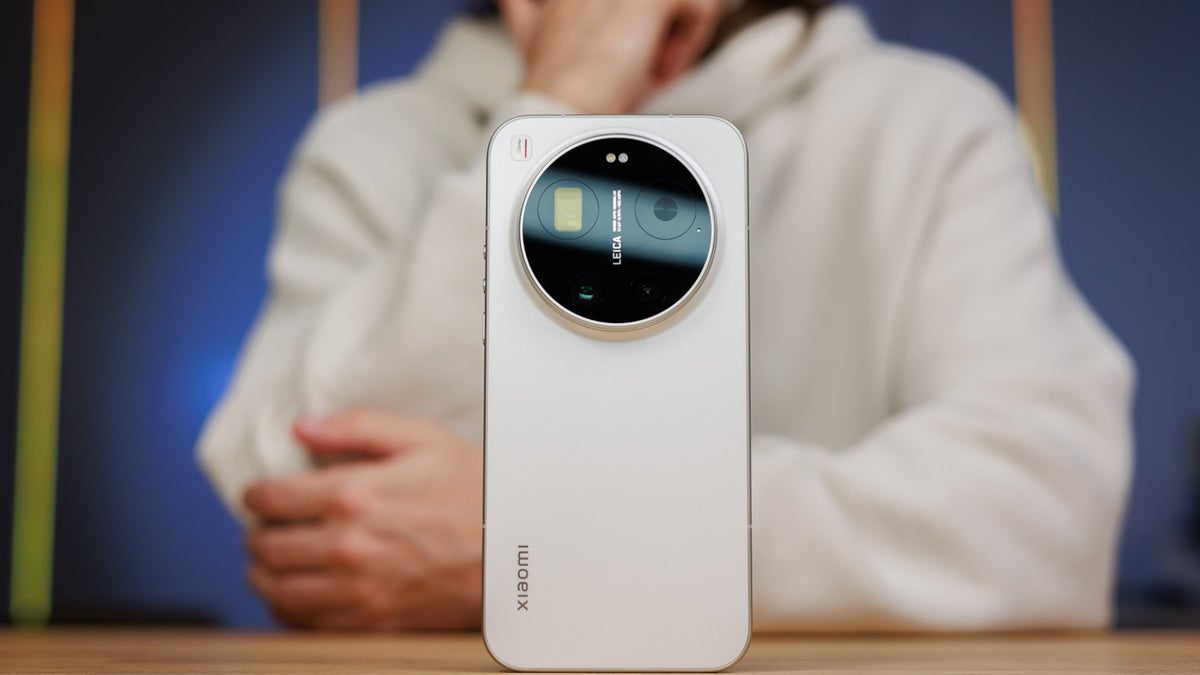
Phone manufacturers reportedly considering pausing high-end Ultra models
News
Majority Bowfell Halo Review
Gadget
hifox: Deterministic Firefox Hardening as an Enforcement Workflow | HackerNoon
Computing
Tiger Teams, Evals and Agents: The New AI Engineering Playbook
News

You Might also Like

Phone manufacturers reportedly considering pausing high-end Ultra models
News

Phone manufacturers reportedly considering pausing high-end Ultra models

3 Min Read
Tiger Teams, Evals and Agents: The New AI Engineering Playbook
News

Tiger Teams, Evals and Agents: The New AI Engineering Playbook

32 Min Read
'I'm Alarmed': Senator Opens Inquiry Into the Ways Tech Companies Report Suspected Child Abuse
News

'I'm Alarmed': Senator Opens Inquiry Into the Ways Tech Companies Report Suspected Child Abuse

5 Min Read
Little Snitch’s software counter surveillance jumps from Mac to Linux
News

Little Snitch’s software counter surveillance jumps from Mac to Linux

2 Min Read
//

World of Software is your one-stop website for the latest tech news and updates, follow us now to get the news that matters to you.

Quick Link

  • Privacy Policy
  • Terms of use
  • Advertise
  • Contact

Topics

  • Computing
  • Software
  • Press Release
  • Trending

Sign Up for Our Newsletter

Subscribe to our newsletter to get our newest articles instantly!

World of SoftwareWorld of Software
Follow US
Copyright © All Rights Reserved. World of Software.
Welcome Back!

Sign in to your account

Lost your password?