Large technology companies are losing capitalization by leaps and bounds due to doubts that huge investments in AI will generate enough profits to support valuations that most analysts define as overvalued. The analysis of the drop in value of Big Tech stands at 1.3 trillion of dollars since 2026 began and it is feared that the negative trend has only just begun.
This change in trend indicates a broad shift in investor perception, who are now more interested in short-term financial transparency than in the long-term goals of AI. Something that, by the way, has yet to be proven. The perception of the usefulness of AI from the big companies in the sector that talk about “changing the world” to what ordinary companies think is astronomical. Let’s not talk about consumers who do not see that “real utility” that the CEO of Microsoft spoke about at the recent Davos Forum and its consequences, such as the very serious memory crisis that threatens the entire technological field.
The liquidation has reduced the market value of the AI majors in billions. Microsoft has been the most affected, with losses of 613,000 million dollars at the stock market close last Friday and with dark days in January with the second largest daily drop in its history (12%) and the first by value (440,000 million dollars).
Amazon has fallen around 13.85% so far this year, representing a loss of approximately $343 billion in market value. Alphabet has lost 87.96 billion, while Apple has lost 256.44 billion dollars so far this year. Even NVIDIAthe company that has taken the most advantage of the AI revolution due to massive sales of accelerators, has decreased its capitalization by $90 billion.
Investments in AI, doubts continue
Although forecasts for 2026 say that global IT spending will increase 10.8% to $6.15 trillion, with prominence for investment in AI that will increase by 80.8%markets are questioning the timeline for ROI on AI investments. This disconnect creates strategic tension for CTOs who must balance aggressive investment in AI with financial market expectations. Likewise, technology leaders have to justify the investment to boards of directors if stocks continue to fall.
And investors are increasingly showing skeptical about artificial intelligence strategy of big technology as a greater number of analysts continue to warn of the AI bubble. Not because of the revolution that these technologies may bring in the future, but because of the excessive acceleration of their control that many describe as unsustainable.
Capital expenditures have skyrocketedespecially in infrastructure acquisition. And it can be a problem. The fact that supplies could be delayed by the memory crisis and that data center hardware is rapidly depreciating has investors worried that they will not see a significant return on silicon before the infrastructure needs to be upgraded or replaced.
The share sale reflects a profound change in investor perception. Instead of rewarding long-term AI objectives, they seek immediate financial transparency and this is nowhere to be seen. This represents a substantial change from months of speculative exuberance that propelled Big Tech to all-time highs.
How to generate performance and what term
Concern now centers on whether massive capital spending on AI infrastructure will generate sufficient returns to justify current stock prices. And investment in AI has only just begun. On the table are gigantic projects such as OpenAI’s Stargate valued at $500 billion. The star AI firm has become a money-burning machine on an industrial scale and drags down other large companies such as NVIDIA, Amazon and Microsoft.
Nobody wants to be left out of the battle and this requires increasingly greater investments. Amazon announced earlier this month that it expected its capital expenditure to increase more than 50% this year. This announcement fueled investors’ fears about rising prices in the IT sector. Amazon’s spending plans reflect the fierce rivalry in AI development, but investors are concerned about when these spending will pay off. And not everyone is going to win. Competition is fierce and can reduce the engine of growth and profits.
Who gains from AI investments
Hardware manufacturers for next-generation data center infrastructure have led the generation of value in recent months. And it is logical, since they have multi-million dollar orders committed for all of 2026 and beyond. Taiwan Semiconductor Manufacturing Co (TSMC), the largest foundry in the world, has added almost $300 billion in capitalization so far this year, for a valuation of $1.58 trillion.
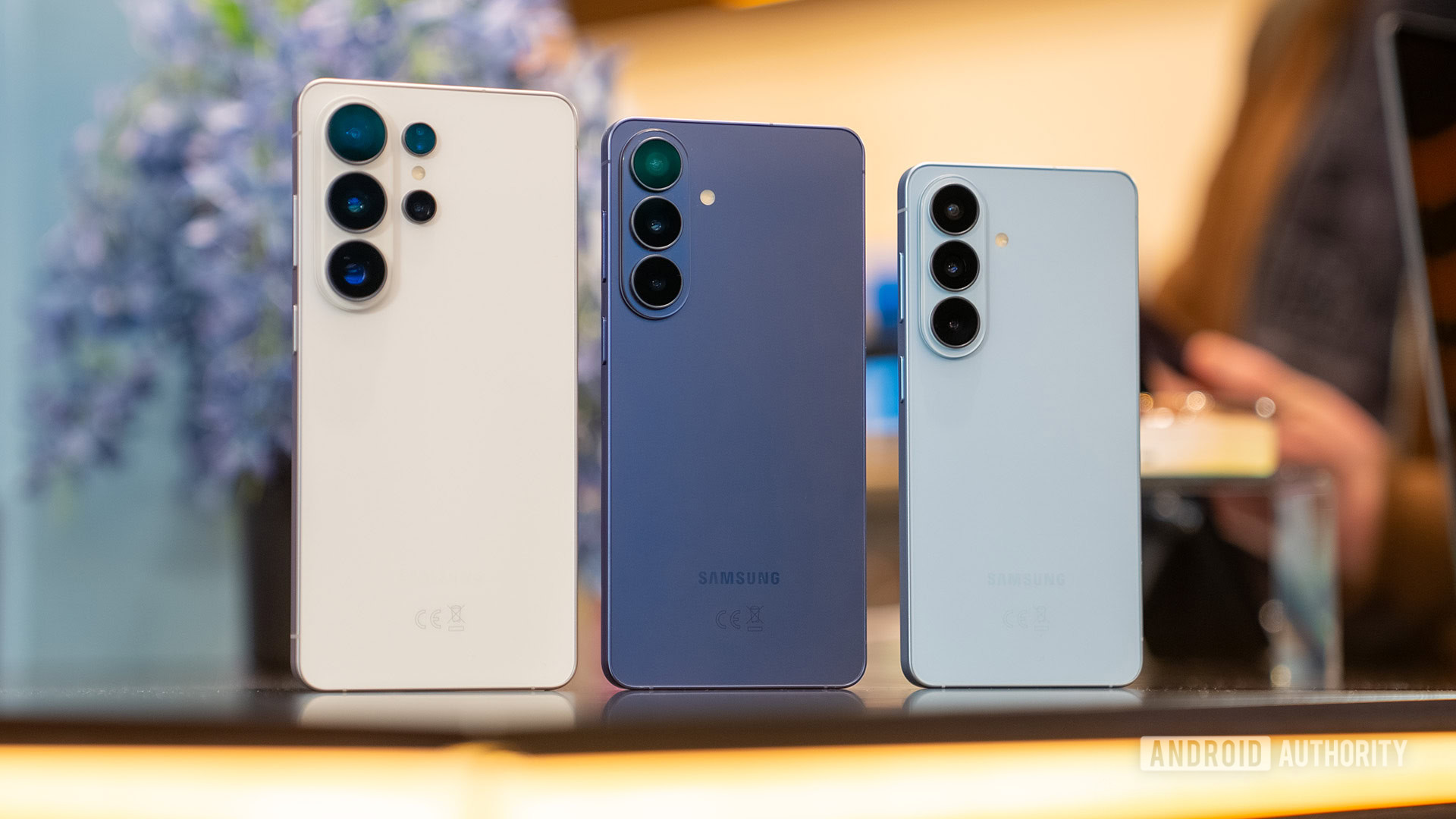
Samsung Electronicsleader in sales of solid state drives for the client and one of the most important in the rest of the memories, is another of the winners, adding 272.88 billion dollars in market capitalization. As to NVIDIAdespite the falls of recent months, has capitalized on the AI era like no other to become the most valuable company in the world. Even Walmart has added 179 billion in market value to overcome the trillion barrier. These gains contrast sharply with Big Tech’s losses, suggesting investors are rotating to different sectors and geographies.