


Tens of thousands of Americans are diagnosed with pancreatic cancer each year, and unfortunately it is a cancer that can be hard to detect in its early stages. Given that the pancreas is deep within the body, it can be difficult for doctors to easily tell if there is a tumor. The symptoms of pancreatic cancer also can be very minor so it’s not obvious something is wrong. Symptoms such as weight loss, nausea, and not having a big appetite are frequent. Now, though, a new study in China is looking to improve pancreatic cancer detection through use of artificial intelligence, similar to the AI breakthrough that can detect endometrial cancer.
Researchers have developed a new system called pancreatic cancer detection with artificial intelligence (PANDA) that can identify pancreatic lesions using standard CT scans. In testing, the AI outperformed the average radiologist, identifying cancer with higher sensitivity and very strong accuracy. The researchers believe PANDA could eventually help doctors screen large populations for pancreatic cancer more quickly and efficiently.
The study was published in the Nature Medicine journal under the title “Large-scale pancreatic cancer detection via non-contrast CT and deep learning”. It brought together a team of professionals from such organizations as the Shanghai Institution of Pancreatic Disease, Hupan Laboratory, Johns Hopkins University, and more to improve pancreatic cancer detection.
The AI research done in this study

The first PANDA model was tested on abdominal CT scans and compared to the work of 48 radiologists interpreting those scans. Then, PANDA tackled a larger dataset of more than 5,300 patients from multiple medical centers to confirm it works reliably in different clinical settings. PANDA then was expanded to chest CT scans to see how it performed. The system was integrated into routine clinical scenarios across emergency, outpatient, inpatient, and physical exam settings, analyzing scans from more than 20,000 consecutive patients to assess how it might support large-scale screening and help detect pancreatic cancer earlier.
The PANDA system works through three increasingly complex AI stages designed to identify and analyze pancreatic abnormalities on CT scans. The first stage locates the pancreas within the scan, while the second stage searches for potential lesions. If a suspicious area is found, the third stage performs a more detailed analysis to determine the specific type of pancreatic lesion. Researchers evaluated PANDA’s performance in how well it detected a lesion, the specific medical case surrounding the lesion, and the classification of the lesion. PANDA was able to detect 26 pancreatic lesions that were not detected by humans, proving its accuracy and reliability within clinical settings, not unlike how AI is being used to detect autism in children.
What this means for the future of pancreatic cancer detection
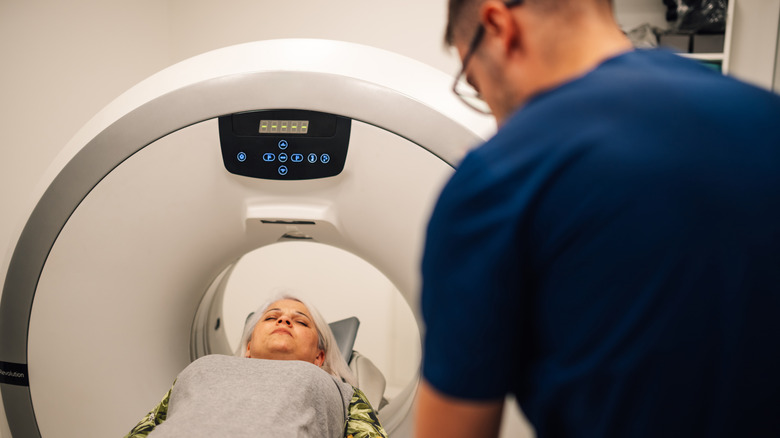
The research team is hopeful that PANDA will revolutionize cancer screening not just for pancreatic cancer, but for other cancer types that can be difficult to detect as well. PANDA detected lesions with about 92.9% sensitivity and an exceptionally high specificity of 99.9%. The study points out the importance of detecting cancer as early as possible, and this technology can resolve problems with missing the signs of cancer on tests. PANDA also takes advantage of standard CT scans, as opposed to CT scans that have injected contrast dye. This means there could be less need for the more invasive and more costly contrast CT scans.
Breakthroughs like PANDA have the potential to improve medicine for both practitioners and patients, like the drug therapy that could reverse diabetes. The exact cause of pancreatic cancer is not fully understood. Genetics play a factor, as does being older. For those concerned about getting pancreatic cancer, some contributing risk factors to try to avoid include smoking, eating lots of red meat and processed meat, being obese, and heavy drinking of alcohol.


