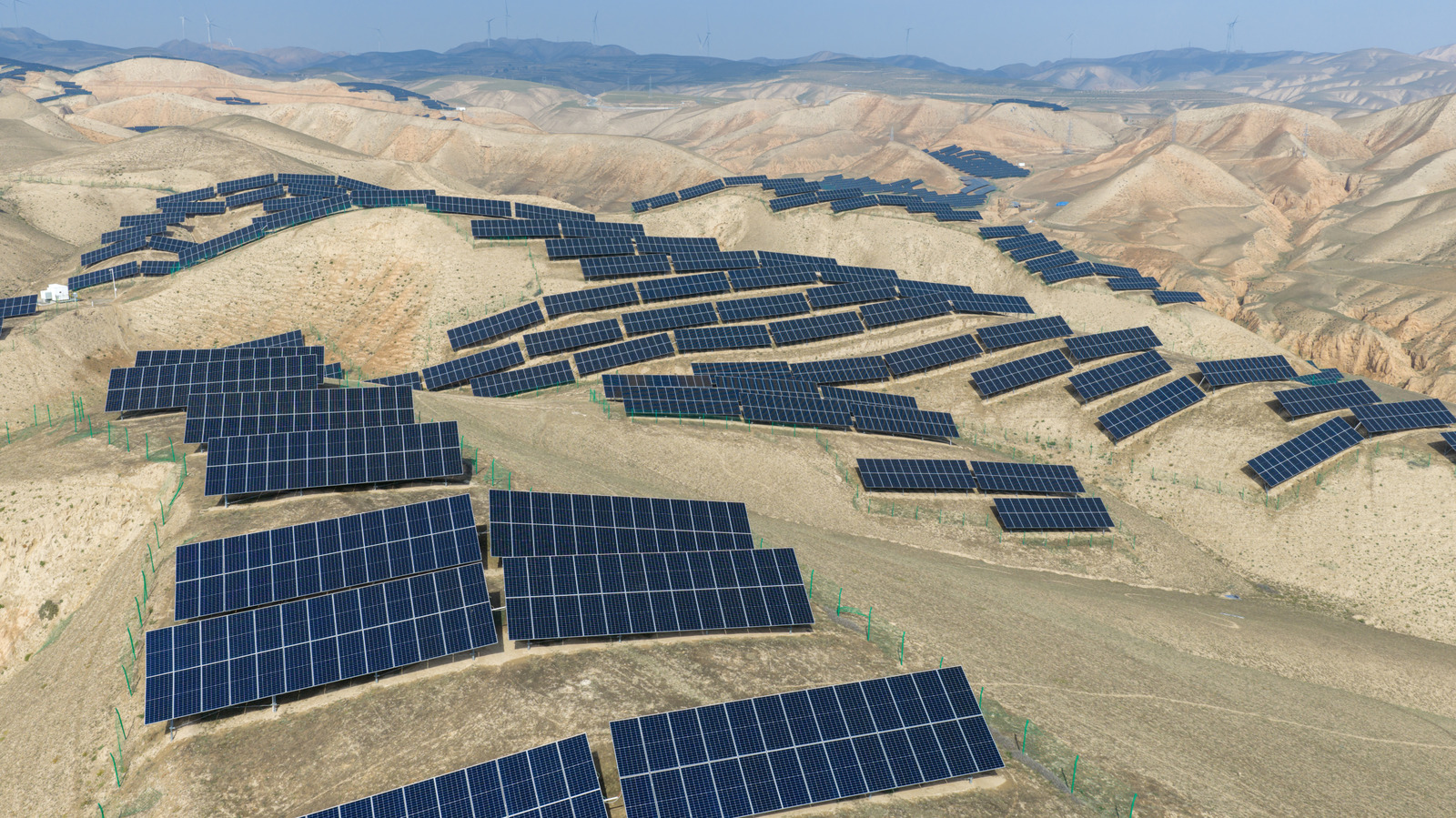
While solar panels have existed since 1883, we have barely scratched the surface of their potential. Sure, you can install solar panels on your house to save money on electricity (after about a decade) and replace household gadgets with solar-powered alternatives, but did you know that solar panels are turning a desert in China green? Well, it’s not so much the solar panels themselves but their presence.
In 2024, the journal Nature published a study on the effects the Gonghe Photovoltaic Park in Qinghai, China (the largest solar farm in the country) was having on the local desert. According to the paper, the installation had a “positive effect on desert area ecology and the environment.” How, you ask? Since the solar panels suck up so much solar radiation, the soil underneath retains more moisture due to a lack of evaporation. Add a steady supply of water runoff due to monthly solar panel cleanings, and you have the perfect scenario to promote the growth of plants and microbes in a desert.
According to the study, the ecological changes are somewhat self-sustaining … so long as the solar farms are maintained. Solar energy farms provide cheap, clean energy while also solving economic problems, such as unemployment rates (local residents can be hired to maintain the solar farms). And the micro-oases the solar panels create provide grazing land for nearby animals while also promoting ecological regulation. The more these solar farms are used, the more benefits they provide, and the more benefits they provide, the more money will be set aside for the maintenance and development of solar farms going forward. It’s a positive feedback loop on multiple fronts.
Qinghai’s deserts aren’t the only ones going green

A key factor of the scientific process is repetition. Can another team of scientists repeat a study and receive similar results? If so, the hypothesis has merit. While the Gonghe Photovoltaic Park is greenifying its desert, researchers need to demonstrate that it isn’t a one-off fluke. Enter the Kubuqi Desert.
While the Kubuqi Desert isn’t China’s largest desert, thirty years ago, the land’s main export was sandstorms. Today, the Junma Solar Power Station, which is located in the desert, generates tons of electricity, and the solar panels encourage plant growth by, among other things, reducing ground speed winds. You can now find plenty of shrubs and bushes throughout the Kubuqi Desert, as well as the occasional fox or hare darting between them. And like the Gonghe Photovoltaic Park, the benefits stretch beyond just clean energy. The Junma Solar Power Station also provides grazing areas for cattle, supports crops such as watermelons and jujube (Chinese dates), and encourages tourism.
A similar experiment is taking place in California. Project Nexus is a study designed to examine the effects of solar panels and the shade they provide over the Hickman Canal, which is located east of San Francisco. The theory is that the installation could help save 63 billion gallons of water by preventing evaporation. While not necessarily as life changing as encouraging plant growth in a desert, Project Nexus works on the same principle. Regardless, large solar farms (in addition to studies that utilize cyanobacteria) could be the key to preventing future desertification.