Looking back on 2025, I would rather focus on a group of Chinese companies I have followed for years and genuinely believe in. They may not sit at the centre of the hottest trends, but each has strengthened its position within its own field through technology, product and long-term investment.
Spanning sectors from drones, robotics, GPUs and new energy to designer toys and domestically developed games, these seven companies differ widely in focus yet together represent, in my view, the Chinese companies most worth watching beyond 2025.
DJI: one of the few Chinese tech companies operating at the very top globally
By 2025, DJI doesn’t really have much left to prove. Globally, whether in consumer or enterprise drones, it’s still the company everyone else has to measure themselves against — especially when it comes to imaging and automation. And DJI is no longer just a hardware company. Over the years, it has built a tightly integrated system that brings together flight control, computer vision, algorithms, and supply chain management — a depth of engineering capability that’s becoming harder to find.
This year, DJI also started taking its camera business much more seriously, which is worth paying attention to. The Osmo 360, launched in July, quickly took 43% of the global panoramic camera market in its first quarter, leaving competitors little room to react.
By bringing the imaging know-how it developed for drones into handheld devices — moving from shooting in the air to shooting by hand — DJI is increasingly shaping itself as an imaging platform company, rather than a brand built around a few standout products.

Unitree: not a gimmick — humanoid robots are actually becoming usable
There have been endless stories about robots over the past couple of years, but Unitree is one of the few companies that has stayed focused on doing the hard, unglamorous work. By 2025, it has largely shaken off the label of a robot dog hype company.
Step by step, it has been grinding through the fundamentals — motors, control algorithms, cost control — and whether it’s quadrupeds or humanoids, its products are finally moving toward something that can be sold, delivered, and genuinely used.
Its in-house M107 joint motor, combined with the G1 humanoid robot starting at RMB 99,000 ($14,000), marks a real shift. For the first time, humanoid robots are being pulled out of PPT decks and exhibition halls and into a more realistic price range. Widespread adoption is still a long way off, but at least the direction is now clear — and it’s the right one.

Pop Mart: long past just selling blind boxes
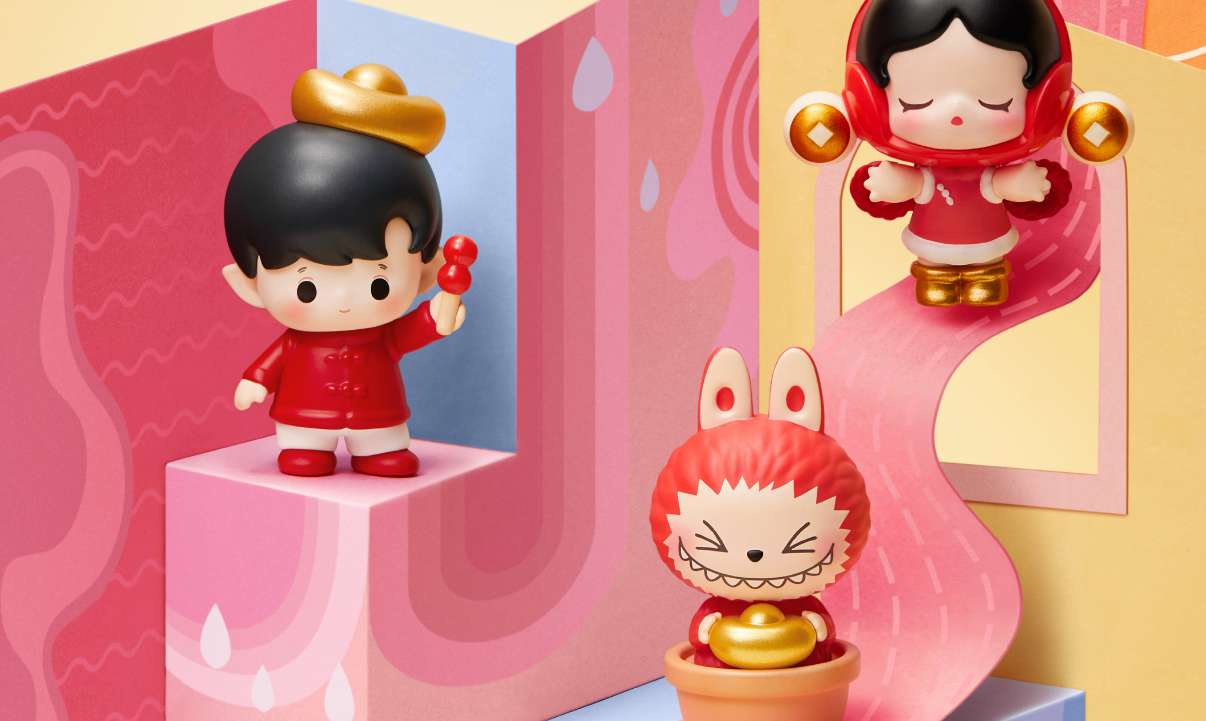
By 2025, still thinking of Pop Mart as simply a blind box company feels a bit outdated. Today, it looks much more like a long-term IP business — one focused on understanding shifts in young consumers’ emotions and patiently building characters over time.
Through overseas expansion, localized IP strategies, and a steady stream of new series, collaborations, and scenario-based experiences, Pop Mart has extended the life cycle of its IPs, turning them from collectible toys into longer-lasting cultural symbols.
Pop Mart now owns a portfolio of popular IPs. Some of the best known include Labubu, Molly, Dimoo, PUCKY, Skullpanda, and the Little Twin Stars (Kiki & Lala) collaboration. Each has a distinct personality and visual style, which ranges from cute and whimsical to more fashion-forward designs and reflects the diverse tastes of younger consumers.

Moore Threads: on the hardest track, staying upright comes first
Everyone knows how difficult the GPU road is. Moore Threads is still under heavy pressure in 2025, but it remains a company worth watching over the long term. From day one, it chose the toughest path: building a full-function GPU. Rather than focusing on a single niche, it has steadily worked to fill in the full stack — graphics, AI computing, and the software ecosystem.
GPUs are never a one- or two-year story; they are an endurance race. Whether Moore Threads can pull ahead is still uncertain, but simply surviving and continuing to move forward is no small feat.
When geopolitics enter the picture, with certain chips and technologies subject to sanctions and export controls, pressure on resources and supply chains only intensifies. This makes Moore Threads’ long-term persistence both more challenging and more worth paying attention to.

BYD: turning new energy into a true industrial system
BYD has always felt steady to me. By 2025, it no longer resembles a young upstart but rather a well-run industrial machine. From batteries to complete vehicles and large-scale manufacturing, BYD has turned new energy from an idea into a system that can be replicated and scaled.
As global competition grows increasingly intense, BYD continues to hold its ground. That resilience comes not from luck, but from scale, cost control, and years of accumulated experience. It may not stir much excitement, but it is very hard to ignore.

CATL: still the steadiest player in batteries
No matter how fierce the industry’s price wars become, CATL remains the most steady presence. By 2025, its edge in power batteries goes well beyond technology leadership, extending into mass production, its customer base, and overall system capabilities.
More importantly, CATL is no longer content with simply selling batteries. It is pushing further upstream into energy storage, power grids, and broader energy systems. That shift suggests its long-term ceiling may be higher than many expect.

Phantom Blade Zero: a chance for Chinese single-player games to take another step forward
Phantom Blade Zero was never meant to be a safe bet. The mix of wuxia and steampunk is a risky combination in itself, but that risk is also what gives the game a strong and immediate identity. With visuals built on Unreal Engine 5, more hardcore combat, and a darker artistic tone, it stands out more easily among a crowded field of action games.
The game is confirmed to launch on PS5 and PC on September 9, 2026. If it can stay consistent in its combat feel, level pacing, and narrative polish, it has a real chance to become another Chinese single-player title seriously discussed by global players, following Black Myth: Wukong.