Gluttonous artificial intelligence and its demanding data centers are reformulating decarbonization plans. When the world had embarked on a journey towards renewables, with countries like China and Europeans betting heavily, and even some US states jumping on the train, data centers arrived with needs that were almost impossible to satisfy.
At the end of December 2024 we already said that data center consumption had skyrocketed, pushing large technology companies to bet both on renewables and, above all, on immediate access energy such as gas and even coal. Some were even targeting nuclear power to be able to operate.
Shortly after, in January 2025, a Reuters report noted that European energy companies, which had embarked on a path of commitment to renewables, were redoubling their commitment to oil and gas. Giants like BP and Shell slowed down their investments in clean energy to return to fossil fuel projects. But it’s not all about where data centers extract energy from, but rather who provides them infrastructure.
And that, and not so much oil or gas, may be the next energy mine.
The new oil mine
An article in the Financial Times points out that the fleeting growth of data centers is generating a market that energy companies do not want to miss. As demand for traditional drilling weakens (although it is something that goes by “neighborhoods”), energy sector groups such as Baker Hughes, Halliburton or SLB are taking advantage of the opportunity to pivot to the data center sector.

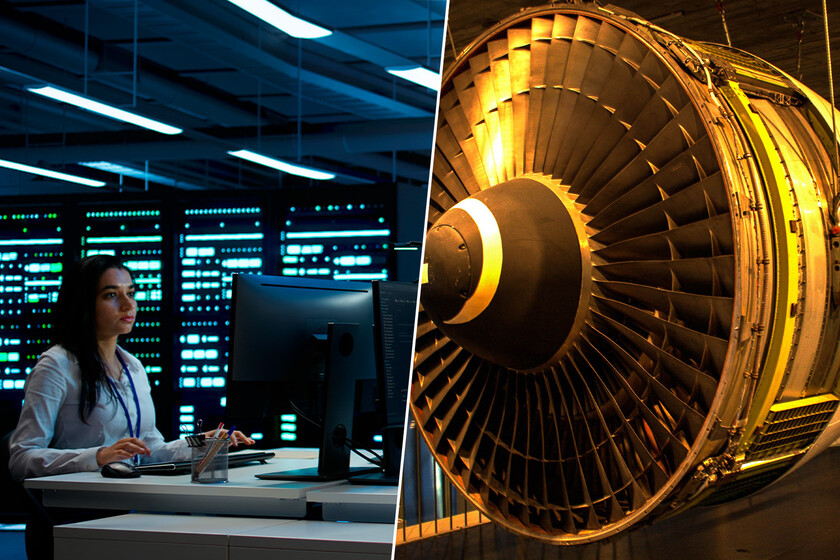
Not building them, not just supplying energy: supporting logistics. Taking advantage of their knowledge of the energy sector, these large companies would be providing equipment such as turbines and power generation systems to those who own data centers, but they also provide generators, batteries, dissipation systems and all the necessary framework to maintain correct energy efficiency.
They would also oversee the team. It is, in short, what they already know how to do, but applied to a new sector such as data centers.
Because these three examples are not typical oil companies, but technology providers for other companies to extract gas or oil. All three provide services to companies with oil fields, but they also supply technology such as gas turbines, compressors or LNG systems and were within sectors such as new energy, with carbon capture and storage systems.
All of this resonates with the idea that ‘Big Tech’ had when they began to build huge data centers, until they saw that increasingly demanding equipment needed more immediate and stable sources of energy.
Data centers = El Dorado
It is estimated that US electricity demand will increase by 90 GW -a real nonsense- from now to 2030 only to power the data centers. Traditional electrical networks may not support this load, and it is at that point that these companies that provide energy services appear to be a key entity.
Pivoting toward artificial intelligence infrastructure is “key to the evolution of oil and gas,” said Lorenzo Simonelli, CEO of Baker Hughes. And it makes sense when we see that the number of US oil rigs contracted 7% year-on-year in 2025, margins have contracted and demand for drilling services is in question.

On a business level, it is a masterstroke. Speaking hypothetically, when the new oil crisis arrives and the fall of the market for both crude oil and gas, companies that have pivoted to data centers, going from being service providers for energy companies to being one for ‘Big Tech’, will not have to take a turn in their strategy because they will already be where the money will be.
Because that’s another question: whether the new MW gold for AI will be a lasting business or a passing fever.
Image | Freepik and Harpagornis
In WorldOfSoftware | The problem with renewables is what to do when there is excess energy. China believes it has the answer with a unique turbine