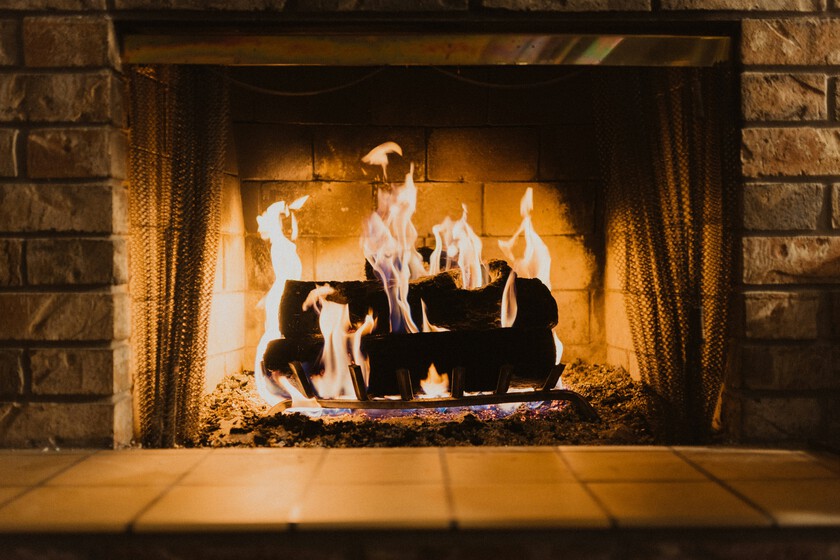
Christmas is many details: the endless advertisements, the lottery that does not play, the mantecados and the nougats, the posadas, the tíos, the red flowers or the festivals of lights. But one of the most characteristic, at least for me, is the smell of burning wood.
I don’t know if it’s because of the hypnotic effect of the fire, the heat they generate or the aroma of burning wood, but a good fire makes a home. So much so that it has become part of the archetypal image we have of him. There is only one small problem: kills us slowly.
On this point, Sam Harris is right. For some reason, people think that breathing winter air scented with burning wood is something radically different from lighting a cigarette or smelling car smoke. I don’t know, it’s like it has an aura of a “natural thing” that purifies it and makes it harmless.
But no, nothing like that. If something is repeated over and over again in the scientific literature, it is the certainty that there is no amount segura of wood smoke to breathe. And this smoke has hundreds of carcinogenic, mutagenic, teratogenic or simply toxic compounds.
The UN calculations
It’s not just hysteria: children who live in homes with fireplaces are more likely to develop asthma, coughs, bronchitis, sleep problems and breathing disorders. What’s more, inhaling wood smoke (no matter how little) affects the lung immune system, increasing the likelihood of colds, flu and other respiratory infections. Come on, it’s bad for your health.
As Harris pointed out, in 2000, the UN estimated that the use of fossil fuels in the home caused almost two million deaths premature. Almost double the number of deaths from traffic accidents. And yet, we do not take it for granted. Although it is true that most of these deaths occur in countries where cooking is still done with wood or charcoal, the truth is that there is no compelling reason to continue burning wood on a regular basis.
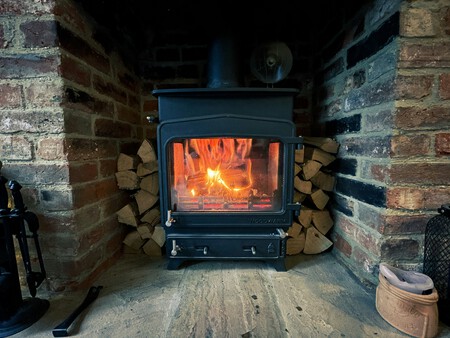
(Matt Seymour/Unsplash)
It is not that the problem of fireplaces is equivalent to that of cigarettes, it is that in some ways it is worse: the “passive smokers” are no longer those next to us, but the entire neighborhood.
This is, without a doubt, a curious phenomenon: the idealization of a heating system that is severely harmful to health. Something that, furthermore, as Harris points out, is difficult to accept, that they are so normalized that we are not able to assume it without great efforts. Isn’t it time to retire chimneys once and for all?
In WorldOfSoftware | In its conquest of Christmas, Tartar has introduced a new tradition in Spain: the “Australian New Year’s Eve”
In WorldOfSoftware | One more Christmas, it’s time to talk about ‘The Holiday’ for what it is: one of the most influential films of the 21st century
Image | Hayden Scott