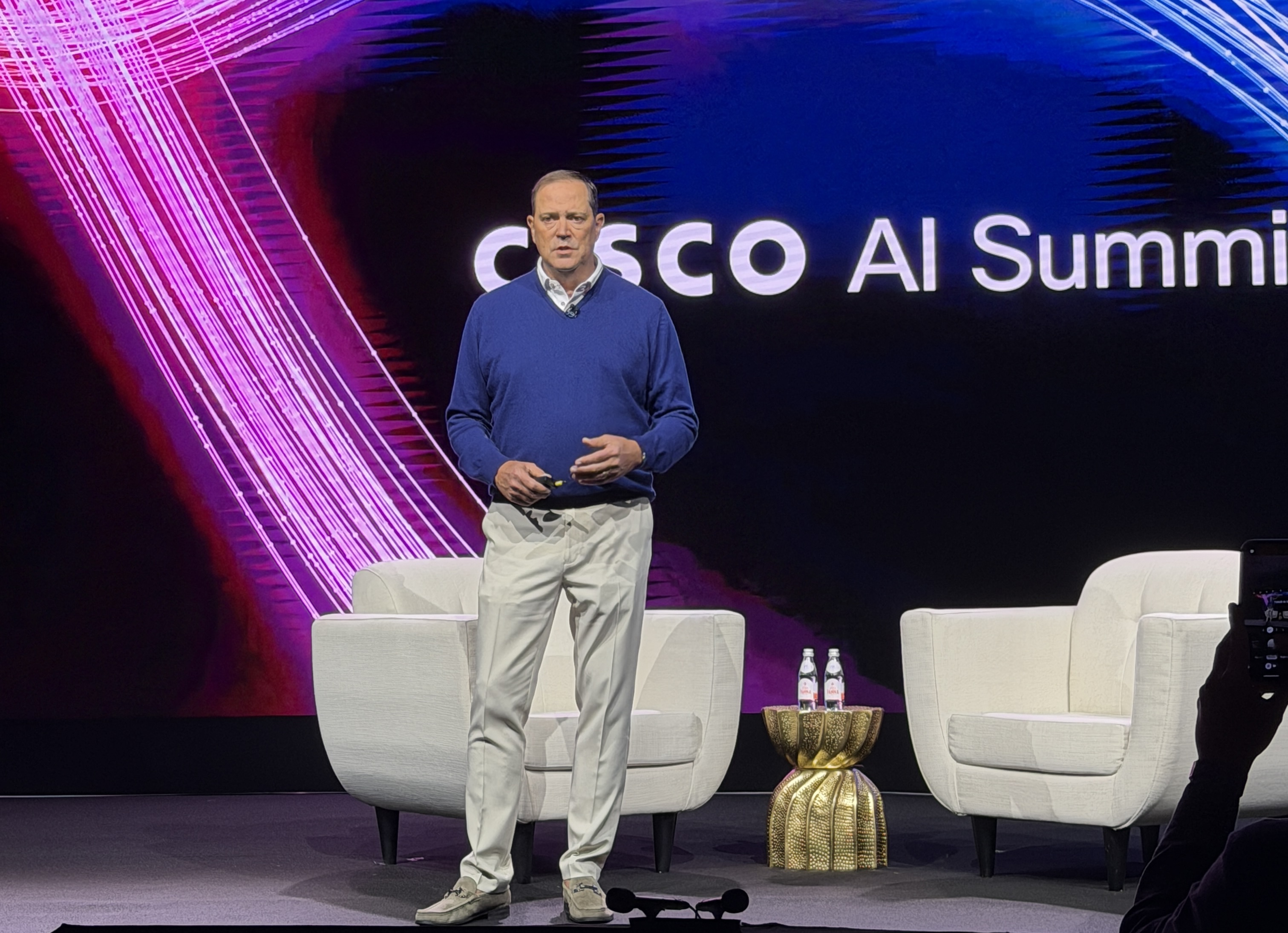
Cisco Systems Inc. held its second annual AI Summit this week, with a star-studded lineup of artificial intelligence celebrities. Unlike most vendor events, the Cisco AI Summit was designed to be a “meeting of the minds,” bringing together the “builders of the AI economy” to help the industry move past the hype and address the practical realities of a world being reshaped by AI. From the shift toward agentic workflows to the demographic necessity of automation, here are five key thoughts that defined the summit:
1. 2026: The year agentic AI goes into production
Though 2025 was defined by widespread experimentation, the consensus among summit leaders is that 2026 marks the official turning point for agentic AI — autonomous systems capable of reasoning, planning and executing complex tasks.
Leading off, Cisco Chief Executive Chuck Robbins (pictured) noted, “For all the enterprise customers who are here this week, we all believe 2026 is going to be a turning point for AI — this will be the year of agentic applications.” OpenAI Group PBC CEO Sam Altman echoed this sentiment in his session with Cisco President and Chief Product Officer Jeetu Patel, describing the current convergence of model capability and interface as another “ChatGPT moment.”
Altman observed that “this is the first time I felt another ChatGPT moment — a clear glimpse into the future of knowledge work.” The movement from “chatbots to agents” changes the fundamental architecture of work. As Patel explained, we are moving from intelligent assistants to systems that can proactively remediate infrastructure issues or even build full pieces of software with minimal human intervention.
Though use cases aren’t easy to find, they are out there. Last week at RingCentral’s Revenue Kick Off, I met with Liesel Perez, co-founder of Axis Integrated Mental Health, and she explained how her therapists run agentic agents in the background to capture notes and update systems for insurance purposes. This allows clinicians to pay better attention to patients and let agentic AI do the heavy lifting, which is an excellent example of the value the technology can bring. It’s a simple use case but one that can have a big impact on productivity and patient care.
2. Solving the trust deficit and the security prerequisite
A recurring theme throughout the summit was the significant trust deficit currently hindering AI adoption. I recently attended the World Economic Forum in Davos, and while AI was the key theme there, this concept of AI trust was pervasive in every session I attended and every attendee I talked to.
In previous technology shifts, security was often treated as an optional trade-off for productivity. In the AI era, security has become a non-negotiable prerequisite.
“If people don’t trust these systems, they’ll never use them,” Patel stated bluntly. This trust must extend across every layer of the stack: the data, the models, the infrastructure and the agents themselves. Cisco’s response has been the launch of AI Defense, a platform designed not just to use AI for cyber defense, but to secure AI itself against misuse and data leakage.
However, trust goes far beyond the technology, and this was the main theme of the panel with Robbins and Anne Neuberger, strategic advisor to Cisco, and Brett McGurk, special advisor for international affairs for Cisco. Neuberger emphasized that AI is the only way to counter modern cyberthreats effectively. Because software-defined networks are constantly changing, identifying “normal” vs. “anomalous” behavior requires AI’s speed to assist human defenders who can no longer keep up manually.
Both experts noted a significant disconnect in Washington D.C. Policymakers often regulate tools they do not use daily given security restrictions in high-level government offices. McGurk warned that imprecise regulation could allow competitors such as China to leapfrog the U.S.
AWS CEO Matt Garman (Photo: Cisco/livestream)
Amazon Web Services Inc. CEO Matt Garman (pictured adjacent) provided an easy-to-understand analogy that highlighted the importance of trust. He explained that if one tries to cross a canyon on a board, one will crawl across the board. “Put up handrails as guardrails and we run.” Trust gives us confidence and that leads to utilization which, in turn, creates the rising tide that benefits everyone.
As has been noted by so many people, AI is a team game, and I thought this quote from Robbins was a call to the entire industry: “None of us can do it alone, therefore trust is really imperative.” This is true, as it will let us run, not crawl, toward AI.
3. The demographic imperative: AI as a necessity
Perhaps the most interesting macroeconomic take came from Microsoft Corp. Chief Technology Officer Kevin Scott, who argued that AI is no longer a luxury, but a “biological necessity” for global society. Pointing to the peak high school graduation in countries such as Japan, Scott highlighted a looming labor crisis caused by aging populations and declining birth rates.
“Demographic data is clear that Japan is in population decline — China, Korea as well,” Scott noted. He believes AI is the only technological intervention capable of maintaining our quality of life as the labor pool shrinks. This shifts the narrative from AI “taking jobs” to AI “filling gaps” that human demographics can no longer sustain.
This aligns with the Silver Tsunami economic theory. For example, in rural America (where Scott’s own mother lives), the brain drain and aging demographics create “zero-sum” environments where one person’s gain is another’s loss. Scott views AI as the tool to turn these back into “non-zero-sum” problems by increasing individual productivity to a level that compensates for the missing workforce.
Scott’s session was a great thought exercise but did provide two contrasting futures:
- The optimistic case: Humans use AI to solve “super important problems with urgency” — curing diseases, managing the energy transition and supporting an aging society.
- The pessimistic vase: We fall into a “superficial mode,” using massive compute resources for distraction. He humorously notes his own kids use AI for biomedical engineering half the time, and the other half to create “pictures of green llamas with big butts.”
Which becomes true? The internet has shown we can do both, but solving problems and transforming the way we work, live, learn and play led the way, with the fun stuff coming much later.
4. Re-engineering work for ‘abundance’
Nvidia Corp. CEO Jensen Huang (pictured adjacent)has assumed the role of the Nostradamus of AI. In his panel, he challenged leaders to adopt an abundance mindset. He argued that AI reduces the cost of intelligence by such an order of magnitude that we must stop thinking about how to save time on small tasks and start thinking about solving impossible problems.
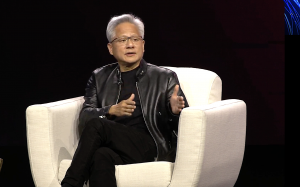
Nvidia CEO Jensen Huang (Photo: Cisco/livestream)
“The definition of abundance is you look at a problem so big, you say, you know what, I’ll do it all,” Huang explained. He encouraged leaders to “let 1,000 flowers bloom” through experimentation rather than demanding immediate, line-item ROI spreadsheets. For Huang, the real risk is not being the first to adopt AI but being the last. “You’re not going to lose your job to AI,” he said. “You’re going to lose your job to someone who uses AI.”
This concept of augmenting labor instead of replacing is a bit like Schoedinger’s Cat in that it’s true and not true at the same time. One stat provided by WEF in Davos was that AI would indeed displace 92 million jobs but also create 170 million new ones. If one uses the internet as analogy, the same thing happened – we don’t buy airline tickets from a booth downtown but rather purchase it off a website. However, the internet democratized access to flying and now the airline industry employs more people than ever.
Though Huang is correct in that work needs to be re-engineered, it’s important for business leaders to reskill current employees so they can be part of the 170 million new jobs instead of being on the outside looking in.
5. Bridging the data gap with synthetic and physical data
The summit highlighted a looming bottleneck: We are running out of high-quality, human-generated data on the public internet. To continue the exponential curve of model improvement, the industry is pivoting toward synthetic data and machine-generated data.
World Labs Inc. CEO Dr. Fei-Fei Li (pictured adjacent) pointed toward the next frontier: spatial intelligence. Whereas language models have been trained on clean text, the physical world of pixels and voxels is far messier. Li believes that for AI to reach true general intelligence or AGI, it must develop world models that understand 3D space, causality and gravity. “The ability to understand… the real 3D, 4D physical world is the foundation,” Li explained. This physical AI will unlock the next wave of value in robotics, healthcare and urban planning.
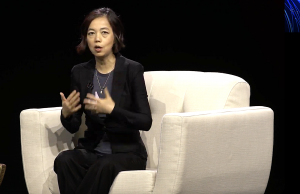
World Labs CEO Fei-Fei Li (Photo: Cisco/livestream)
Li’s session raised some good points for information technology leaders as to why they need to look at AI as being more than chatbots. The first is that language is a relatively new intelligence, only about 500,000 years old, whereas perception, seeing and touching, has been evolving for more than 1.5 billion years. AGI requires mastering words and perception, and that’s the challenge World Labs is taking on.
Also, the path to generalized robots, or physical AI, is much harder than self-driving cars. A car just has to avoid touching things; a robot has to manipulate them without breaking them. The scarcity of 3D data is real, but the emergence of high-fidelity synthetic data is creating a flywheel that will accelerate physical AI faster than we think.
If a company’s AI strategy is 100% focused on text and data, it’s missing the 3D world where many businesses live. From the warehouse floor to the surgical suite, spatial intelligence is the horizontal layer that will define the next decade.
Comment on leadership: It’s the multiplier
One of the last but most important sessions at the Summit was from Cisco Chief People, Policy and Purpose Officer Francine Katsoudas. She and I have had several conversations, most recently in Davos, on how AI success is driven as much or more by leadership than by tech. She provided some interesting data that AI adoption is not a bottom-up grassroots movement, nor is it a top-down mandate delivered via email; it is a direct reflection of active leadership. Her research at Cisco indicates that the “lions” of the modern era (an analogy to ancient maps that used the phrase to highlight unexplored or dangerous territories) — ambiguity, ethical uncertainty and the gap between evolving work and static skills — can be tamed only through a transformation in leadership behavior.
Katsoudas challenged the common C-suite narrative that blames the workforce for slow transitions or skill gaps. Instead, she presented the leader as the primary engine of momentum. According to Cisco’s internal data:
- Adoption is personal: AI adoption does not follow a “corporate email surprise;” it follows the visible behavior of the leader.
- The 2x effect: When a leader actively integrates AI into their own workflow, the adoption rate of their team doesn’t just grow — it doubles.
- The new talent profile: Leaders must pivot from valuing only stability and past performance toward seeking curiosity, agency and tech enthusiasm across the entire enterprise, including finance, legal and people departments.
Katsoudas concluded with a call for leaders to move away from fear-based narratives and toward a stance of radical confidence in their people: “The future does not belong to those that wait for the map to be finished,” she said. “It belongs to those who fearlessly walk with the lion.”
Business leaders, you’re on deck to lead the way with AI.
Zeus Kerravala is a principal analyst at ZK Research, a division of Kerravala Consulting. He wrote this article for News.
Photo: Zeus Kerravala
Support our mission to keep content open and free by engaging with theCUBE community. Join theCUBE’s Alumni Trust Network, where technology leaders connect, share intelligence and create opportunities.
- 15M+ viewers of theCUBE videos, powering conversations across AI, cloud, cybersecurity and more
- 11.4k+ theCUBE alumni — Connect with more than 11,400 tech and business leaders shaping the future through a unique trusted-based network.
About News Media
Founded by tech visionaries John Furrier and Dave Vellante, News Media has built a dynamic ecosystem of industry-leading digital media brands that reach 15+ million elite tech professionals. Our new proprietary theCUBE AI Video Cloud is breaking ground in audience interaction, leveraging theCUBEai.com neural network to help technology companies make data-driven decisions and stay at the forefront of industry conversations.