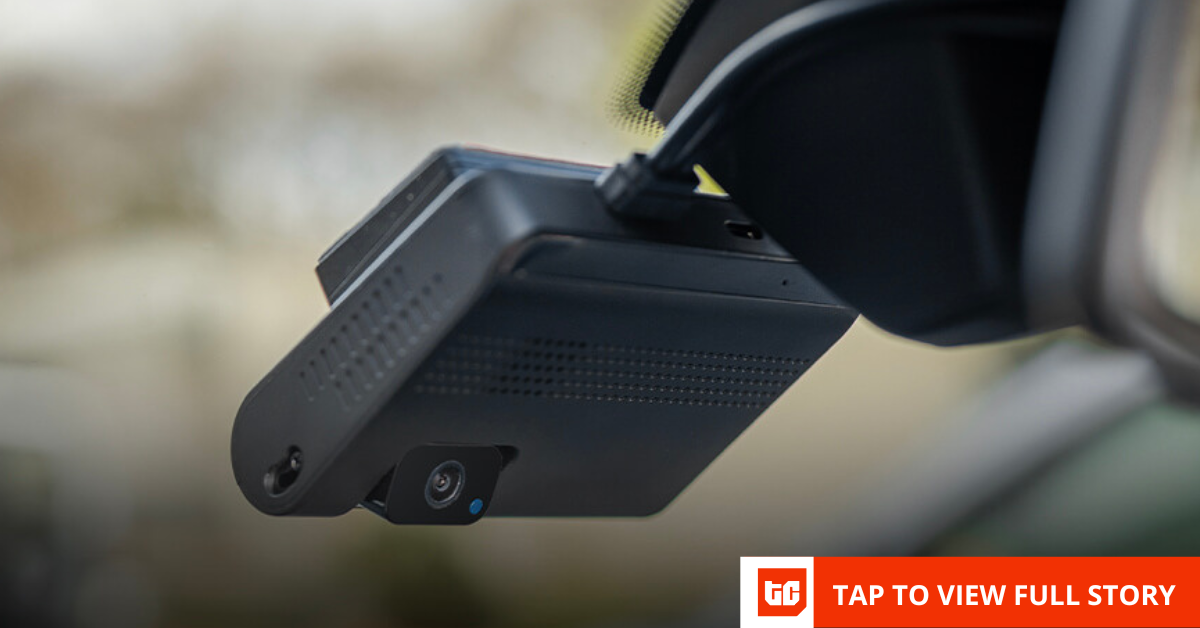
On February 13, dash camera (cam) footage began circulating on South African social media.
The clip showed the final moments of a Nigerian e-hailing driver, Isaac David Satlat’s life. Within days, police had suspects in custody.
Since the video surfaced, dash cams used in e-hailing have shifted from a niche accessory to a frontline safety demand among South Africa’s drivers. The shift has intensified debate over platform responsibility, surveillance, and passenger privacy.
I took 23 e-hailing trips in the days after the video circulated between February 15 and 19. On nearly every ride, drivers spoke about cameras. Some had already installed them; others were planning to.
“Honestly, I did not care much about the dash cam until the two incidents of e-hailing driver killings in their cars. It’s now a must-have, like justice insurance,” said Martin, an Uber driver in Johannesburg.
Cameras as the last witness
The drivers are increasingly willing to pay for dash cams. Bolt launched an in‑app dash‑cam partnership for South African drivers in May 2025, and Uber allows drivers to register their own dash cams through the app.
Most dash cams in e-hailing use, however, come from telematics providers such as Cartrack and other fleet-monitoring companies already widely used in the sector. Basic models cost R400 (roughly $25), making them accessible even in a low-margin gig economy.
Butho, an Uber driver who had just installed his dash cam, was blunt about their limits.
“The dash cam doesn’t help in real time,” he said. “But the footage helps as evidence for family members to get justice if someone is killed. If I survive, then it’s very crucial to have.”
For many drivers, Satlat’s murder changed how they think about safety. E-hailing GPS logs can help investigators after an attack, but they do not prevent violence at the moment.
“Given the recent case of Satlat, a visible camera might do what the GPS apps can’t, making an attacker think twice before striking, since it’s quicker to get them arrested,” said Qhubani, a Bolt driver based in Johannesburg.
Ndabezinhle Khoza, chairperson of the South African Ride-Hailing Drivers Association (SARIDEHA), said that the value of dash cams depends on how they are deployed in e-hailing.
“Dash cams, if remotely monitored, play a pivotal role in apprehending criminals in the e-hailing industry,” he said. “But if they’re just loop-recording, they can be useless; criminals can destroy them if they realise they’re on camera.”
A regulatory push gains traction
The e-hailing association has long called for dashcams in cars, saying video recordings can help prevent attacks and provide proof if something goes wrong, including violent crime, passenger-driver disputes, and fake or shared driver profiles.
Uber said it offers safety tools, including real-time GPS trip tracking, ride check technology to detect unusual stops, routine deviations or potential collisions, in-app emergency assistance, and audio recording.
Khoza argued that platform apps rely primarily on voice recording, which does not capture physical actions. Dash cams record both video and audio, which helps resolve conflicts and identify who was actually driving.
Under its ‘bring your own dash cam’ (BYOD) policy, Uber said, “Drivers who independently install a dashcam can integrate it with the Uber app, enabling secure and direct upload of footage if required for a safety investigation.”
But while Uber frames BYOD as a way to empower drivers with extra protection, Khoza said it also effectively shifts the cost and risk of that protection onto individual workers operating on already thin margins. He wants the government to introduce regulations mandating cameras across platforms and requiring companies to fund them.
Bolt did not respond to a request for comment.
Privacy paradox
The same cameras drivers see as protection are raising unease among riders.
Satlat’s murder not only drove camera adoption among drivers; it exposed passengers to the reality that they may be recorded during trips without explicit notice. Many riders say they are uncomfortable being filmed in what feels like a semi-private space.
“When you enter a ride and realise you’re being watched, it’s unsettling,” said Ntuthuko Ndaba, a freelance graphic designer. “But if you’re told upfront, that also creates tension or fear.”
Drivers themselves acknowledge the dilemma. Bernard, an Uber driver in Pretoria, said footage is typically accessible to both the telematics provider and the vehicle owner and is automatically deleted after roughly 14 days, a policy intended to balance evidentiary value with privacy risk. But governance of access remains opaque to passengers.
Siyabonga, a Bolt driver, framed it differently: “Privacy can’t apply in public transport. Passengers shouldn’t worry about the presence of dash cams in Uber cars; it’s meant for safety.”
Digital technologies and ethics researcher, Dr Nyx McLean, said dismissing privacy concerns in e‑hailing misunderstands how people actually experience e-hailing vehicles.
“A ride-hailing car sits in a grey zone between public and private space,” Dr McLean said. “Passengers are not anonymous commuters in a bus; they are identifiable individuals in close proximity, often discussing personal matters. Treating that environment as fully public risks eroding reasonable expectations of situational privacy.”
Tech-enabled justice and its risks
Satlat’s case shows how dashcams, trip data, and viral sharing can quickly turn violent ride-hailing incidents into public test cases. But this same system can also become routine surveillance, where recording is the norm and access to justice is not equal.
Tebogo Sibidla, director at Werksmans Attorneys, a South African law firm, said “although primarily driven by safety concerns and driver protection, the push for dash cams in e-hailing raises deeper questions about how constant surveillance affects everyday life and the extent to which the law recognises a legitimate expectation of privacy.”
Recording entire journeys may exceed what is strictly necessary for safety under South Africa’s Protection of Personal Information Act (POPIA). The law does not ban dash cams, but it does make always‑on, whole‑journey recording legally risky unless there is proof that it is truly necessary and proportionate for safety.
The visibility of cases captured on camera may also reshape justice itself.
“When safety becomes contingent on being recorded, people who are less visible to technology systems or who distrust them may end up less protected,” McLean said. “That creates a hierarchy of whose victimhood is legible and whose is not.”
Safety vs surveillance in a high-crime transport economy
South Africa’s surveillance and in-vehicle recording debates sit under the POPIA, enforced by the national Information Regulator. The law requires that recording be necessary for a specific purpose, that people be informed, and that data be retained only as long as needed.
In practice, most passengers are not notified when entering a camera-equipped vehicle. Across the 23 trips I took, no driver mentioned a dash cam until asked, suggesting that much current use operates in a legal grey zone around informed consent and notification.
Yet dash cams are legally analogous to CCTV, and South Africa is already one of the world’s most heavily surveilled private-security environments. The country has roughly 2.7 million private security officers and pervasive camera coverage across malls, estates and commercial services. E-hailing cameras extend that surveillance culture into mobility platforms, framed as individual self-defence tools in a structurally unsafe system.