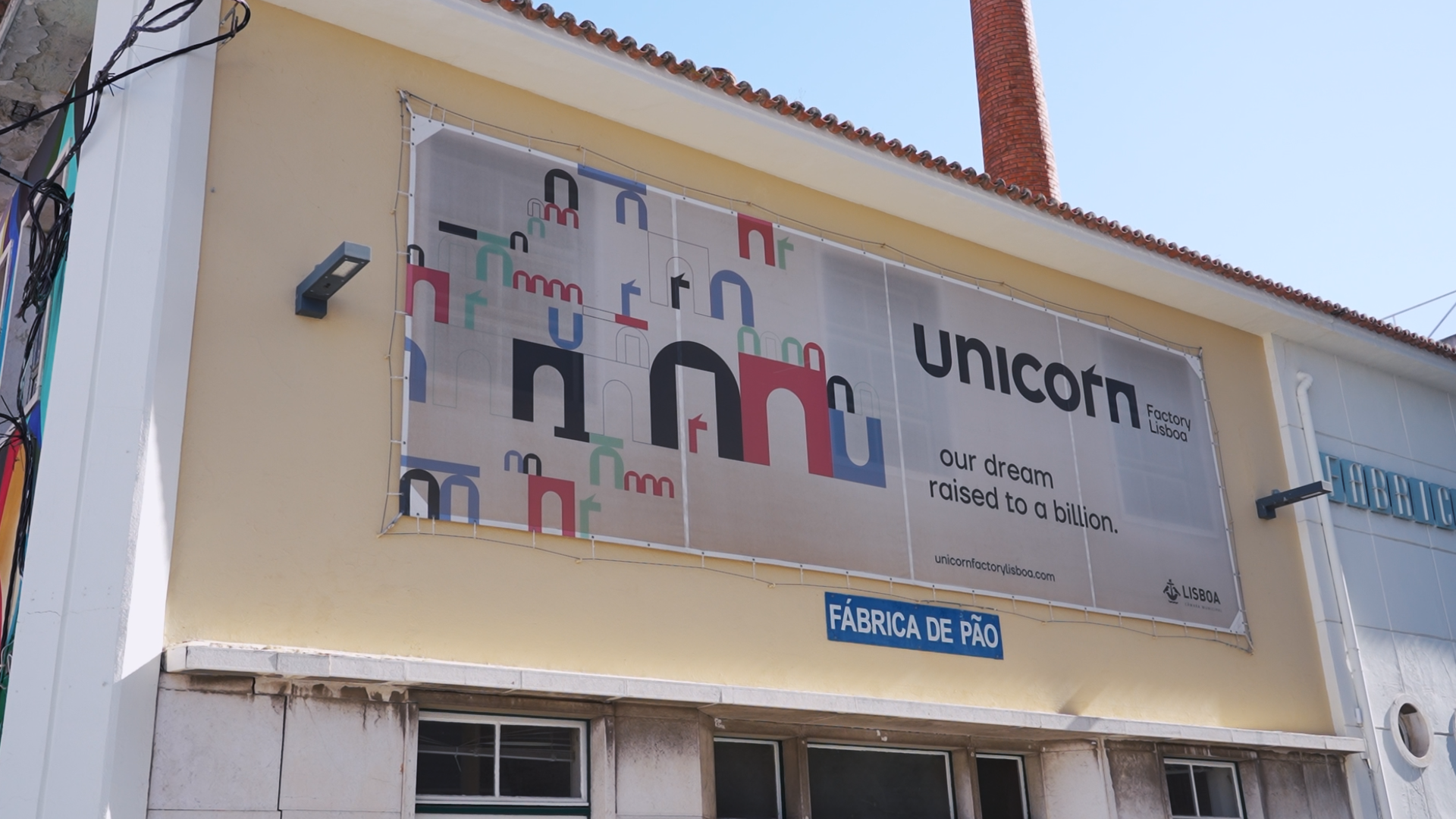
When our team pulled into Lisbon’s Beato Innovation District, we didn’t find the sterile glass skyscrapers typical of modern tech hubs. Instead, we were greeted by red-brick industrial buildings with a strong sense of history—structures rooted in heritage, free from cold corporate uniformity.
José, Director of Unicorn Factory Lisboa, stood amid the complex and pointed out the history etched into the skyline. “That used to be a cookie and pasta factory,” he explained, gesturing to the surrounding buildings. A former bread factory nearby is under renovation, and a silent milling plant still stands—remnants of an era when this 35,000-square-meter site supplied food to Lisbon. Today, it has a new mission: fueling the future of Europe’s digital economy.

A Cathedral for Innovators
Launched in 2017, the Unicorn Factory paused briefly during the pandemic but has since been revitalized. José notes with pride that 10 of the 18 heritage buildings have been renovated and put into use, with over 1,300 innovators working here. This is far more than a coworking space—it is a unique sanctuary where major deep-tech companies, startups and research centers coexist and collaborate.

Our cameras captured the “hardcore” reality of this ecosystem:
- Micro Harvest has more than just office desks—it operates a compact bio-factory right inside the building, using bacteria to cultivate protein for sustainable fish feed, and has already achieved large-scale production.
- Claranet, a cybersecurity firm recently acquired by a telecom giant, has built a top-tier situational awareness room for its 500 employees in the old factory, along with a dedicated R&D and training center for cybersecurity.

An Insight into Global Expansion
Gil Azevedo, Executive Director of Unicorn Factory Lisboa, shared the scale of their efforts: in just one year, 250 startups and over 1,000 students have joined their programs, with half of the startups coming from outside Portugal.

In our in-depth conversation, Gil shared an interesting observation: compared to countries with larger markets, where startups often wait until they scale up to pursue global expansion, Portuguese businesses start seeking international opportunities at a very early stage. For them, overseas expansion is an essential requirement for growth.
This trend has nurtured a thriving startup ecosystem in Portugal. The country has spawned seven unicorn companies, six of which emerged years ago, with artificial intelligence playing a key role in each of their business models. Beyond AI, the ecosystem boasts competitive enterprises in health tech, food tech and fintech. Portugal also leads Europe in green economy innovation within the sustainability sector, and even traditional industries like textiles are being reshaped by innovative solutions.
A Hub Connecting Three Continents
To support such growth, the Unicorn Factory has built a comprehensive six-pillar support system, covering youth entrepreneurship, early-stage incubation, scale-up programs, innovation centers, international collaboration and social innovation.
As Gil emphasizes, Portugal is emerging as a unique global hub connecting innovators across three continents. With a solid talent pool and inclusive multicultural environment, it serves not only as a springboard to the European market but also as a natural bridge to South America (especially Brazil) and Africa. Drawing on its open spirit dating back to the Age of Discovery, this former factory has become a truly international stage for innovation. “Our vision is to achieve true globalization,” Gil said.

Join the Odyssey
Through our lenses, we will take you between historic industrial relics and cutting-edge tech labs, where pioneers will share how they transformed abandoned factories into a top European incubator, and reveal the “Third Option” this hub offers to global innovators.
Let’s open this door and discover a different side of Portugal.
Stay tuned to TechNode for the premiere of our new series, Tech Odyssey.