OpenAI’s Strategic Pivot Toward Developer Tools: A Case Study in Responding to Claude Code’s Market Dominance

By Markos Symeonides
Introduction
In the rapidly evolving AI landscape, market dominance can shift quickly, demanding swift strategic responses from industry leaders. OpenAI, long a pioneer in artificial intelligence, recently faced an internal “wake-up call” as Claude Code, Anthropic’s developer-centric AI platform, surged ahead in market adoption. This case study explores OpenAI’s strategic pivot toward focusing on developer tools, analyzing the competitive pressures, product decisions, financial context, and future outlook shaping this transformation.
1. The Competitive Landscape That Forced the Pivot
By early 2024, Anthropic’s Claude Code had established itself as the preferred platform for developers seeking powerful AI coding assistants and multi-agent coordination capabilities. Claude Code’s innovative features, including the Codex CLI subagents, allowed developers to orchestrate complex workflows with multiple AI agents working in tandem—something OpenAI had yet to fully match.
Anthropic’s recent leak of the Mythos model, which promised a “step change” in AI capabilities, further heightened competitive pressure. Mythos integrated advanced reasoning and multi-modal understanding, widening the gap in developer tools functionality.
Fidji Simo, OpenAI’s CEO of Applications, described Claude Code’s success as an internal “wake-up call” that exposed weaknesses in OpenAI’s previous product strategy. While OpenAI had been aggressively launching consumer-facing products, it lagged in delivering cohesive, scalable tools tailored for developers and enterprise customers—the segments fueling AI adoption at scale.
2. OpenAI’s Previous Strategy and Why It Wasn’t Working
OpenAI’s prior approach was characterized by rapid expansion into diverse AI application areas. The launch of Sora, a video generation tool, and Atlas, a specialized AI browser, alongside exploratory hardware device projects, reflected a broad but diffuse focus. While these products demonstrated technical prowess, they lacked seamless integration and clear alignment with core developer and enterprise needs.
This multi-pronged product launch strategy, as admitted by Simo, “slowed the company down” by diluting resources and fragmenting user attention. OpenAI was generating significant revenue, but the fragmented portfolio failed to consolidate market leadership in the developer tools space, where Claude Code was rapidly gaining ground.
The lack of a unified desktop app or a cohesive developer ecosystem made it difficult for customers to adopt OpenAI’s AI tools as part of their daily workflows, creating friction that competitors exploited.
3. The Decision to Shut Down Sora
In a decisive move emblematic of the strategic pivot, OpenAI shut down Sora video generation just six months after its public launch. Despite initial excitement, Sora’s user engagement and enterprise traction fell short of expectations, and maintaining it diverted valuable engineering and product resources.
The shutdown was less a failure and more a realignment of priorities. OpenAI recognized that doubling down on developer tools and enterprise integration offered a clearer path to sustainable growth and competitive differentiation. This decision underscored an important lesson about focus: excelling in core competencies often trumps broad but shallow innovation.
4. The Codex Plugin as a Competitive Strategy
One of OpenAI’s most intriguing strategic moves has been the launch of the Codex plugin designed to run inside Claude Code. This “Trojan horse” approach allows OpenAI to leverage Claude Code’s growing user base by embedding Codex capabilities directly into its rival’s platform, offering developers enhanced functionalities without forcing them to switch ecosystems.
This plugin enables seamless integration of OpenAI’s Codex code generation and multi-agent orchestration within Claude Code’s interface, blurring competitive boundaries and positioning OpenAI as an indispensable partner rather than a direct adversary. It also allows OpenAI to gather valuable insights into developer workflows and preferences on Claude Code, informing future product development.
This tactic exemplifies a nuanced competitive strategy that blends collaboration and disruption to regain market influence.
The Complete Guide to OpenAI Codex Plugins: Enterprise AI Coding in 2026 discusses the technical architecture and use cases of Codex subagents, providing deeper insight into how this plugin enhances developer productivity.
5. Product Consolidation Roadmap
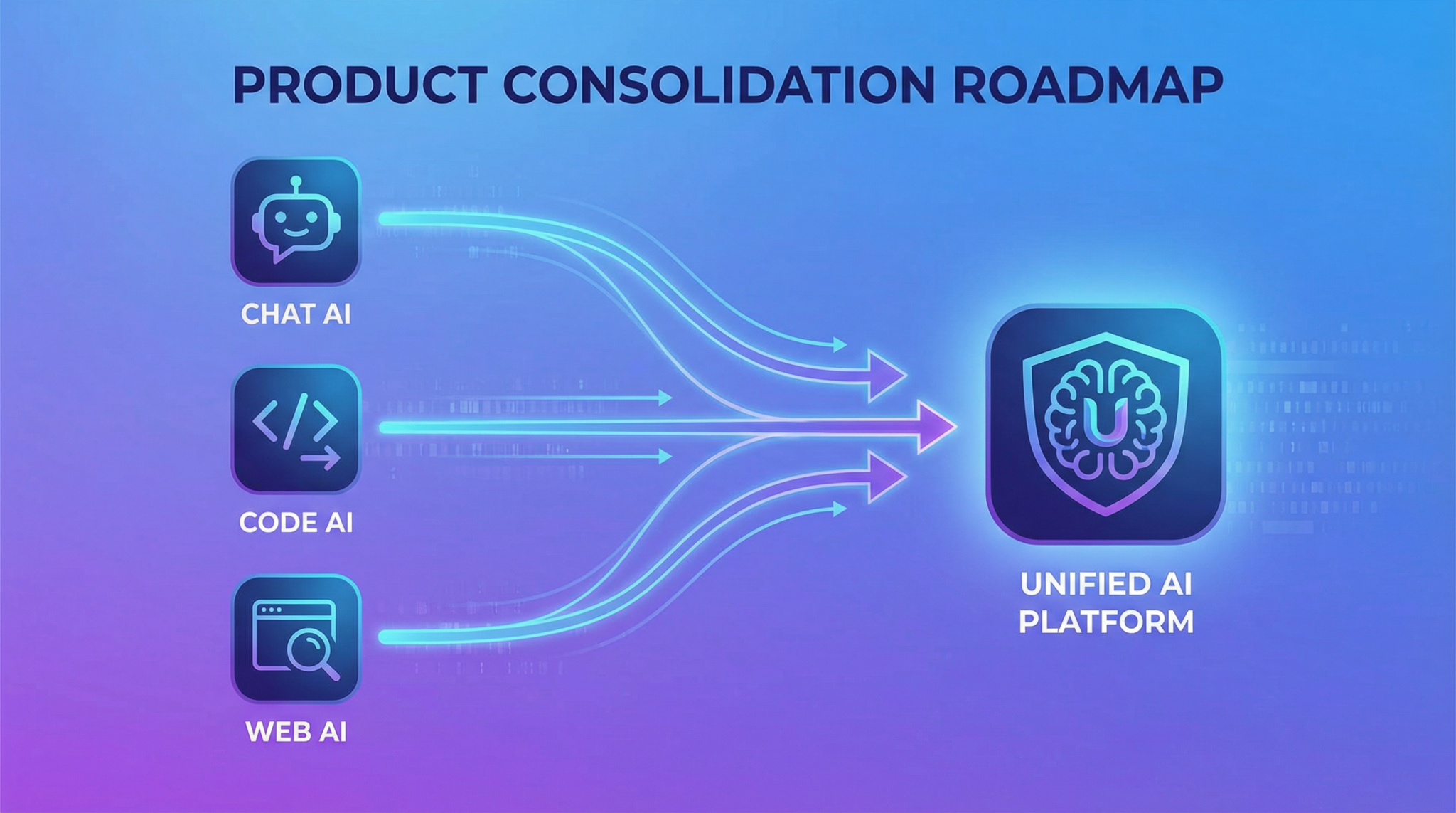
Leading this strategic consolidation is OpenAI co-founder Greg Brockman, who has taken charge of unifying the company’s AI offerings into a single, streamlined desktop application. This merged app will integrate ChatGPT, Codex, and Atlas browser capabilities, creating an all-in-one productivity platform for developers and enterprise users.
This roadmap reflects a clear shift from product proliferation to product integration, emphasizing user experience, interoperability, and enterprise readiness. By converging these tools, OpenAI aims to reduce friction, increase customer retention, and simplify the AI adoption journey.
Additionally, this consolidation is expected to facilitate advanced features such as cross-tool context sharing, unified billing, and centralized management of AI workflows—critical factors for scaling AI usage in professional environments.
ChatGPT Coding Masterclass Part 4: Codex CLI Deep Dive — Terminal-First AI Coding with GPT-5.3-Codex provides an in-depth analysis of how combining conversational AI with code generation transforms software development workflows.
6. Financial Position and Investor Confidence
Financially, OpenAI’s pivot comes from a position of strength. The company now reportedly generates approximately $2 billion in monthly revenue, a testament to its dominant presence in the AI market despite competitive pressures.
Moreover, OpenAI recently closed a monumental funding round of $122 billion at an $852 billion valuation. This massive capital injection reflects investor confidence not only in OpenAI’s technology but also in its renewed strategic focus and leadership’s ability to execute.
Such financial backing gives OpenAI the runway to invest heavily in research and development, accelerate product consolidation, and compete aggressively against Anthropic and other emerging players.
7. Lessons for AI Companies About Focus vs Diversification
OpenAI’s experience underscores a critical lesson for AI companies navigating fast-changing markets: while innovation and diversification are vital, maintaining strategic focus is paramount. Expanding into too many product verticals simultaneously risks resource dilution, market confusion, and slower execution.
The decision to shutter Sora and realign around developer tools illustrates the benefits of concentrating on core strengths and customer segments. Developer platforms are the backbone of AI adoption, influencing everything from startup innovation to enterprise transformation.
Additionally, OpenAI’s “Trojan horse” Codex plugin strategy exemplifies how competitive ecosystems can be navigated with creative partnerships and integrations rather than zero-sum battles.
The March 2026 AI Evolution: OpenAI’s Strategic Pivot, Google’s TurboQuant, and the New Era of Agentic Commerce explores how emerging AI companies can balance innovation with focus to sustain growth and competitive advantage.
8. Future Outlook and Predictions
Looking ahead, OpenAI’s strategic consolidation and developer-centric refocus position it well to reclaim leadership in AI tooling. The combined desktop app promises to revolutionize developer workflows by integrating conversational AI, code generation, and browsing capabilities within a unified environment.
However, the competitive landscape remains dynamic. Anthropic’s Mythos model leak signals that innovation cycles will continue accelerating, with new entrants pushing the boundaries of AI reasoning and multi-modal understanding.
OpenAI’s success will hinge on its ability to rapidly iterate on its consolidated platform, foster a vibrant developer ecosystem, and anticipate emerging use cases. The $2 billion monthly revenue stream and nearly trillion-dollar valuation provide the resources needed to compete at this scale.
Ultimately, OpenAI’s pivot exemplifies the importance of agility, focus, and strategic integration in the AI industry’s high-stakes race for dominance.