On paper, the analytics revolution looks finished. AI has moved from novelty to budget line. In the 2025 RSM Middle Market AI Survey, 91% of respondents said they use generative AI, but most described themselves as only “somewhat prepared.”
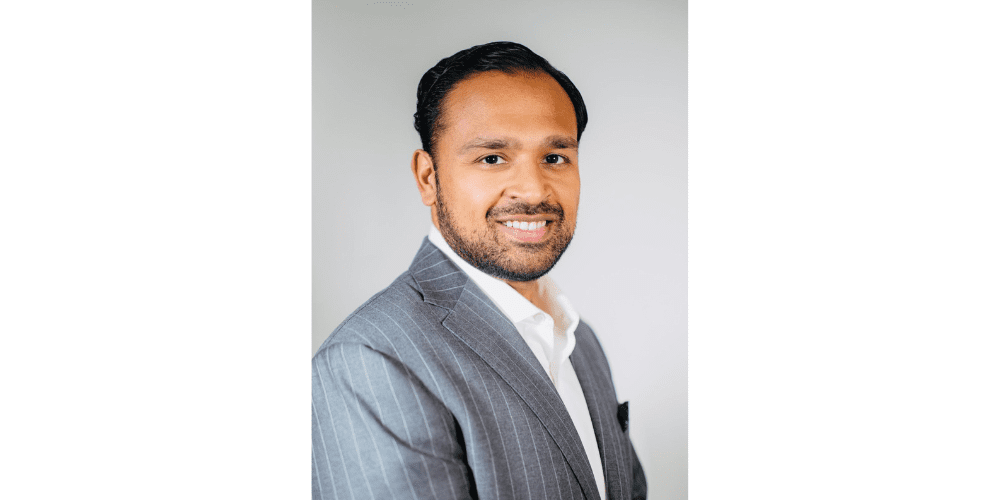
Hamid’s analytics ethos comes from building before advising. Early in his career, he helped start Unison, a software company at the intersection of social listening, sustainability, and decision support. That work gave him a front-row seat to how analytics products earn or lose trust. “An insight no one trusts is just a screenshot with ambition,” he says.
Today, his work increasingly focuses on mid-market companies in Michigan and beyond: organizations large enough to feel competitive pressure, but not large enough to fund a full modern data organization. Leaders are told AI will compress decision cycles, personalize experiences, and automate reporting. They want that future, but live with thin analytics headcount, fragmented systems, fuzzy ownership, and a queue of operational fires.
Hamid’s answer is not to downplay AI, but to sequence ambition. “You don’t start by asking, ‘Where can we put gen AI?’” he says. “You start by asking, ‘What do we believe drives value here, and can we measure it honestly?’” That question sits at the center of what he calls the Causal Compass Framework.
The Causal Compass starts by getting leaders to agree on a causal model for the function they are working with. For a sales or marketing team, Hamid focuses on three layers: high-value levers (controllable choices such as offer design or channel mix), high-value actions (behaviors and funnel signals that show whether levers are working), and high-value outcomes (results like revenue, retention, or margin). Organizing analytics around these layers, rather than around tools, often unlocks more value than a platform refresh. “Metrics are not the strategy,” he says. “They are the grammar. Once we agree on the grammar, we can write better sentences.”
After the causal foundation, the Causal Compass turns to people. In Hamid’s view, analytics teams underperform less from lack of technical skill and more from lack of cognitive diversity. He points to how high-performing tech organizations hire unusual backgrounds to build better systems: journalists who interrogate data like a source, behavioral scientists who understand experimentation and customer experience, teachers who know how to drive adoption. As AI compresses routine analysis, Mohammad Hamid summarizes the modern analytics function as three complementary roles: strategy (choosing the right problems and defining the causal model), implementation (getting data, pipelines, and governance to actually work), and storytelling (making insights usable and actionable).
Process and technology complete the picture. A decade ago, analytics teams spent most of their time on ETL: pulling data from source systems, cleaning it, and loading it into warehouses. ETL still matters, but modern cloud platforms, APIs, and automation have shifted the balance and made DataOps and DevOps discipline central to analytics engineering. Hamid argues that pipelines tied to revenue or risk should be treated like products, with clear ownership and service expectations.
In practice, that philosophy shows up across sectors. Within automotive and industrial manufacturing, Mohammad Hamid has helped multi-site operations unify quality, supply, and maintenance data into a single operational model, with the biggest win coming from shared definitions for defects and downtime so plant teams stopped arguing about what was “real.” In financial services, he has worked on refining risk signals by layering behavioral segmentation over traditional credit attributes, showing that the organization did not lack data; it lacked a coherent story for how risk, product design, and customer communication moved together over time.
Asked what he would tell a Michigan mid-market CEO or CIO trying to make sense of AI and analytics, Mohammad Hamid offers a short playbook. Start with a decision and value map anchored to the few decisions that really move the business, then work backward to the data and operating cadence required. Treat data quality and governance as AI readiness, focusing on a handful of “golden datasets” with clear owners and SLAs. Invest in executive literacy so leaders can sponsor the right use cases and say no to the wrong ones. And build small, auditable wins that improve a weekly decision loop and prove that analytics and AI can change how the business actually runs.
The broader analytics market is expected to keep expanding through the decade, powered by cloud, AI, and the move toward real-time decisioning. But Hamid’s message from Detroit is that scale without coherence is not progress. “AI will widen the gap between organizations that know what they are trying to prove and organizations that are just hoping the dashboard will rescue them.” For mid-market organizations in Michigan and beyond, the Causal Compass Framework is not a rejection of AI. It is a reminder that modern analytics is still, in a deeply human way, about judgment. And for leaders trying to build durable advantages in the AI era, that may be the most reassuring insight of all.