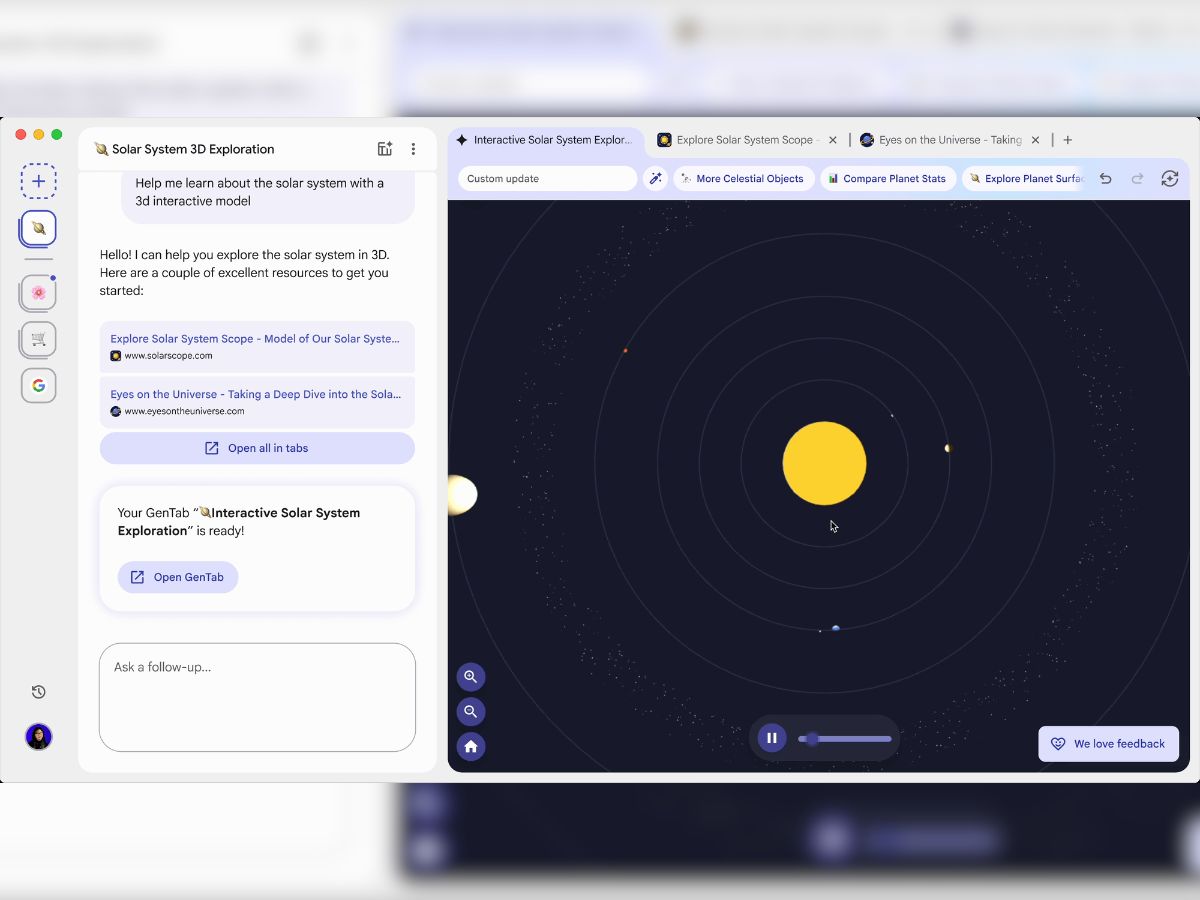
oogle has unveiled Disco, a new experimental AI-powered browser that takes a very different approach to how we use the web. Instead of sticking to the traditional model of opening sites and tabs, Disco tries to turn your prompts into small, purpose-built apps on the fly. Developed by the Chrome team and powered by Gemini 3, Disco is designed to rethink how users search, explore information, and interact with the web. Also Read: Fortnite Makes A Comeback On Google Play Store After Nearly Five Years
What Makes Google Disco Different?
The core of Disco revolves around a feature called GenTabs. Rather than just loading webpages, the browser uses your query to pull information from multiple sources and then builds a personalised mini-app around what you’re trying to do.  Also Read: OpenAI Announces GPT-5.2 Models With Major Productivity Upgrades, Aims To Challenge Gemini 3 Pro
For instance, if someone asks for help planning a holiday, Disco pulls useful details together and creates a travel planner app. Students researching a subject can get a visual learning tool generated on the spot, using information gathered from multiple open tabs. Also Read: Hackers Push Fake ChatGPT Atlas Browser Via Search Ads To Steal Passwords: Report
While similar tasks can be done using AI chatbots, Google says Disco stands out because it uses Gemini 3 to personalise these experiences instantly, drawing context from your browser activity and chat history. Users can also refine or adjust the generated apps using simple natural-language prompts, and GenTabs will link back to the original sources it used.
Availability and Early Access
Google Disco is currently available only on macOS, and those interested will need to sign up for early access through the Google Labs waitlist. Google says Disco is still in the early testing phase, and some of the ideas behind it could eventually show up in other Google products. However, there is no clarity yet on when or whether Disco will roll out broadly to the public.
As AI-powered browsing tools gain momentum across the tech industry, Google’s new experiment signals a fresh direction – one where a browser doesn’t just help you look things up, but builds what you need as you go.