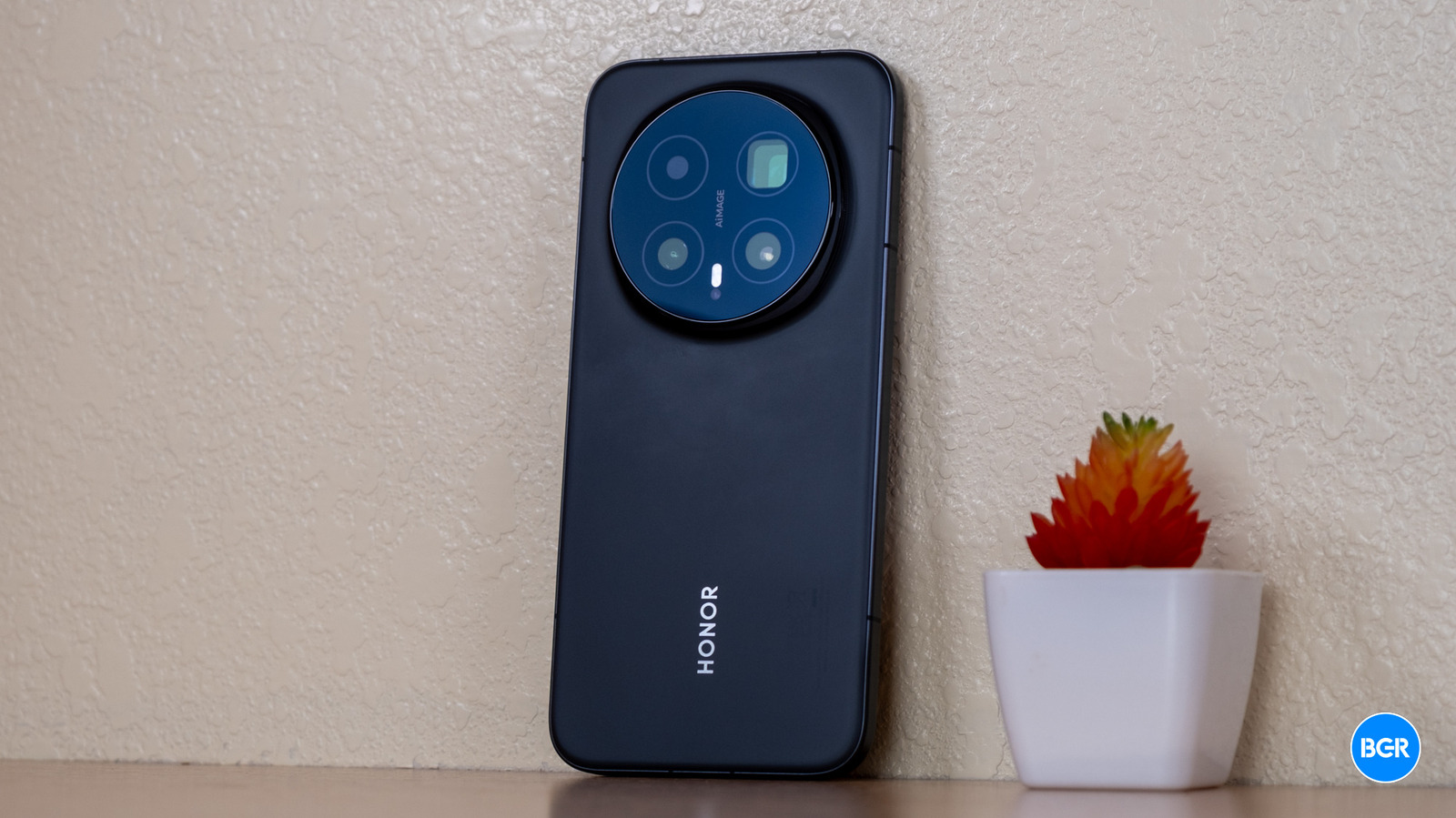
Top-tier Honor Magic phones have long offered some of the best of Android, and now Honor is back with its latest ultra-flagship in the form of the Honor Magic8 Pro. The Magic8 Pro follows the same playbook as previous-gen Honor flagship phones, with hardware that’s designed to be the best of the best. It’s built to compete with the likes of the Samsung Galaxy S25 Ultra, with a price tag to match.
And, like previous years, Honor has put a ton of effort into the camera hardware — something that could help set the device apart from the others in its price bracket. Also, unlike the Magic7 Pro, the Honor Magic8 Pro will make it to global markets. There’s always been one thing that sets the Magic series back though — software. Can the Magic8 Pro deliver the complete package?
Design
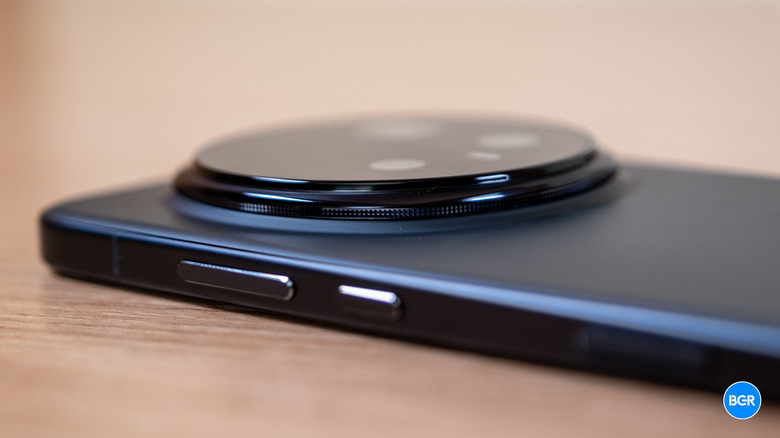
Honor’s sticking with the design direction of the rest of the industry, and the Magic8 Pro looks sleek, stylish, and premium. As on its other recent releases, you’ll get a massive circular camera module on the back housing the camera sensor. I’d love to see Honor try something different with how they handle the camera bump at some point, but it’s not a dealbreaker. It just means the camera sticks out pretty noticeably from the back.
Pick up the Magic8 Pro, and it feels high-end. The front gets what Honor’s calling a NanoCrystal Shield, and the back has a frosted glass that does a pretty good job keeping fingerprints at bay. The phone is also incredibly durable, at least as it relates to dust and water. It offers IP68, IP69, and IP69K ratings — so it should easily survive most water or dust environments, including from high-pressure water jets. Not many phones can claim all three ratings — OnePlus is one of the few others doing it.
Color options include Sunrise Gold, Sky Cyan, Black, and White. I’ve been using the Black version, which looks good but isn’t exactly the most exciting choice available. The “Black” is closer to gray, which at least makes it a bit more interesting without going overboard.
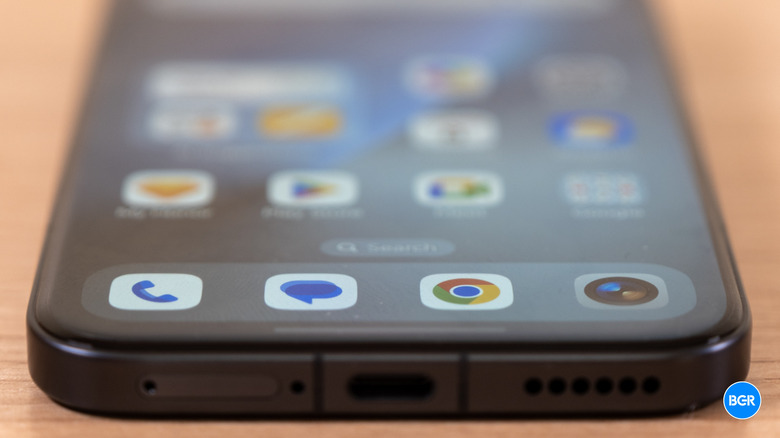
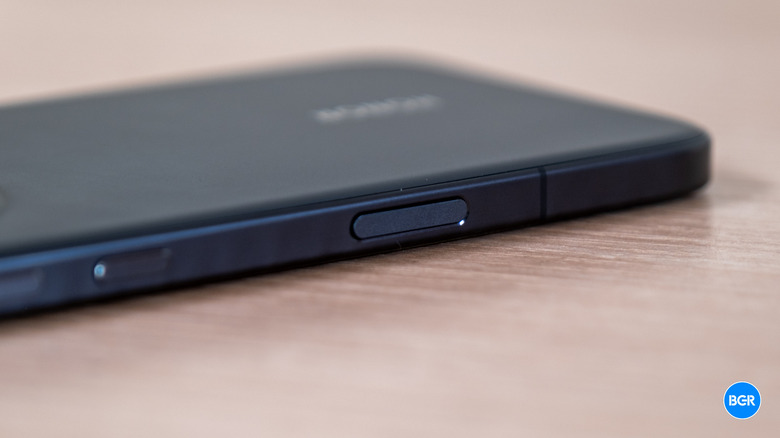
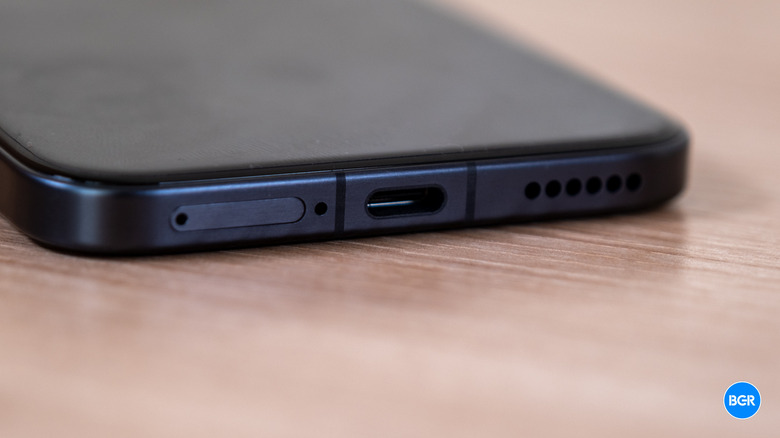
Layout-wise, it’s pretty standard. There’s a USB-C port on the bottom, with volume and power on the right side. Honor added a dedicated AI button on the right edge too, sitting in roughly the same spot as Apple’s Camera Control on newer iPhones. The placement feels a little awkward to hit during regular use. Putting it higher up, or where the iPhone’s Action Button usually is, would have been a more natural choice. I’ll get into what this button actually does in the software section. All in all, the Magic8 Pro looks and feels great. It looks sophisticated, feels premium, and can handle pretty much anything you throw at it.
Display
The Magic8 Pro has a 6.71-inch LTPO OLED screen with a 1256 x 2808 pixel resolution, which is plenty sharp. Refresh rate scales anywhere from 1Hz to 120Hz depending on what’s on screen, which helps balance smoothness with battery life. Honor also included 4320Hz PWM dimming, so if you’re sensitive to lower dimming frequencies, this should be easier on your eyes.
It has a high level of brightness too. Honor says you’ll hit a peak of 6,000 nits with HDR, and I was easily able to see content on the display even in direct sunlight. There’s really nothing missing here. This display checks every box you’d want from a flagship screen in 2025, matching or beating what you’d find on competitors at the same price. It’s crisp, smooth, bright, and vibrant.
Performance
Powering everything is Qualcomm’s Snapdragon 8 Elite Gen 5 — the newest flagship Qualcomm chip. It’s built on a 3nm process, and Honor’s claiming 20% better single-core CPU performance, 23% improvement on the GPU side, and 37% gains for the NPU compared to the previous generation. Regardless of actual improvements, indeed, the phone performed very well.
The phone never stuttered or lagged on me, staying smooth and responsive no matter what I was doing. Games loaded fast and ran without issues, while jumping between apps felt seamless.
Benchmarks confirmed the excellent performance. Single-core performance put the Magic8 Pro right at the top of the pack. Multi-core numbers were also very good, though slightly behind some competitors with more RAM. That small gap probably won’t matter in actual use — this is still one of the fastest phones you can buy right now.
Battery and charging
Inside the Magic8 Pro is a 7,100mAh silicon-carbon battery for international versions, though European models get a smaller 6,270mAh cell because of regional regulations. Either way, battery life is excellent. Getting through a full day is easy, and lighter users could probably stretch into a second day without much trouble. Keep up with overnight charging, and battery anxiety just isn’t something you’ll deal with.
Charging speeds are quite good too. Wired charging tops out at 100W — way faster than anything Samsung or Apple offer on their flagships right now. Wireless charging hits 80W with Honor’s own charger, making it one of the fastest wireless implementations on any phone on the market.
The one downside is the lack of Qi2 magnetic support. Without those built-in magnets, the Magic8 Pro won’t work with the newer magnetic charging stands and accessories that have gotten popular since Apple’s MagSafe debuted. If you’ve invested in that ecosystem, this might be a disappointment, and I hope more companies adopt the magnets required soon. Google has for the Pixel 10 series, and it’s time other Android manufacturers do too.
Camera
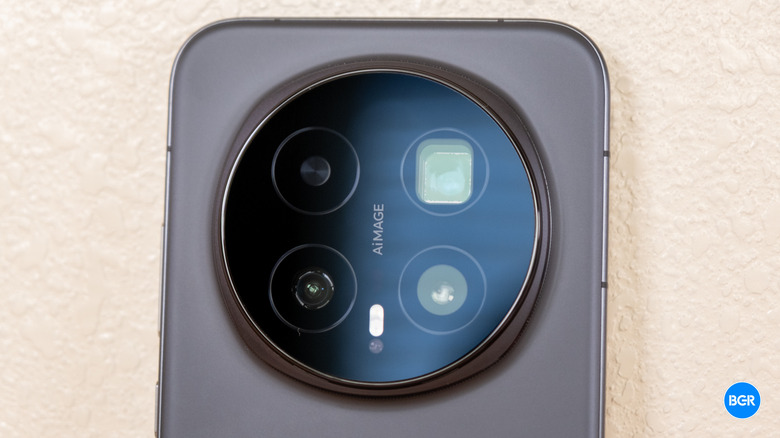
Honor’s top-tier Magic phones have consistently delivered strong cameras, and the Magic8 Pro keeps that going with a seriously impressive sensor setup. The main camera has a 50-megapixel sensor with f/2.0 aperture. The telephoto is the headline spec — offering a massive 200-megapixel 1/1.4-inch sensor, giving you 3.7x optical zoom. A 50-megapixel ultrawide camera rounds things out, with a 122-degree field of view. The front camera matches the rear at 50 megapixels, and it has a 3D depth sensor for better portraits and facial recognition.
 Christian de Looper/BGR
Photos from this system are exceptional. Images consistently come out bright and detailed, with rich colors throughout. The tuning runs slightly warm, but not so much that it feels fake — photos just look stunning. Zoomed shots hold up impressively too. Even at 10x, you’re getting solid detail and clarity — likely thanks to that 200-megapixel telephoto camera.
Low-light photography is particularly impressive. Even in dark environments, you get bright, reasonably sharp images. Low-light zoom shots surprised me with how well they performed, though push the zoom too far, and images inevitably start to fall apart.
As you would expect in 2026, there are quite a few AI-based camera features. The upscaling capability works pretty well, boosting resolution without being too aggressive about it. That restraint is welcome — a lot of AI upscaling goes overboard with sharpening or creates weird artifacts.
 Christian de Looper/BGR
Other AI features are more hit-or-miss. Magic Color, which tries to replicate things like a warm sunset, didn’t really work for me — I generally liked standard filters better. AI Outpainting, which extends images beyond their original frame, gave acceptable but imperfect results. Some AI-generated details didn’t quite match the rest of the image, making it more of a fun experiment than something you’d actually rely on.
Whatever you think of the AI stuff, the fundamental camera here is outstanding. The Magic8 Pro produced some of the best photos I’ve ever taken with a smartphone, and it absolutely belongs in the conversation with the best smartphone cameras available.
Software
The Magic8 Pro ships running Android 16 with Honor’s MagicOS 10 on top. This version of MagicOS borrows pretty heavily from iOS, adding transparency effects that feel reminiscent of Apple’s recent Liquid Glass design, but not as polished — if you could call Liquid Glass polished in the first place.
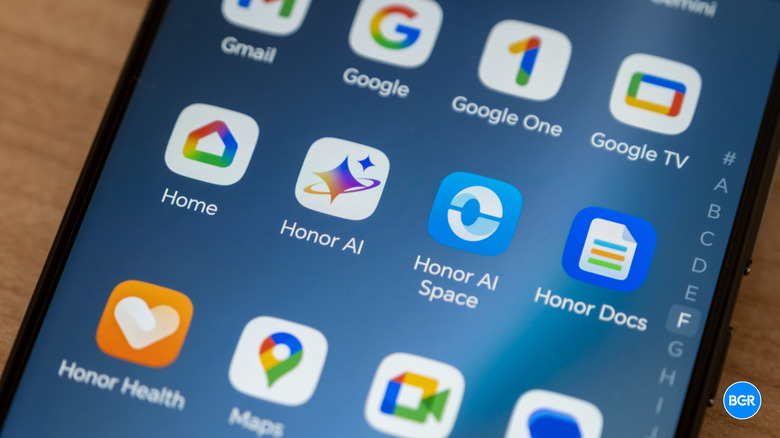
Even with the updates, MagicOS still isn’t my favorite Android skin. Parts of the interface look dated, and while Honor has cut back on duplicate and bloatware apps compared to a few years ago, there’s still too much pre-installed software that most people won’t need. The Honor app lineup includes Honor Docs, Honor AI, Honor AI Space (yes, two separate AI apps), Honor Health, and more. It’s just too many apps that the average person will never open. The good news is you can actually uninstall many of them rather than just disabling them.
That AI button on the right edge of the phone is essentially an Apple Action Button replica, but for Honor’s AI features. The settings menu looks just like Apple’s UI, too. Unfortunately, it’s not as versatile — you can use it to open things like the Camera app or Google Lens instead of the numerous Honor AI features, but you can’t map it to any app of your choice or to a system similar to Apple’s Siri Shortcuts. Thankfully, you can map different functions to a short press, double press, and long press — something that Apple still doesn’t offer for the Action Button.
The Honor AI apps are pretty stock standard. You can do things like ask an AI chatbot to change certain settings on your phone, edit photos using natural language, and so on. They work well, but there’s little that’s totally new here.
Conclusions
The Honor Magic8 Pro is an excellent phone held back by its software — but less so than previous Honor devices. The cameras are stunning, the display competes with the best out there, and performance is flagship-level throughout. On specs alone, you could argue it’s the best smartphone available right now. The price is definitely premium at £1099.99 in the UK (~$1,474 USD), but if hardware quality and camera performance matter most to you, it might be worth it.
The Competition
The Samsung Galaxy S25 Ultra is the most obvious competitor here. Samsung’s flagship gives you a larger 6.9-inch display and has a 200MP main camera. I would say on the whole, the Honor device’s camera is that extra bit better, plus the phone has a battery that’s arguably better and can charge faster. The only downside? One UI isn’t my favorite Android UI, but it’s better than Honor’s MagicOS.
Should I buy the Honor Magic8 Pro?
Yes, if you’re willing to spend the cash on it.