By using this site, you agree to the Privacy Policy and Terms of Use.
Accept
World of SoftwareWorld of SoftwareWorld of Software
  • News
  • Software
  • Mobile
  • Computing
  • Gaming
  • Videos
  • More
    • Gadget
    • Web Stories
    • Trending
    • Press Release
Search
  • Privacy
  • Terms
  • Advertise
  • Contact
Copyright © All Rights Reserved. World of Software.
Reading: How Discord Scaled Its ML Platform from Single-GPU Workflows to a Shared Ray Cluster
Share
Sign In
Notification Show More
Font ResizerAa
World of SoftwareWorld of Software
Font ResizerAa
  • Software
  • Mobile
  • Computing
  • Gadget
  • Gaming
  • Videos
Search
  • News
  • Software
  • Mobile
  • Computing
  • Gaming
  • Videos
  • More
    • Gadget
    • Web Stories
    • Trending
    • Press Release
Have an existing account? Sign In
Follow US
  • Privacy
  • Terms
  • Advertise
  • Contact
Copyright © All Rights Reserved. World of Software.
World of Software > News > How Discord Scaled Its ML Platform from Single-GPU Workflows to a Shared Ray Cluster
News

How Discord Scaled Its ML Platform from Single-GPU Workflows to a Shared Ray Cluster

News Room
Last updated: 2025/12/03 at 3:13 PM
News Room Published 3 December 2025
Share
How Discord Scaled Its ML Platform from Single-GPU Workflows to a Shared Ray Cluster
SHARE

Discord has detailed how it rebuilt its machine learning platform after hitting the limits of single-GPU training. By standardising on Ray and Kubernetes, introducing a one-command cluster CLI, and automating workflows through Dagster and KubeRay, the company turned distributed training into a routine operation. The changes enabled daily retrains for large models and contributed to a 200% uplift in a key ads ranking metric.

Similar engineering reports are emerging from companies such as Uber, Pinterest, and Spotify as bespoke models grow in size and frequency. Each describes the move from manual, team-owned GPU setups to shared, programmable platforms that prioritise consistency, observability, and faster iteration.

Discord’s shift began when teams independently created Ray clusters by copying open-source examples and modifying YAML files for each workload. This led to configuration drift, unclear ownership, and inconsistent GPU usage. The platform team set out to make distributed ML predictable by standardising how clusters were created and managed.

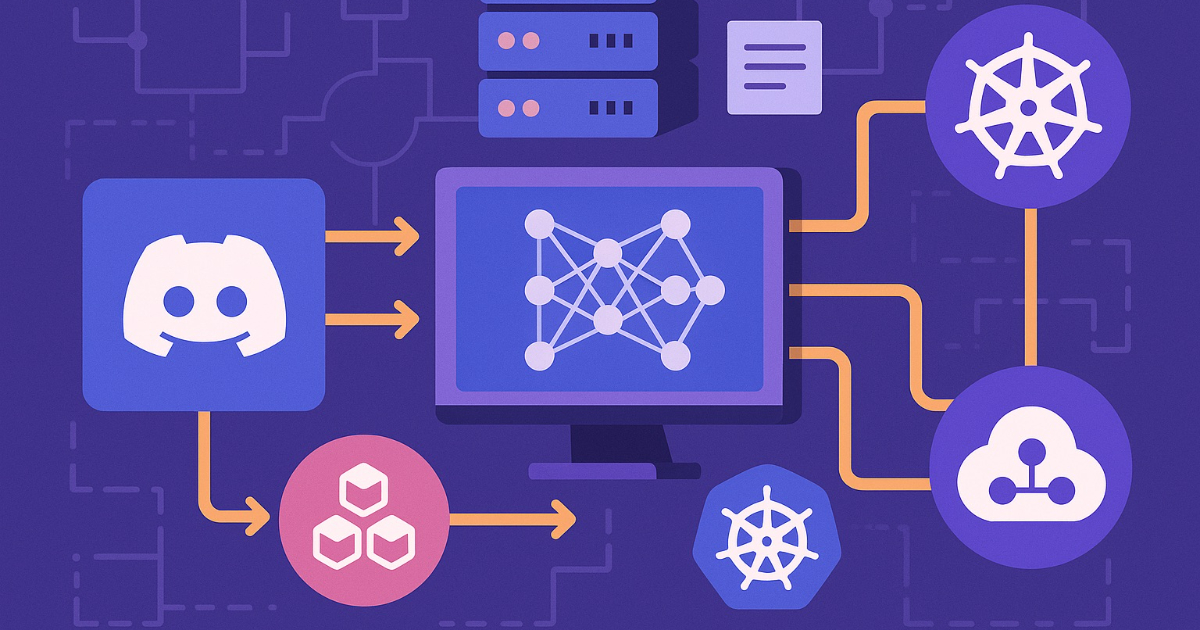
The resulting platform centers on Ray and Kubernetes but is defined by the abstractions on top. Through a CLI, engineers request clusters by specifying high-level parameters, and the tool generates the Kubernetes resources needed to run Ray using vetted templates. This removed the need for teams to understand low-level cluster configuration and ensured that scheduling, security, and resource policies were applied consistently.

Training workflows were consolidated in Dagster, which interacts with KubeRay to create and destroy Ray clusters as part of a pipeline. Jobs that previously required manual setup now run through a single orchestration layer, with cluster lifecycle automated by the system.

Discord also built X-Ray, a UI showing active clusters, job logs, and resource usage. These components turned distributed training into a predictable workflow rather than a bespoke setup exercise.

According to the company, the platform enabled daily training for large models and made it easier for engineers to adopt distributed techniques. Teams were able to implement new training frameworks without requiring direct involvement from the platform group. The improvements translated to measurable product gains, including better ads relevance.

Other organizations have described similar transitions. Uber migrated parts of its Michelangelo platform to Ray on Kubernetes and reported higher throughput and GPU utilisation. Pinterest built a Ray control plane that manages cluster lifecycle and centralises logs and metrics, reducing operational friction for ML engineers. Spotify created “Spotify-Ray”, a GKE-based environment where users launch Ray clusters through a CLI or SDK to unify experimentation and production workflows.

However, there are also published cautionary accounts about the limits of internal ML platforms. In a post from earlier this year, CloudKitchens described how its first Kubernetes-based system became overly complex, with simple ML jobs taking more than ten minutes to start and Bazel-based workflows creating ongoing maintenance friction for Python users.

Taken together, these accounts suggest a shift toward shared ML platforms with clearer abstractions and more predictable workflows. Platforms can unlock faster iteration and more reliable access to distributed compute, but can also introduce design and maintenance trade-offs of their own. 


Sign Up For Daily Newsletter

Be keep up! Get the latest breaking news delivered straight to your inbox.
By signing up, you agree to our Terms of Use and acknowledge the data practices in our Privacy Policy. You may unsubscribe at any time.
Share This Article
Facebook Twitter Email Print
Share
What do you think?
Love0
Sad0
Happy0
Sleepy0
Angry0
Dead0
Wink0
Previous Article How to make the most of Instagram carousels in 2025 [GUIDE] How to make the most of Instagram carousels in 2025 [GUIDE]
Next Article The HackerNoon Newsletter: Porting Scientific Algorithms from MATLAB to JavaScript (12/3/2025) | HackerNoon The HackerNoon Newsletter: Porting Scientific Algorithms from MATLAB to JavaScript (12/3/2025) | HackerNoon
Leave a comment

Leave a Reply Cancel reply

Your email address will not be published. Required fields are marked *

Stay Connected

248.1k Like
69.1k Follow
134k Pin
54.3k Follow

Latest News

Blind spots in AI and LLM security
Mobile
AI Is Transforming The Military For The Better (And Worse) – Here’s How – BGR
News
AI chip unicorns Etched.ai and Cerebras Systems get big funding boost to target Nvidia –  News
AI chip unicorns Etched.ai and Cerebras Systems get big funding boost to target Nvidia – News
News
This new Google Photos feature could be great for your phone battery (APK teardown)
News

You Might also Like

AI Is Transforming The Military For The Better (And Worse) – Here’s How – BGR
News

AI Is Transforming The Military For The Better (And Worse) – Here’s How – BGR

5 Min Read
AI chip unicorns Etched.ai and Cerebras Systems get big funding boost to target Nvidia –  News
News

AI chip unicorns Etched.ai and Cerebras Systems get big funding boost to target Nvidia – News

7 Min Read
This new Google Photos feature could be great for your phone battery (APK teardown)
News

This new Google Photos feature could be great for your phone battery (APK teardown)

3 Min Read
Today's NYT Strands Hints, Answer and Help for Jan. 14 #682 – CNET
News

Today's NYT Strands Hints, Answer and Help for Jan. 14 #682 – CNET

3 Min Read
//

World of Software is your one-stop website for the latest tech news and updates, follow us now to get the news that matters to you.

Quick Link

  • Privacy Policy
  • Terms of use
  • Advertise
  • Contact

Topics

  • Computing
  • Software
  • Press Release
  • Trending

Sign Up for Our Newsletter

Subscribe to our newsletter to get our newest articles instantly!

World of SoftwareWorld of Software
Follow US
Copyright © All Rights Reserved. World of Software.
Welcome Back!

Sign in to your account

Lost your password?