
What is the YouTube algorithm?
The YouTube algorithm decides which videos users see, based on relevance, viewer satisfaction, and predicted watch behavior. The algorithm accounts for 70% of what users watch on the platform.
YouTube’s core goal is simple. It wants viewers to enjoy watching and keep coming back. The platform is not focused on pushing videos randomly or rewarding short spikes in attention. It prioritizes content that keeps viewers satisfied over time.
At its simplest, the YouTube algorithm works by predicting what each particular viewer wants to watch next. It uses watch history, search history, and user behavior to decide which video should follow the current video. That is why the same video can perform well for one audience and poorly for another.
This is where YouTube differs from other platforms. TikTok and Instagram reward fast, bite-sized novelty. YouTube focuses on session time and depth. It looks at whether viewers watch more than one video, move to related videos, and return later. That focus explains why long-form videos and evergreen content still perform well.
Next, we’ll look at how the YouTube algorithm ranks videos in 2026, including the signals that matter most for visibility and reach.
How the YouTube algorithm works in 2026
In 2026, the YouTube algorithm does not rely on a single signal or a simple score. It evaluates how a video performs with viewers, how satisfied those viewers feel afterward, and how well the video fits into each person’s viewing habits. The goal is to recommend videos that feel relevant now and still make sense later, not just videos that spike briefly.
“It’s not about luck or hacks or how many subscribers you have. It’s about proving through each test phase that this video is good enough, and it deserves to be shown to more and more new people,” says Dan the creator, founder of the YouTube Wealth Academy.
Below are the major categories of ranking signals YouTube uses today:
- Viewer engagement signals
- Viewer satisfaction signals
- Personalized recommendations and user context
- Long-term relevance and topic durability
- Multi-language and global audience optimization
1. Viewer engagement signals
Viewer engagement shows how people react once a video is presented to them. These signals help YouTube understand whether a video attracts attention and holds it.
Key engagement signals include:
- Click-through rate, which reflects how well titles and YouTube thumbnails set expectations
- Watch time, which shows how long viewers spend watching
- Average view duration, which reveals how much of the video is actually watched
- Likes, comments, and shares, which add context but are secondary to viewing behavior
- Return viewers, which indicate whether people come back to the same YouTube channel or continue watching more videos from the same creator
Click-through rate gets viewers to start watching, but watch time and average view duration determine whether the video performs over time. The return viewers metric is especially important because it signals trust and consistency. When videos lose viewers early, YouTube usually stops pushing them, even if they start strong.
2. Viewer satisfaction signals
Viewer satisfaction YouTube signals go beyond visible engagement. YouTube uses direct feedback and long-term patterns to measure how viewers feel about a video.
These signals include post-watch surveys, user surveys, and long-term watch history analysis. Prompts like “Is this video satisfying?” give YouTube direct feedback. Over time, YouTube compares how viewers behave after watching a video, whether they continue watching, leave the platform, or return later.
Satisfaction is weighted more heavily than engagement alone because it predicts future behavior. A video can generate YouTube views and still perform poorly if viewers feel misled or disappointed. YouTube prioritizes videos that keep viewers happy, not just active.
3. Personalized recommendations and user context
YouTube does not rank videos the same way for everyone. It ranks videos for a particular viewer.
Personalization is based on individual watch history, video topics previously consumed, and recent search history. Device context also matters. Someone watching on a smart TV often sees longer videos, while mobile viewers are more likely to see YouTube Shorts.
Frequency of visits and session habits influence what appears next. If a viewer regularly watches similar content at certain times, YouTube adjusts recommendations to match that pattern. This is why YouTube recommended videos can feature heavily for one audience and barely be shown to another.
4. Long-term relevance and topic durability
Not all videos are evaluated on the same timeline. YouTube actively rewards long-term relevance.
Evergreen videos continue performing because they remain useful and searchable. YouTube resurfaces older videos when interest increases, when Google Trends data shifts, or when viewer behavior signals renewed relevance. This is common with tutorials, explainers, and long-form content.
Trending topics can drive fast visibility, but timeless topics build sustained watch time. In many cases, older videos outperform new uploads once the algorithm recognizes their durability.
5. Multi-language and global audience optimization
YouTube is a global platform, and its algorithm routes content across regions.
Auto-translation signals, closed captions, and metadata in multiple languages help YouTube understand who a video is for. Multiple audio tracks and accurate subtitles increase accessibility and expand reach to new audiences.
Videos optimized for multiple languages are more likely to be recommended internationally, especially when user behavior shows strong satisfaction across regions. This is increasingly important as YouTube recommendations become more personalized and globally distributed.
Where the YouTube algorithm recommends videos
YouTube recommends videos using different ranking systems for Home, Suggested, Shorts, and Search results.
When people talk about “the YouTube algorithm,” they usually imagine a single system deciding what gets seen. In reality, YouTube recommendations come from several interconnected systems, each designed for a specific purpose. A video can perform well in one place and poorly in another, depending on how it matches viewer intent in that context.
1. How the YouTube homepage algorithm works
The YouTube homepage is built around immediacy. It tries to predict what a user wants to watch right now, based on recent behavior rather than long-term intent.
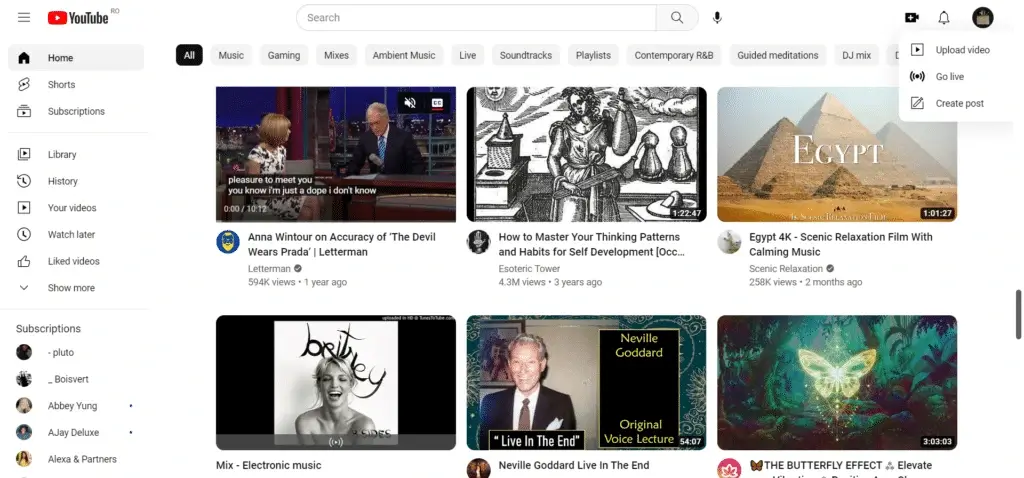
To determine what each user wants to see, YouTube looks at:
- Recent watch history and search history
- What the viewer watched during their last session
- Time of day and device context, such as mobile versus smart TV
- Short-term user behavior patterns
Recurring watch patterns matter a lot here. If a viewer regularly watches similar YouTube videos at certain times, the homepage adapts. This is why the same video can appear repeatedly on one person’s homepage and never show up on another’s. The system is not ranking the video in isolation; it’s matching it to a particular viewer and their current mindset.
2. How the YouTube suggested videos algorithm works
Suggested videos are the highest-traffic surface on YouTube and the main driver of sustained YouTube video views.
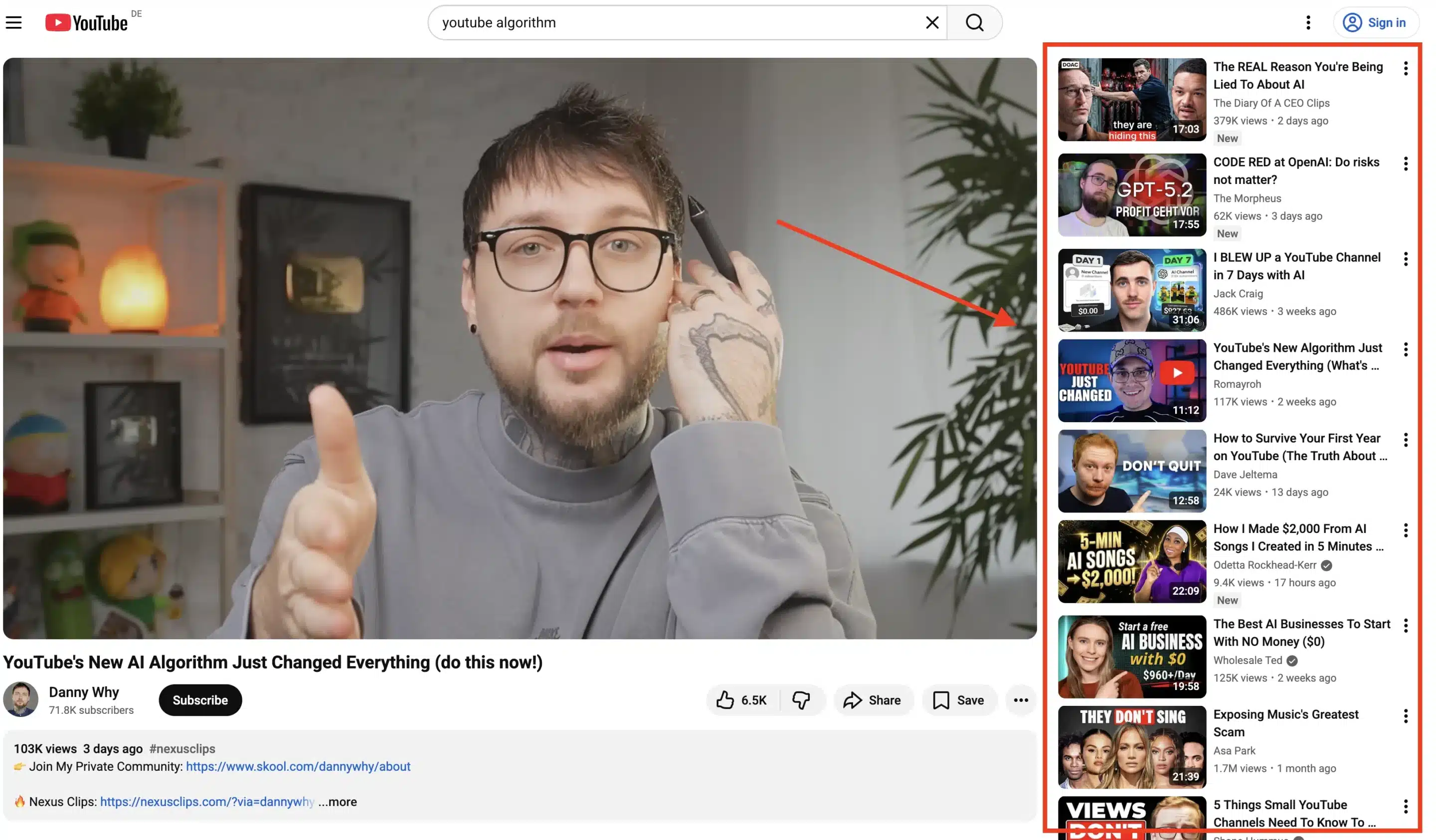
Suggested relies heavily on affinity scoring, which looks at:
- Videos watched together in the same session
- Topic clustering across related videos
- Patterns tied to the same creator or similar creators
- How viewers move from the current video to the next video
If viewers consistently watch more than one video from the same creator, or move between related videos on the same topic, YouTube strengthens those connections. Over time, this creates powerful recommendation loops through related videos. This is why consistency in topic and format often matters more than chasing trends.
3. How the YouTube search algorithm works
YouTube Search behaves differently from Home and Suggested because it is intent-driven.
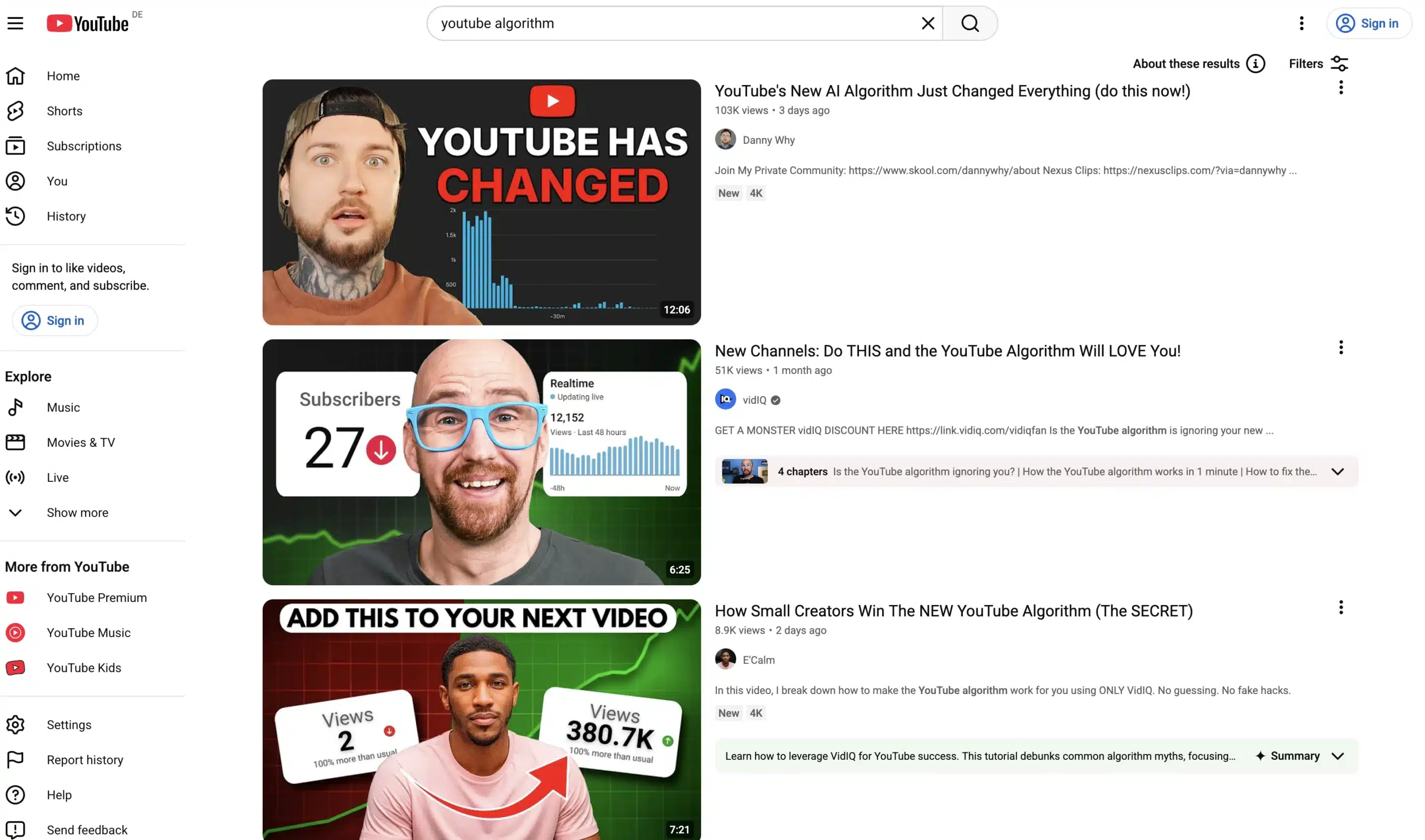
When ranking search results, YouTube focuses on:
- Search intent and relevance
- Relevant keywords in titles and video descriptions for YouTube SEO
- Captions, transcripts, and on-screen text
- Watch time and average view duration from search traffic
Search behaves more like Google search results than other YouTube surfaces, hence the name YouTube SEO. Clarity matters more than novelty. If YouTube clearly understands what a video is about and sees that viewers who find it through search stay to watch, it is more likely to rank and continue recommending that video over time, including resurfacing older videos when interest returns.
How the YouTube Shorts algorithm works in 2026
Shorts rely heavily on rapid satisfaction signals, completion rate, and rewatch behavior, and theyare a major part of YouTube’s success nowadays, given that they get 70 billion daily views.
The YouTube Shorts algorithm is built for speed. Unlike long-form videos, Shorts are evaluated almost immediately based on how viewers react in the first moments. YouTube is trying to determine whether a short video delivers value fast enough to keep viewers watching and whether it fits naturally into a viewer’s short-form consumption habits.
How the Shorts algorithm distributes videos
Every Short starts with testing. YouTube does not push Shorts broadly right away. Instead, it shows them to small initial test groups and closely watches behavior.
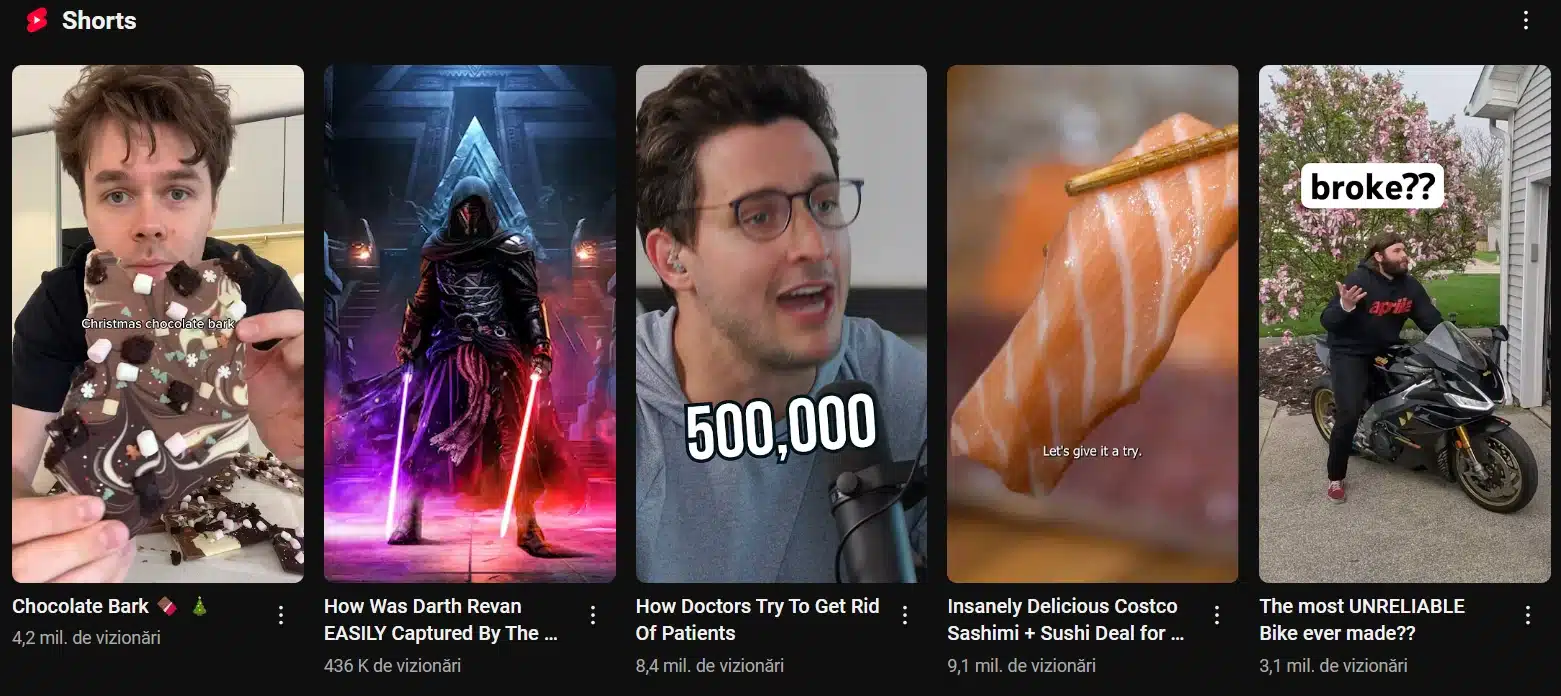
Key distribution signals include:
- Initial test groups, which help YouTube gauge early reactions
- Completion rate, which shows how often viewers watch the full Short
- Replays, which signal strong interest or clarity
- Swipe-through behavior, which shows how quickly viewers skip
Shorts that are watched all the way through, or replayed, expand into larger audiences. Shorts that cause viewers to swipe away quickly usually stop being pushed. This is one of the clearest examples of how quickly the algorithm tests and adjusts distribution.
How the YouTube Shorts algorithm ranks videos
Once a Short performs well in testing, ranking depends on speed and relevance.
YouTube looks closely at:
- Velocity, meaning early positive engagement relative to impressions
- Audience matching, based on watch history and past Shorts behavior
- Topic framing and clarity in the first 2 seconds, including visuals and on-screen text
Clarity matters more than creativity here. If viewers do not immediately understand what the Short is about, they are more likely to swipe. Shorts that lose viewers early rarely recover, no matter how strong the idea is.
Shorts and monetization changes in 2026
In 2026, retention plays a larger role in Shorts monetization. Completion rate and watch time influence RPM and eligibility more than raw views alone. Creators can earn between $0.01 and $0.06 for every 1,000 views.
Shorts that consistently hold attention are more likely to generate revenue and be included in broader recommendation cycles.
YouTube also increasingly encourages traffic flow between formats. Shorts are often used to introduce viewers to long-form content, guiding them toward longer videos from the same creator. When this flow works, Shorts act as discovery, while long-form videos drive deeper engagement and session time.
Tips for working with the Shorts algorithm
When you look at how the YouTube Shorts algorithm behaves in 2026, a few clear patterns emerge:
- Shorts perform best when the value is obvious immediately, since the algorithm heavily weighs early swipe-through behavior
- Videos with a clear topic and visual context in the first seconds are easier for the system to test and match to the right audience
- Completion rate and replays consistently signal stronger satisfaction than likes or comments
- Shorts are more likely to keep circulating when they fit naturally into existing viewing patterns rather than trying to appeal to everyone
- Shorts that connect cleanly to longer videos from the same creator tend to support broader channel discovery over time
These patterns reflect how YouTube evaluates Shorts quickly and at scale, using viewer behavior to decide whether a Short should continue being shown or quietly dropped.
How to improve your organic reach on YouTube in 2026
You can help the algorithm surface your content by improving discoverability, engagement, retention, and viewer satisfaction.
Once you understand how the YouTube algorithm works, improving organic reach becomes less about chasing hacks and more about aligning with how viewers actually behave. The goal is to make it easier for YouTube to understand your content, easier for the right audience to find it, and more satisfying for people to keep watching.
1. Work on visibility and discoverability
Visibility starts before anyone presses play. YouTube needs clear signals to understand what a video is about and who it is for.
Focus on:
- Doing keyword research aligned with real search intent, not trends for the sake of trends
- Writing clear, searchable titles that match what viewers are actually looking for
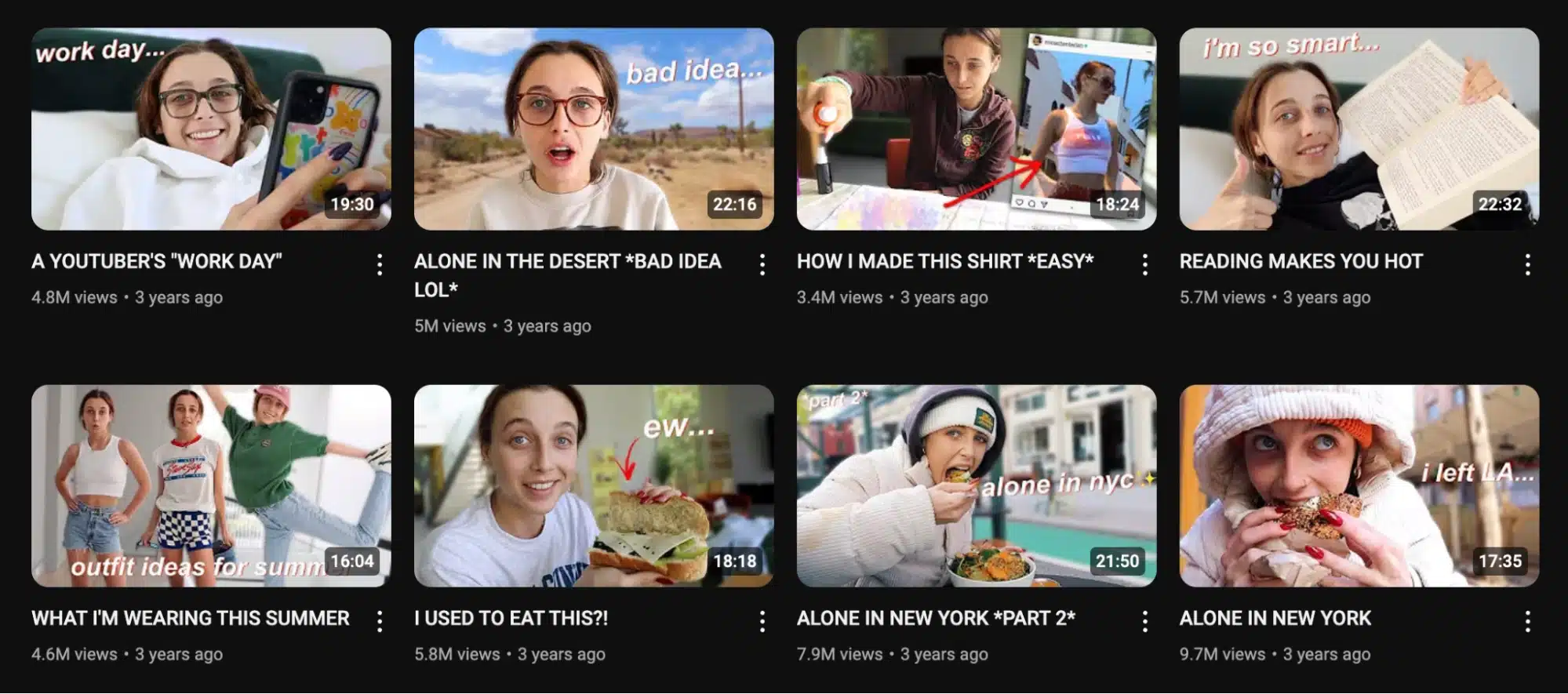
Designing YouTube thumbnails that clearly signal the topic and the value of the video
- Adding complete video descriptions and key timestamps to reinforce structure and relevance
- Including multi-language captions when possible to expand reach
- Posting regularly and scheduling content strategically