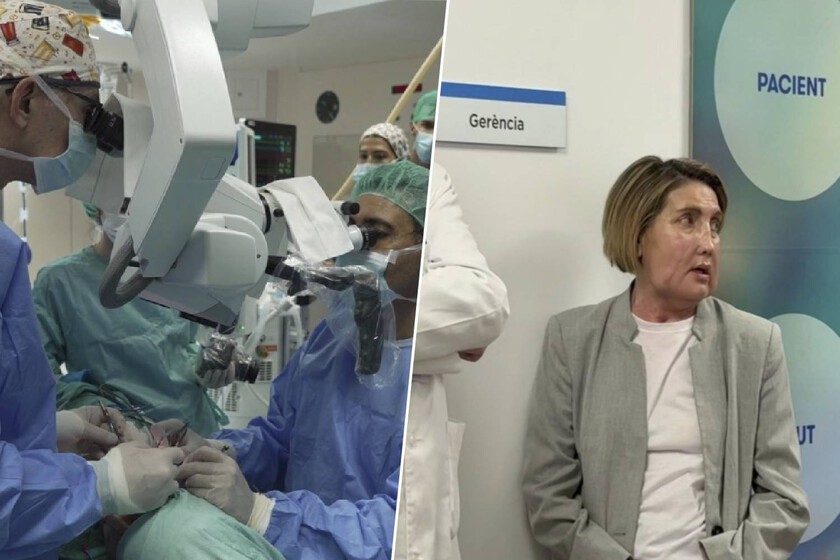
Spain has once again demonstrated why it remains at the top when it comes to organ transplants with the new milestone that has occurred at the Vall d’Hebron Hospital in Barcelona. It is neither more nor less than the first face transplant in history from a donor who had requested euthanasia, dying in a controlled manner in a hospital environment.
The programming. Until now, face transplants, of which about 54 have been performed worldwide, depended on the urgency and availability of a donor who died due to an accident or brain death. However, this case introduces a new variable: transplant scheduling.
This is thanks to the fact that the donor had requested to benefit from the Euthanasia Law and jointly expressed her willingness to donate all her organs and tissues, specifically her face. This is something that allowed the medical team to have time, which is not common in transplants, to look for the most suitable candidate and also plan in detail what the procedure was going to be like.
What they did. By knowing in advance the availability of the donor, the medical team was able to begin virtual 3D planning. In this case, digital models of both the donor and the recipient were created to be able to design completely personalized cutting and grafting guides to guarantee the success of the intervention.
And it is not at all easy to do this type of transplant, since the bone structure and soft tissues must fit together with millimeter precision, reducing the usual uncertainty of these operations.
The surgical challenge. The operation was not easy, as it lasted 24 hours and required the coordination of a team of nearly 100 professionals, including plastic surgeons, microsurgeons, anesthetists, nursing and immunology experts.
And it was not a simple aesthetic operation by putting the skin on top and that’s it, but rather a complete reconstruction was sought at all times that included muscles, nose, lips, blood vessels and of course nerves. All of this could not be done without microsurgical equipment that allowed arteries, veins or nerves less than a millimeter in diameter to be ‘connected’ in order to have sensitivity, movement or the ability to eat.
The recipient. Her name is Carme, and her life changed radically in 2024 while she was on vacation in the Canary Islands when she suffered a bite that caused a serious infection. The bacteria caused sepsis and death of the facial necrosis, causing him to lose part of his face and severely affecting his jaw.
In this case the consequences were devastating, since Carme could barely open her mouth and had serious difficulties breathing and feeding. Not to mention his social life, which had been drastically reduced, with the mental impact that this entailed. According to his own statements, the transplant was “the only solution” to try to regain a normal life.
Legal context. All this is not a coincidence, since the Vall d’Hebron was already a pioneer in 2010 in performing the first complete facial transplant in the world. Of the six transplants that have been performed in the history of Spain, half have taken place in this center, demonstrating the great experience they have in this regard.
The procedure is also framed within the Euthanasia Law that came into force in Spain in 2021, which contemplates the possibility of donating organs. The generosity of the donor, who explicitly offered her face during the authorization process for her assisted death, has opened a new door for regenerative and transplant medicine, demonstrating that advance planning can be key to success in the most extreme surgeries.
Images | Vall d’Hebron
In WorldOfSoftware | Elizabeth Hughes’ 42,000 injections and the miraculous discovery of insulin