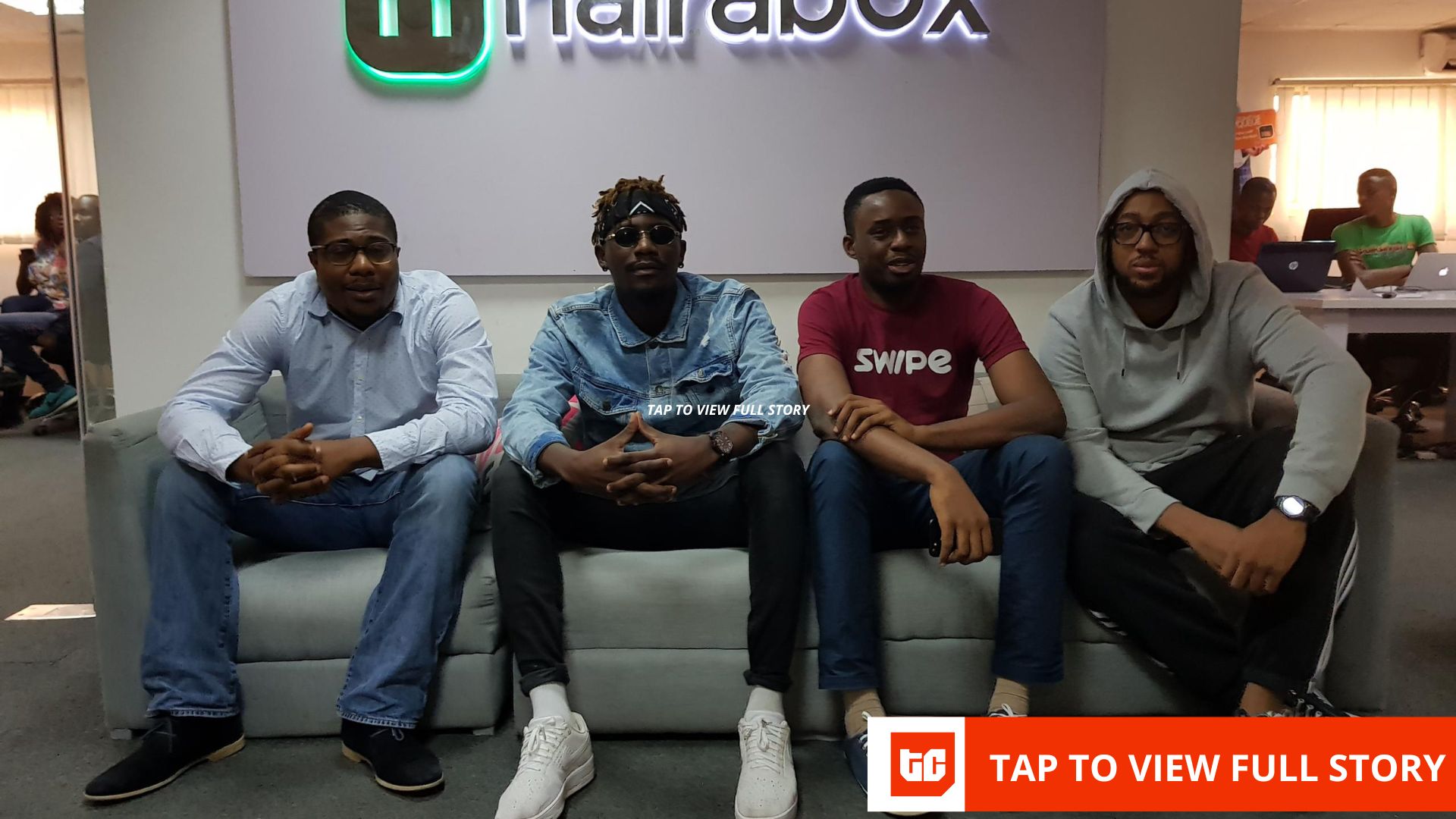
In October 2024, nearly a decade after it launched from a cramped “shop office” in Lagos, Nairabox, a Nigerian digital ticketing and lifestyle platform, was acquired by travel tech giant Wakanow. For founders Jay Chikezie and Tokunbo Adetona, the exit marked the end of a 10-year sprint and the beginning of a new chapter for Nairabox.
What began as a payments experiment in 2015 became one of the backbones of a multi-billion-naira entertainment ecosystem. And in the end, it was the seriousness of that ecosystem and the sheer size of the distribution runway that Nairabox could unlock that caught Wakanow’s attention, until the founders finally said yes.
Nairabox was never built to be sold
Their founders intended to dominate the lifestyle space, not exit it. But over time, they realised something else: to achieve the vision they had grown into, someone else might need to take the baton.
“We’ve always been serial entrepreneurs,” Chikezie says. “Nairabox was our first child, but we were already working on other babies. We launched Tremendoc in 2017 while Nairabox was still crawling.”
Wakanow had been trying to acquire the company since 2022 to expand beyond travel into entertainment and lifestyle sectors, according to Chikezie. The founders were stubborn; the attachment was emotional as much as strategic. But the courtship was persistent.
“They started as clients,” Adetona explains. “But from the Group CEO, Bayo Adedeji, it was clear he saw something much bigger. He knew where he wanted to take it, and eventually, we saw that too. It became a legacy conversation.”
A good deal, but also the right one
Was the acquisition money good?
Chikezie laughs before answering: “It was good. But beyond the money, they needed to understand the vision.” The founders did not disclose the deal’s cost.
The negotiation spanned three years. What convinced the founders wasn’t just valuation; it was continuity. Wakanow agreed to preserve the Nairabox brand, maintain core partnerships, and embed Nairabox’s culture of innovation into a larger distribution network. The deal also included transitional roles: Chikezie joined as an advisor and consultant.
“We wanted to make sure the vision was transferred properly,” Chikezie says. “Nairabox didn’t just build tech; we built partnerships. That was our superpower.”
For Chikezie and Adetona, one word kept coming up: distribution. Wakanow had physical locations across Africa, something Nairabox could never replicate on its own. While young Nigerians embraced digital ticketing, a large portion of the population still wanted human reassurance.
“People want to walk in somewhere. They want to speak to someone,” Adetona says. “Wakanow had that trust network.”
Wakanow also had capital, regional presence, and the operational muscle to execute the “lifestyle ecosystem” vision Nairabox had always imagined: flights, events, food, streaming, even transport.
A company built out of frustration
Ironically, Nairabox never intended to be a ticketing company.
“We were building a payments platform,” Chikezie recalls. “POS networks were a mess at that time. Cards declined constantly. We created a barcode system so people could pay offline.”
Nairabox secured 400 merchant outlets and a verbal agreement with a bank to use its licence. On that basis, they raised ₦20 million (approximately $100,000 at the 2015 exchange rate of ₦200 to $1) and built the full product in 2015.
When they returned to the bank, ready to launch, everything collapsed.
“They told us, ‘You’ll be in the pipeline for next year.’ We had secured the money because we told investors that the bank was backing,” Chikezie says. “The team was tired. It was devastating.”
In the emotional aftermath of that meeting, Chikezie, drawing from his entertainment background, pitched a survival idea: ticketing.
Cinemas had no ticketing platforms. Event promoters relied on email confirmations and printed sheets of paper. The queues were endless. The experience was chaotic. Nobody thought digital ticketing could be an industry.
The founders argued bitterly. The projections for payments had been huge; the projections for ticketing were tiny. But the barcode tech they had built could be reversed: instead of scanning to pay, users could scan to enter.
“Six or seven years later, I realised we had actually introduced e-ticketing to Africa,” Chikezie says. “We didn’t think we were innovating back then. We were just in trouble.”
How an underfunded startup hacked visibility
Unlike fintechs like Paystack and Flutterwave, born in the same era, Nairabox was underfunded. From 2015 to 2024, the startup raised only $1.2 million.
“We were grossly underfunded,” Chikezie says. “But we let our revenue speak for us.”
The team compensated with partnerships. Nairabox struck deals with 13 commercial banks and collaborated with Visa and Mastercard, thereby strengthening its financial ecosystem. Its reach extended into consumer and lifestyle sectors through partnerships with Burger King, Bukka Hut, major cinema chains, and hundreds of restaurants nationwide. The company also teamed up with major global brands such as BlackBerry, Nokia, Guinness, and Universal Music Group, while working closely with promoters and entertainment brands across the country.
In 2018, a Visa partnership gave them 50 billboards for a minimum of ten big-ticket concerts in December. As part of the deal, Visa customers who bought tickets on Nairabox would receive a 10% discount on concerts featuring Afrobeats superstars Davido or Burna Boy. The following year, 2019, MasterCard, feeling outdone, doubled it to 100 billboards.
Recommended: The raves where you’ll definitely meet tech bros and babes this December
“Those billboards would have cost hundreds of millions (of naira),” Chikezie says. “But partnerships were our currency.”
The visibility made Nairabox the “cool brand” in lifestyle technology and eventually the default ticketing engine for Nigeria’s biggest concerts.
The event that changed everything
For their first year, no promoter cared about the technology. What mattered was database size, and Nairabox had none. They just needed one event, according to Chikezie.
It arrived in 2016: Felabration at Hard Rock Café, making its Lagos Island debut.
The promoter, Matthew Ohio, called Chikezie to pitch the idea. Jay made a snap decision that startled everyone: he offered ₦1 million (about $1.39 million at the 2017 exchange rate of ₦360 to $1) instantly for 40% of the ticket sales.
As soon as Ohio left the office, the other co-founders panicked. But Chikezie insisted: “People who need to see our technology will be there.” He was right.
The event created the viral visibility Nairabox had been waiting for. Promoters began reaching out. The brand suddenly had street credibility. The tech worked flawlessly in a high-pressure environment.
But the true explosion came the following year.
Nairabox worked with Mr Eazi, Burna Boy, and others, but the watershed moment was Davido’s 30 Billion Concert in 2017.
After the show, Davido posted on Snapchat, thanking Nairabox by name and saying the concert grossed over ₦500 million (about $1.39 million at the 2017 exchange rate of ₦360 to $1).
“People started counting our money immediately,” Chikezie laughs. “Even FIRS showed up at our office.”
By January 2018, dozens of ticketing platforms sprang up, believing ticketing was suddenly profitable. Most died within a year.
The founders recall one competitor calling to concede: “Okay, Jay, I accept. You guys are number one.”
The tech gap no one saw coming
In 2017, Nairabox’s founding CTO and co-founder, Damilola Jegede, left the company. His departure created a deep technical vacuum.
“Dami was thinking three steps ahead of every build,” Adetona explains. “Replacing that kind of technical brain is nearly impossible.”
They hired engineers, but execution slowed. Some of the big ideas stalled because the team lacked senior tech leadership.
Funding could have solved this, but COVID hit. When the lockdowns began, 80% of Nairabox’s revenue disappeared overnight. Cinemas, events, festivals, everything stopped.
The team had to improvise again.
The company launched Nairabox Food in 2020, a food delivery company, signing 300 restaurants in Lagos and 60 in Abuja. It also launched Nairabox TV in April 2021, pioneering live-streamed studio concerts with artists like Chike and Oxlade.
Nairabox collaborated with Nelson Jack and later with YouTube, streaming performances by Grammy-winning acts Wizkid and Burna Boy. It kept the brand alive until events returned. But it also exposed a tough truth: to scale the big ideas, they needed funding, and fast.
A ticketing company that never thought about competition
One of the striking things about Chikezie and Adetona is how little they cared about competitors.
“People get triggered by competition,” Chikezie says. “We focused on the problem.”
Nairabox, despite not initially intending to be a ticketing company, ultimately played a decisive role in shaping the Nigerian e-ticketing landscape after its entry in 2015. Although platforms like Ariiya Tickets were founded earlier, the critical innovation Nairabox introduced was barcode technology, which quickly became the industry standard and is now utilised by nearly every ticketing platform in the country.
Chikezie and Adetona may be serial entrepreneurs, but Nairabox is the company that taught them the value of stubbornness, improvisation, and timing. The company they built out of panic became a national infrastructure. And now, under Wakanow, it has a runway long enough to finally fulfil the vision that started in a small Lagos office, to become the largest lifestyle and e-ticketing platform in Africa. Adetona is building a new payment company for freelancers called Simplifi, while Chikezie continues to run Tremendoc and Myphlexit, a new lifestyle company for the UK market.