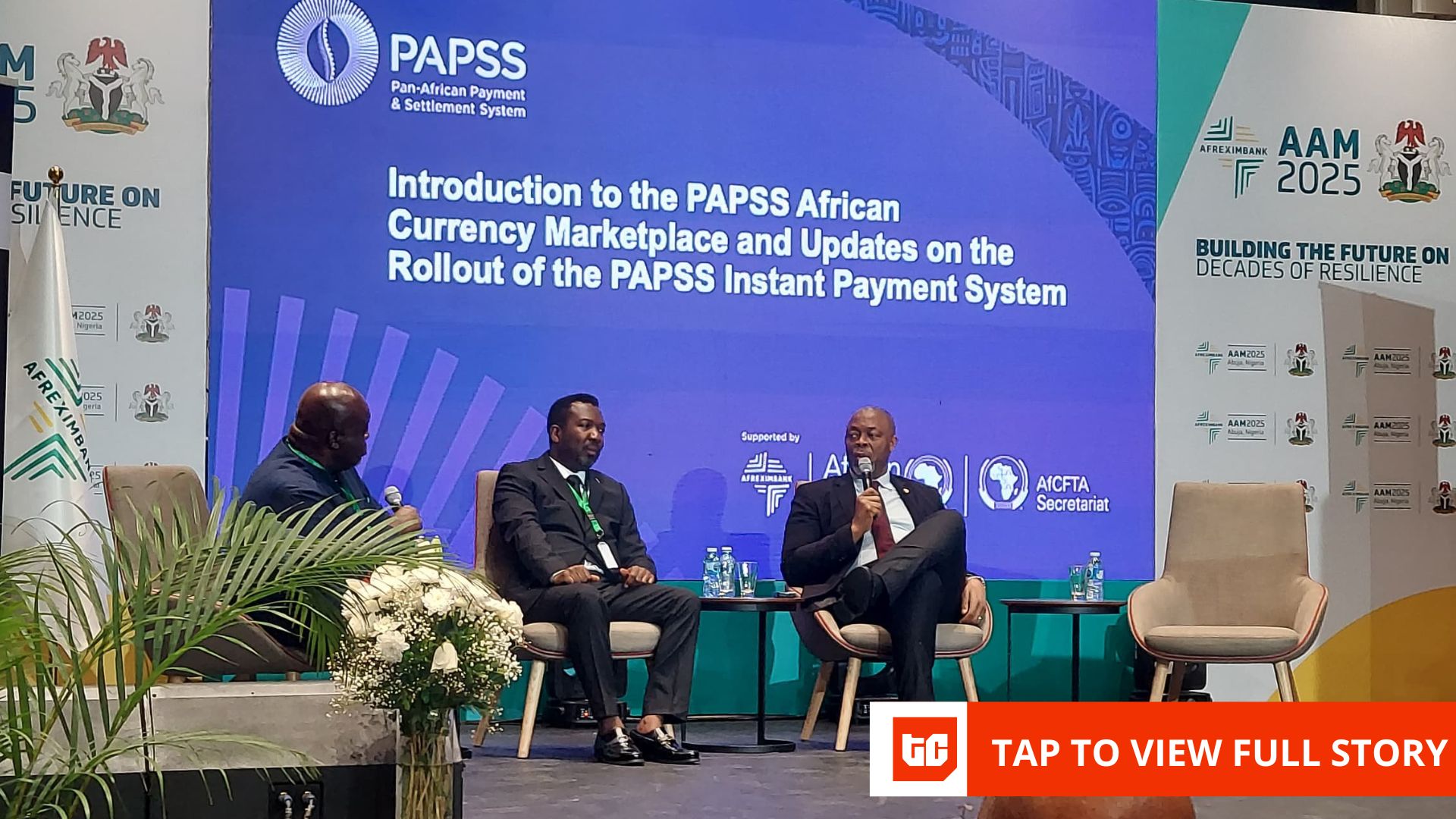
When the Pan-African Payment and Settlement System (PAPSS) launched in January 2022, it aimed to address one of Africa’s most persistent trade barriers: the high cost and complexity of cross-border payments. Its core promise was simple: enable instant, low-cost payments in local currencies, eliminating reliance on correspondent banks in Europe and the United States.
That ambition is increasingly intersecting with a broader shift underway across the continent—the rise of Digital Public Infrastructure (DPI). In Nigeria, one of PAPSS’s most important markets, foundational layers such as real-time payments, digital identity, and interoperable banking rails are beginning to reshape how money moves domestically and, by extension, how it can move across borders.
Sub-Saharan Africa remains the most expensive region in the world for sending money, with average remittance fees reaching 8.45% in Q1 2025, far above the global average of 6.4% and more than double the United Nations’ Sustainable Development Goals target of 3%. In certain intra-African corridors, such as transfers from Tanzania to Rwanda, costs can soar to 15–20% due to limited direct banking links.
A major driver of these high fees is the “USD detour,” in which a large majority, often estimated at over 80% of cross-border African payments, are routed through correspondent banks in the US or Europe, forcing currencies like the Kenyan and Ugandan shillings to undergo unnecessary dollar conversions that can add an extra 2–5% to every transaction.
For decades, intra-African transactions were routed through financial hubs like New York or London, even when both parties were on the continent. A Kenyan merchant paying a Zambian supplier, for instance, would often have to settle in dollars or euros, forcing African banks to hold scarce foreign currency reserves just to trade with one another. The process was slow, expensive, and exposed businesses to exchange rate volatility.
PAPSS was designed to change that. By allowing payments to be settled directly in local currencies, it removes intermediaries, cuts out double currency conversions, and reduces both transaction costs and settlement times, from as long as three to seven days to near-instant transfers.
Four years on, the system is beginning to gain traction. PAPSS is now live in 19 countries, connecting more than 160 commercial banks and over 15 national switches. Adoption is also deepening in key markets such as Nigeria, where more than 22 banks, including Access Bank, UBA, Zenith Bank, First Bank, Fidelity Bank, and Sterling Bank, are already integrated into the network.
This progress is not happening in isolation. Nigeria’s domestic payments infrastructure, anchored by the Nigeria Inter-Bank Settlement System (NIBSS) and real-time platforms like NIP, has created a fertile environment for PAPSS to plug into.
“Almost all the banks in Nigeria are connected to our system,” said Papa Samba Thiongane, Head of Marketing and Communications at PAPSS, in an interview with in January. “Many have already implemented PAPSS on their mobile applications.”
Yet scale alone does not define its ambition. New products such as PAPSSCARD, launched in June 2025 by Afreximbank, PAPSS, and Mercury Payment Services, and initiatives like the African Currency Marketplace point to a broader goal: positioning PAPSS not just as a payments rail, but as the foundation of a more integrated Pan-African financial system.
At its core, PAPSS is built for simplicity. A sender initiates a payment in local currency through a bank branch, mobile app, or internet banking platform. The instruction is routed through PAPSS for validation and compliance checks, then delivered in real time to the recipient’s bank, where funds are received in local currency. Central banks later settle net positions behind the scenes.
But the ambition extends beyond speed. By enabling cross-border transactions in local currencies, PAPSS aims to reduce reliance on the dollar and euro, ease pressure on foreign exchange reserves, and give African economies greater control over their financial flows.
The rollout of PAPSS across Africa has been uneven, with some users still encountering delays and limited awareness of how to access the system. Even in major corridors such as Nigeria and Ghana, friction points remain, slowing adoption and frustrating users who expected seamless cross-border payments.
Paul Gozo, a Ghana-based project coordinator, frequently sends transfers to colleagues across West Africa. He noted that while sending money to other countries is generally straightforward, transfers to Nigeria have become more complicated.
“For almost a year, PAPSS worked perfectly,” he recalled. “I could send money to about 10 fellows at once from the comfort of my home.”
However, new limits have been introduced on transactions between Nigeria and Ghana. “You cannot send more than 10,000 Ghana cedis at a time,” Gozo said. “I have to visit the bank two or three times to send the same amount I used to send in one transaction. Plus, I must provide extra proof of funds and explain the purpose of each transfer.”
These new requirements have added both time and administrative burdens for frequent users. While PAPSS was designed to streamline cross-border payments and reduce reliance on correspondent banks, operational challenges have created friction in practice.
Workarounds remain common for some users. Samuel Duwuona, a Ghana-based media professional, told , in March 2026, that he had to open an Ecobank account specifically to receive payments from Nigerian clients, pointing to ongoing gaps in data sharing between financial institutions.
“I’m not sure how effective mobile money transfers between Ghana and Nigeria are right now,” Duwuona said. “It’s still in a sandbox and not available to everyone. Something is going on between Onafriq, PAPSS, and some banks and mobile money operators.”
That “something” reflects ongoing efforts to extend PAPSS beyond banks into mobile money ecosystems. In June 2025, the Bank of Ghana approved a six-month pilot led by Onafriq (formerly MFS Africa) and PAPSS, enabling customers of banks, fintechs, and mobile money operators to send and receive cross-border payments directly into wallets and bank accounts. Transactions are cleared through Afreximbank, which acts as the central settlement entity.
Building on that pilot, the two organisations expanded the model in February 2026, launching a bi-directional payment corridor between Nigeria and Ghana. The initiative, Africa’s first wallet-based outbound payment pilot from Nigeria, allows users to send money in naira and receive funds in cedis, eliminating the need for a hard currency intermediary such as the US dollar.
As the partnership matures, Thiongane said new solutions are on the way to reduce the frictions customers face. In 2025, PAPSS, in collaboration with the African deep-tech company Interstellar, launched a Pan-African Currency Marketplace (PACM). The platform enables the direct exchange of local currencies (e.g., Nigerian naira to Ethiopian Birr) without routing the transaction through an external foreign currency.
“This year, our focus is on expanding the network across more African countries—especially Francophone markets and other key economies—while driving deeper adoption,” Thiongane said. “We’re working closely with banks and fintechs to promote usage and ensure businesses and consumers can use the system for their everyday transactions.”
This report is produced under the DPI Africa Journalism Fellowship Programme of the Media Foundation for West Africa and Co-Develop.