
You can’t price, market, or ship well until you know who values you most.
Most companies don’t plateau at $2–10M ARR because of product or marketing. They plateau because they’re building for “everyone who might buy,” instead of a crystal-clear someone. This typically involves developing “personas”, “ideal customer profiles (ICPS)”, “jobs to be done” or something similar.
The tricky part here is that most of the traditional processes are a waste of time.
I’ve seen teams waste months here with very little to show for it. This is the process that I’ve found to be much faster and more impactful.
What is a Persona and Why Does It Matter?
The single biggest inflection point in most companies happens when they understand these groups, collect the data, use it correctly, and then adjust their strategy accordingly.
Let’s say you sell a product that digs holes. What kind of hole does your customer actually want?
Well, that depends on whether your customer is a:
- 5-year-old at the beach
- A hobbyist gardener
- A construction worker
- An oil prospector
All of these people want a hole. However, why they want a hole dug and what that hole has to look like is very different.
Because of that, the value that they put on a hole is also very different.
A 5-year-old at the beach might only want a single hold dug and doesn’t have any money to pay you. An oil prospector might pay $100k per hole and might need hundreds of them.
Granted, these holes need to look different, but that’s kind of the whole point.
Problem Centric Personas
There are lots of different methodologies to define your user personas.
In my experience, the most useful one by far is grouping users by the underlying problem they are coming to your product to solve.
This is the best indicator of both their retention potential and willingness to pay.
At Codecademy, we had four main personas:
-
Hobbyists: People who find coding interesting but don’t need it for anything specific.
-
Students: People learning for school assignments.
-
Career Upskillers: People adding coding to their existing job skills, so a financial analyst who wants to move from Excel to Python + SQL.
-
Career Switchers: People who want to become full-time engineers or data scientists. So this could be a journalist who wants to become a full-stack engineer.
After we started collecting this data and using it, we saw some unsurprising trends.
- “Hobbyists” don’t really need to learn to program; it is literally a hobby. They were typically retirees or people who just liked learning.
- “Students” had a need, but learning to program didn’t unlock any immediate earnings, so they retained well on the free product but didn’t have a high willingness to pay.
They typically didn’t buy the paid product. If they did, they didn’t stick around.
However, “Career Upskillers” and “Career Switchers” had a real problem we could solve.
If they gain new skills, they can make more money relatively quickly, so not surprisingly, they had the highest LTV.
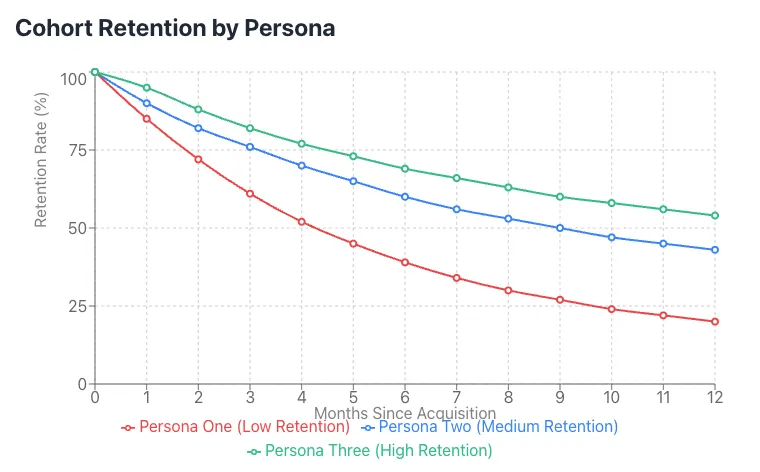
When we used this segmentation information in our data, we saw something like the image below. Our best personas had a meaningfully different retention rate and LTV.
How to Build Your Personas
Like all good consultants, I came up with a catchy & complex framework for you to solve this:
- Have your founder guess.
In my experience, most of the long, expensive research frameworks here are a waste of time.
Founders should have been in your problem space long enough and spoken with enough users that they can probably segment people with about 30 minutes of thinking.
If they don’t, you have other problems.
You’re better off forming some rough categories and filling in details as you speak with users in the course of routine user research.
As with most things in the startup game, velocity is everything.
Using This Data to Make More Money
For this data to be useful, you need to do the following things:
- Collect it
- Integrate it across your analytics so you can see the differences
- Modify the early experience to maximize activation rates.
- Use the overall lessons to drive product development & marketing.
The easiest way to do this is with onboarding surveys.
I’ve never seen any material drop-off in early-stage engagement from onboarding, and if you use this data to customize the early-stage experience, which you should, you will likely increase activation.
Let’s take a look at a few examples.
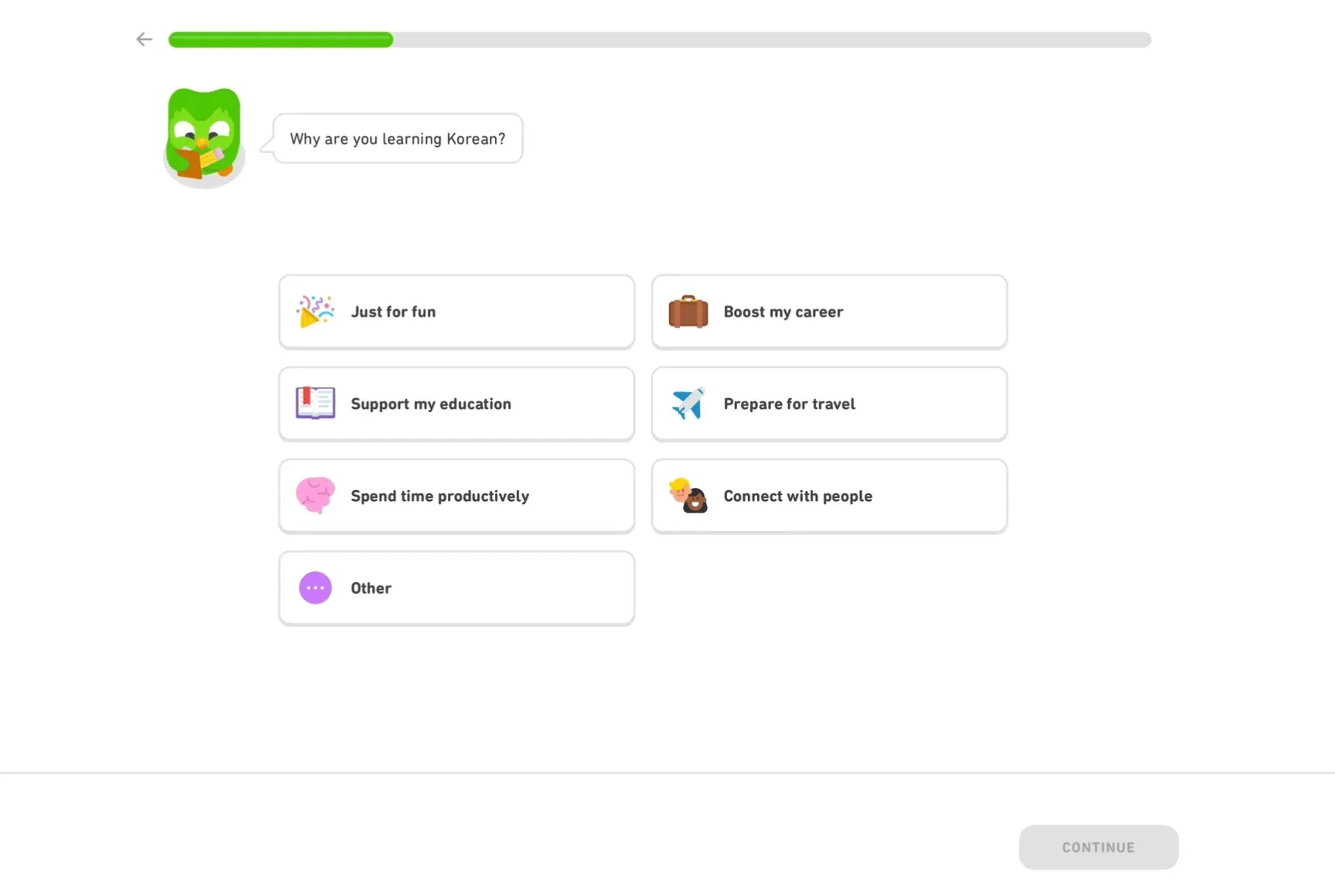
Duolingo does this. They asked for the core motivation up front, as they can’t infer this from the course data.
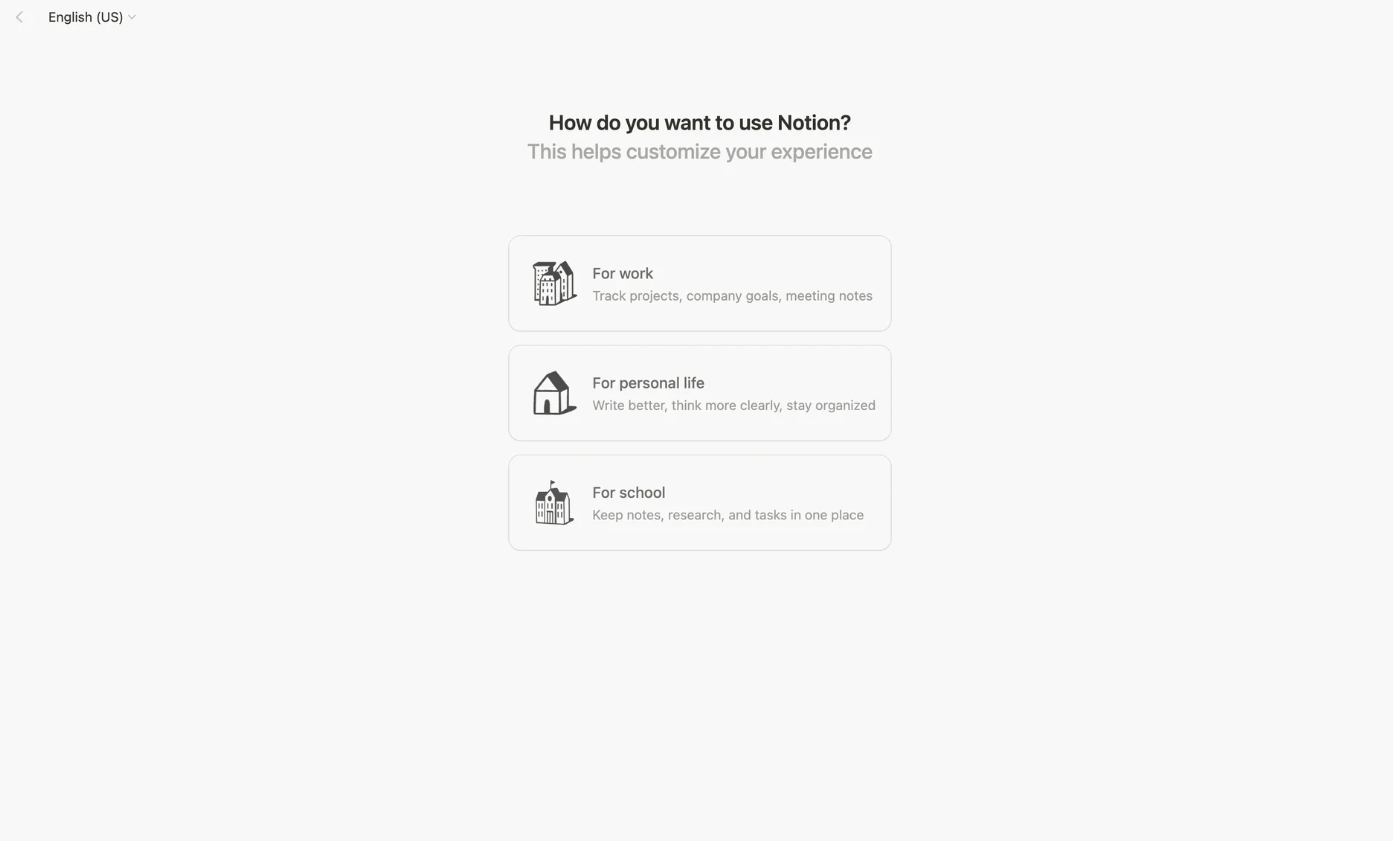
Notion asks for your organizational information, likely as they have materially different PLG motions in selling to these users
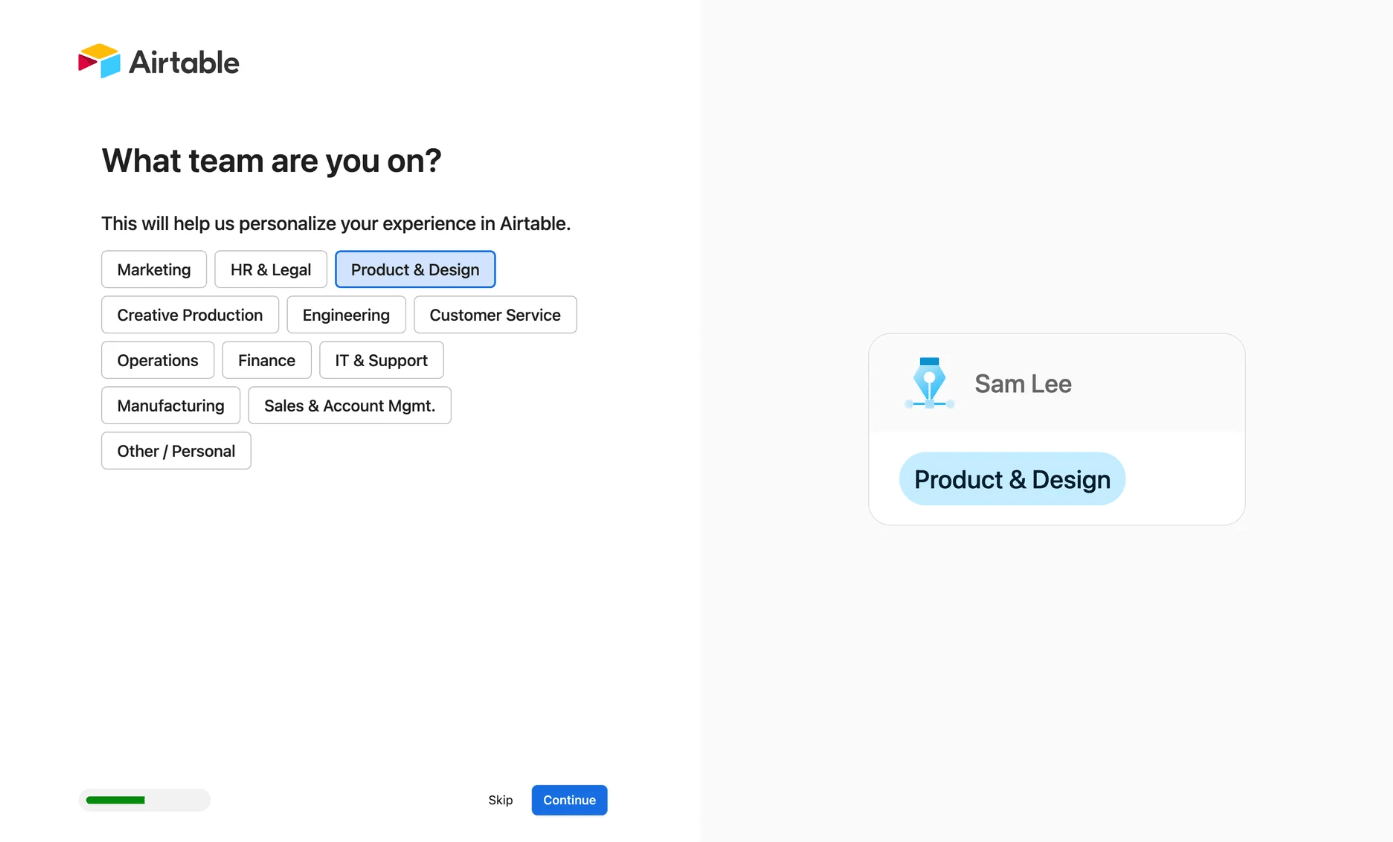
Airtable collects the role of the users, likely as they both customize the early stage experience and their product gets used on the team level primarily.
So, What Do You Do With This Information?
As stated above, the basic playbook looks like this:
- Map out your personas with your founder. Do it quickly.
- Set up something during onboarding that allows you to segment them.
- Use this segmentation data in all of your key metrics. Look at it weekly.
- Pick your ideal persona
- Make sure both marketing and product optimize for this over the others.
The hardest part of this by far is having the discipline to focus on the best persona in your marketing and product development.
This cannot be overstated.
The larger your team and/or the longer you’ve been doing this, the more resistance there will be to stop doing things that kind of work and start trying to find things that really work.
Good luck out there.