![How to ask for donations on social media [tips + examples]](https://blog.hootsuite.com/wp-content/uploads/2023/06/examples-of-social-media-donations.png "How to ask for donations on social media [tips + examples]")
Receiving a donation for your nonprofit is the absolute best. But asking for that money? A little awkward and tedious.
Luckily, asking for donations is the easiest it’s ever been. As long as your nonprofit organization has a social media account, you’ve got a platform to help spread the word and mobilize support.
Keep reading to see real examples of how to ask for donations on social media, plus short, copy-and-paste messages you can use right away.
Key Takeaways
- Specific, urgent, and story-driven donation posts perform best on social media.
- Make giving effortless with clear goals, CTAs, and one-click donation paths.
- Keep your content mix balanced with storytelling posts, progress updates, and donation requests.
- Hootsuite takes the guesswork out of posting with smart timing recommendations and a centralized calendar to manage every channel.
The best donation asks on social media are specific, urgent, story-led, and ridiculously easy to act on.
Here are 16 tips you can use to strengthen your fundraising strategy, break through busy feeds, and motivate people to give.
1. Understand your audience
It’s impossible to craft an effective message if you don’t know who you’re talking to.
Want to know who’s actually on the other side of your posts? Take a beat to study your audience through social media analytics and social listening.
Then match the ask to what’s realistic for them. Some audiences can support small one-time gifts, while others may include major donors.
Remember: Different audiences respond to different initiatives and messaging styles.
Learn more about how to find your target market here.
2. Be specific in your ask
Most nonprofit organizations are always in need of money, but there’s nothing compelling about an ongoing, bottomless request for cash.
Instead, create campaigns focused on specific amounts of money and specific outcomes for best results.
For instance, “We’re raising money to pay for Jeremy the Dog’s vet bills” is a specific, achievable goal that people can get behind. Or, “It’s Sloth Month! For every $100 we raise in May, we can sponsor toe surgery for one endangered sloth!”
Be clear about what you are asking for, and what impact that money will have.
Source: Nanaimo Foodshare Society
3. Create a sense of urgency
It’s easy to put things off without a deadline. By giving your donation request a time limit, you’re inspiring your potential donor to take action before it’s too late.
You can do this by setting a fundraising goal to achieve by a certain date
For example, “We need to raise $10,000 by the end of the month to start our Habitat for Humanity project!” Or, offering limited-time-only rewards for donors: “Everyone who donates this week will receive a special sticker pack!”
Urgency works especially well for time-bound events like Giving Tuesday, year-end appeals, or your annual fundraising gala.

Source: Students Rebuild
4. Tell specific stories
Sure, your organization may have tons of impressive stats about the good your funding does, but ultimately, humans connect with stories.
If you’re able to share a personal, specific instance of impact with your social media followers, you’re going to make a powerful impression (just take a look at the example below – who’s chopping onions?).

Source: Big Brothers Big Sisters of America
So share a heartwarming picture of that little kid wearing the new pair of glasses your charity bought for her, or post a video of your scholarship recipient reporting from his dorm room.
You can even share the story of a volunteer or employee who has been touched by your organization’s work. Get granular, and build that emotional connection with authentic, personal testimonials and success stories. Just don’t forget to include a call-to-action to donate, too.
5. Share data about your impact
Of course, that’s not to say every post needs to be an emotional personal story. Sometimes it’s nice to mix it up with some actual numbers (or bigger-picture information) about the impact your organization has made.
If you have data about what a difference you’ve made, consider posting an infographic or video.
Don’t sleep on data. It can actually tell a compelling story and prove that donations are actually making a difference.

Source: Writers’ Exchange
6. Share your fundraising progress
Sharing your progress towards a fundraising goal or milestone can be a great excuse to post about your donation drive. And, transparent updates help build trust and encourage continued support throughout your campaign.
These sorts of posts also offer social proof, confirming to donation-curious followers that other people have taken the plunge, and that they can feel comfortable doing the same.

Source: Habitat for Humanity
7. Make it easy to donate
If you want people to give you money, make it as frictionless as possible to do so. Put that donation link front and center every chance you get.
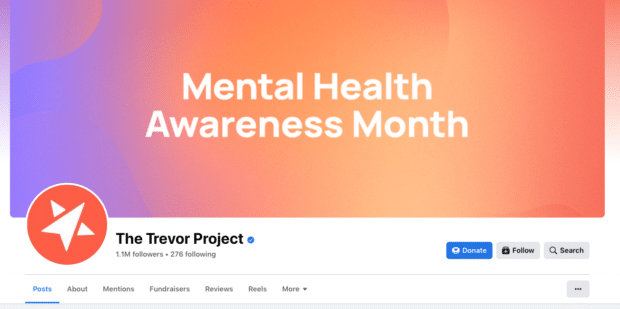
Anywhere you have a chance to leave a link directly to your donation page, do it — whether that’s in your social media profile or as a sticker on your Story.
To take it one step further, make sure your donation form is fast, mobile-friendly, and doesn’t ask for unnecessary info
Anywhere you have a chance to leave a link directly to your donation page, do it — whether that’s in your social media profile or added as a sticker on your Story.
Pro tip 💡: Include a clear option for recurring donations if you want to boost long-term impact.
8. Curate a mix of content
This might seem counter-intuitive, but stay with us: sometimes, to collect donations, you need to not ask for donations.
That’s right: a good social media content calendar for nonprofits includes more than just requests for funding. Entertain, educate, inspire, and then casually slip in that donation request on your next scheduled post.
In short, mixing educational and inspiring posts is key for long-term donor engagement.
Backpack Buddies, for instance, shared this helpful video about how to save money on groceries, while also letting its audience know exactly what their organization is about (and how far they’ll be able to stretch your money, should you be inspired to donate).

Source: Backpack Buddies
9. Add a donate button to your page
Online donations just got way easier.
On Instagram and Facebook (both Meta companies), you can allow people to donate directly through your page with a donate button.
Just set yourself up with Fundraise with Facebook, then add a button directly to your profile.
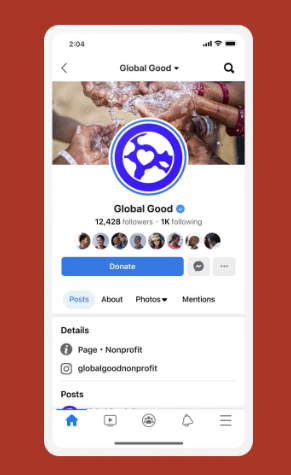 Source: Facebook
These donate buttons provide a quick and easy way for people to give funds to your organization without leaving social media (you just need to sign up for Meta Pay first).
More on signing up for fundraising tools on Meta here.
10. Incentivize sharing
Get your followers to help you spread the word about your fundraising campaign by offering incentives for sharing. Just think: even one share can expose your fundraiser to an entirely new donor base.
Whatever donation platform you’re using to collect money should offer an option to prompt donors to share. Take this opportunity to encourage them to humble-brag about how they’ve made a difference — “Tell your friends about why you support this amazing cause!”

Source: The Giveland Foundation
Even if only a fraction of donors actually post about their donation, that’s still increased the social reach of your campaign, so it absolutely never hurts to ask.
11. Use the word “you” and action verbs
There’s an art to asking for donations, and it involves making the reader the hero of your post. Address the reader directly with the word “you” (or “we”) and incorporate as many action verbs as you can.
This adds a personal touch that makes supporters feel seen. For example:
“You can make a difference. Your donation impacts horses all over the world. Donate today, and you will fund a brand new schoolhouse.”

Source: Drew Child Development Corporation
12. Post at the right time
Getting your donation request in front of the most people possible means scheduling your posts for the right time.
Use a scheduling tool like the Hootsuite dashboard to plan ahead for optimal posting times on all of your preferred social media platforms.

13. Embrace hashtags and social SEO
Get your donation-request posts discovered with strategic hashtags and social SEO practices. This helps your social media posts reach people who are already searching for related topics.
To get started, pick three to five relevant, specific hashtags that will reach your target audience — think #GivingTuesday or #RescueDogs.

Source: Wires
Using strong keywords in your captions is important too, as social platforms improve their search functionality. Be clear and accurate in everything you write to improve your discoverability.
Learn more about how to help people find you on social media here.
14. Encourage supporter-run fundraisers
Facebook has a fundraiser functionality that allows users to raise funds for a specific charity or nonprofit. All you have to do as an organization is set yourself up to allow for that functionality, using Facebook’s fundraiser tools here.
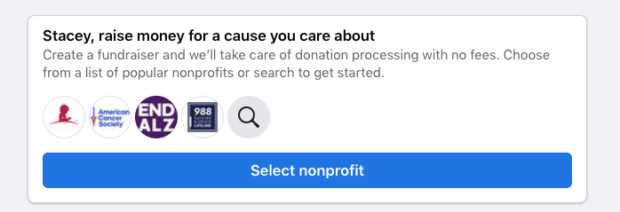
Once you’ve got the capability in place, let your followers know this is a possibility and encourage them to run their own micro-fundraisers whenever they want.
Celebrate a birthday? Honor a loved one’s memory? Whatever their personal reason, we love to see the whole community getting involved.
15. Collect donations in a livestream
Hosting a livestream is a great way to raise awareness and encourage donations in real time.
Remember telethons? There’s an excitement and urgency around a specific fundraising event that can incentivize people to open their wallets.
Your livestream could be a Q&A interview, an “ask me anything” session, a special concert or speaker, a behind-the-scenes or on-the-ground look at the impact you’re making. Here are some tips for creative social media live streams to get the juices flowing.
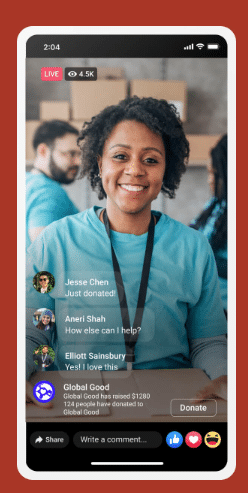
Source: Facebook
Though you can go live on lots of social platforms, Facebook Live and Instagram Live allow you to add donate buttons right on your livestream, as does TikTok, so those are the easiest ways to encourage donations.
16. Say thank you
Once your campaign is over, don’t neglect your good manners: follow up with a big thank you post to your amazing donors. It’s a great way to acknowledge supporters and even recognize past donations.
Plus, shouting out your supporters is just one more chance to remind others that you heartily welcome donations, please and thank you.

Source: Ohm Radio 963
Here are some real nonprofit examples that show how powerful a well-crafted donation ask can be.
1. The Spot
Kids charity The Spot put up a Facebook post promoting a “Support a Student” donation drive, and it ticks all the boxes for a strong ask.
It mentions a specific, attainable goal (supporting 700 students) and clarifies exactly what impact a $25 donation can have (e.g., it purchases a backpack and supplies for one student).
And, a link to donate with PayPal is right in the post.

Source: The Spot
A potential donor isn’t going to have very many excuses not to click that link. Plus, calling out a specific donation amount helps supporters rally around a concrete target.
2. World Vision International
World Vision International does something really clever here. They take the cost of a donation and anchor it to something familiar: a cup of coffee. Suddenly, the ask feels totally doable.
They follow that hook with a clear list of real benefits, showing exactly how far that “cup of coffee” goes for a child. It is a smart one-two punch that pairs an easy yes with clear impact.

Source: World Vision International
3. World Wildlife Fund
World Wildlife Fund knows how to use urgency to motivate.
They connect the dots fast: nature needs us right now, and Giving Tuesday is your moment to step in. It’s simple, direct, and makes you feel like your contribution has real weight.

Source: World Wildlife Fund
4. Greater Vancouver Food Bank
This B.C.-based food bank partnered with Ryan Reynolds and Blake Lively for a matching-donation program.
The promise of double the funds from a star-studded duo gave the donation drive a “why now” hook that helped the organization raise thousands and thousands of dollars.

Source: Greater Vancouver Food Bank
5. Maximum Fun
Podcast network Maximum Fun promotes donations by offering special prizes and content when certain donation milestones are “unlocked.” It’s a fun way to gamify the donation process and to rally the community together towards one common goal.

Source: Maximum Fun
Here are 19 donation message examples to get you started.
Psst: Hootsuite’s OwlyGPT would definitely have a few good ideas for your specific campaign needs, too.
Urgent donation examples
- This is the moment. Your donation today ensures we don’t have to pause critical support for [beneficiaries].
- Last push. Last hours. Last chance to fuel this work. Donate now and help us finish strong.
- We’re racing the clock to support [beneficiaries]. Donate today and help us hit our goal before [deadline].
- Only 48 hours left to make an impact. Your gift today helps us reach [goal] faster.
Giving Tuesday donation examples
- Help us make this our biggest Giving Tuesday yet. Donate today to support [beneficiaries].
- For Giving Tuesday only, every dollar is matched. Help us turn $5 into $10 for [beneficiaries]. Donate now!
- We only have 24 hours to reach our Giving Tuesday goal. Will you help us get there?
- It’s Giving Tuesday. If you’ve been waiting for the right moment to give, this is it.
Story-based donation examples
- Meet [Name]. Their story is why we’re fundraising today. [Add story details] Donate to help us reach more people like [Name].
- This moment changed everything for [Name]. Your gift today creates more moments just like it.
Instagram donation messages
- Today’s the day to make a difference.
- We’re raising funds for [cause/organization], and need your help — every dollar counts towards creating a brighter future for [beneficiaries]. Donate today and join us in changing lives. Link in bio.
Facebook donation messages
- Join us in our mission to [describe the goal or impact]. Together, let’s create a world where everyone has the opportunity to [outcome].
- Your donation of [amount of money] will be used directly to [what will the money be used for?]. Together, we can make a difference and bring hope to those who need it most.
LinkedIn donation messages
- [Cause/Organization name] is dedicated to making a positive impact in [describe the cause/issue]. We believe in creating a better world for everyone, and we need your help to make it happen.
- This month, we’re looking for support for [specific project or need]. Even just [smallest amount of money] makes a powerful impact — so please join us in our mission to [describe the goal or impact].
- Your generosity will make a significant difference and empower us to create positive change.
TikTok donation messages
- We need your help! There are only [number] days left to reach our fundraising goal. Your dollar today could help us [goal of fundraiser] and make a real difference in the world. Ready to give back? Donation link in bio.
Twitter donation messages
- We’re raising funds for [specific project or need] and the clock is ticking. Will you take five minutes to donate now? [link to donation site] No amount is too small, and every contribution matters. (And if you can’t donate now, would you consider helping us spread the word with a retweet?)
What are effective social media donation campaigns for large nonprofits?
The best campaigns pair a specific need with a real story and a clear, simple way to give. Large nonprofits do especially well when they combine urgency with a clear goal, a clear call to action, thoughtful updates, and strong visuals.
How do enterprise nonprofits craft high-converting donation posts?
For enterprise nonprofits, a strong hook, a real story, and a one-click path to donate can lift conversions fast. Big teams also A/B test formats and use tools like Hootsuite’s Best Time to Post to make sure every post goes out when supporters are active.
What templates help teams ask for donations at scale?
Teams use plug-and-play templates for impact stories, Giving Tuesday posts, progress updates, and quick donation asks. These keep messaging consistent across regions and channels while giving local teams room to tailor the details.
Which social media channels drive the most donation revenue?
Instagram and Facebook tend to lead the pack thanks to built-in fundraising tools and easier link paths, but TikTok and YouTube perform well when the story is strong.
But remember: the best channel is the one where your supporters already spend time (and where your outreach performs best).
How do you measure ROI from social-driven fundraising?
You can measure the ROI from social media fundraising by tracking the path from impression to donation. Look at link clicks, conversion rate, total revenue, and how many new donors came from social. Layer in engagement and sentiment to understand which stories inspire action and where to scale your fundraising efforts.
Raise money and strengthen your nonprofit fundraising strategy with Hootsuite. Nonprofits save up to 75%.