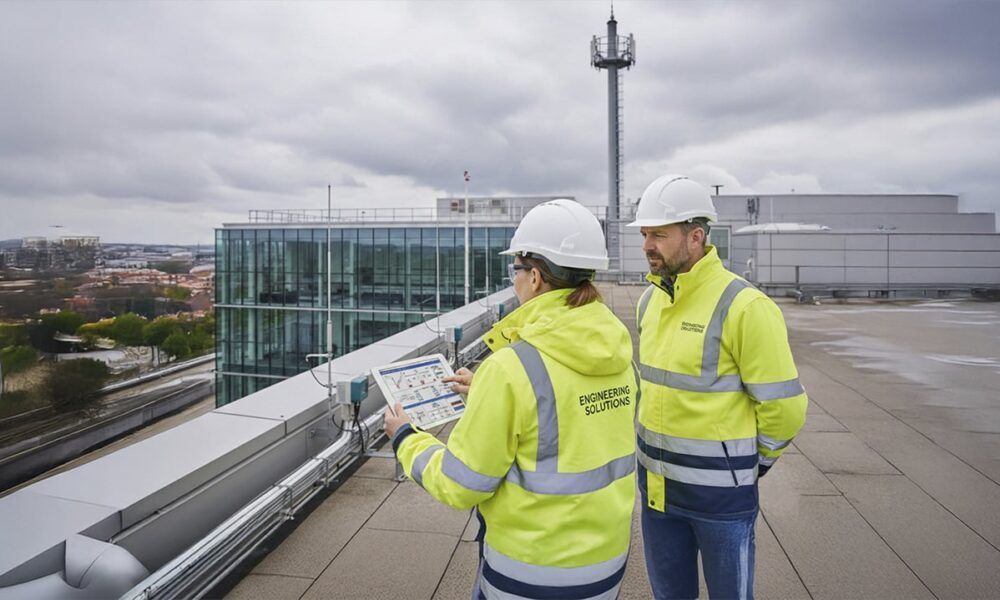
Lightning never announces its arrival with structural sympathy. For UK engineers, a single strike can behave like an electrical hammer, travelling through metal, masonry, cabling, and control systems. Failures often appear far from the point of entry. A rooftop strike may silence a data hall two floors below. This unpredictability should drive a disciplined focus on Lightning risk assessment as a core engineering activity rather than a mere compliance formality.
Across Britain, engineers treat lightning as a probabilistic threat. They measure exposure, tolerance, and consequence with the same seriousness applied to flood or fire. The practice blends standards, site knowledge, and engineering judgement, shaped by the UK climate and dense building environment.
The UK context for lightning risk
The United Kingdom typically records fewer strikes than southern Europe, yet infrastructure density raises the impact per event. Tall urban structures, wind farms along coastlines, rail signalling corridors, and heritage buildings create varied risk profiles. Engineers face pressure from insurers, regulators, and asset owners to justify protection decisions with evidence rather than intuition.
Lightning related failures often stem from the indirect effects of a strike. Surge propagation through power or data lines can badly damage equipment without visible structural harm. UK engineers recognise this pattern and frame assessments around system behaviour, not just air terminals and down conductors.
Standards as an engineering language
BS EN IEC 62305 shapes professional practice across the UK. Engineers use it as a shared language that links design offices, contractors, inspectors, and insurers. The standard divides risk into measurable components, tying strike probability to loss categories such as human life, service continuity, cultural value, and economic cost.
Risk assessment under this framework demands structured thinking. Inputs include structure geometry, location, soil resistivity, line routing, occupancy patterns, and service criticality. Outputs guide decisions on lightning protection systems, surge protection devices, inspection cycles, and maintenance planning.
This process suits the UK engineering mindset. It values traceability. Every assumption can be reviewed. Every conclusion carries a reference.
How engineers approach Lightning risk assessment in practice
UK engineers rarely treat risk assessment as a one time task. It evolves alongside the asset. Refurbishments, equipment upgrades, and usage changes alter exposure and consequence. Skilled practitioners revisit assumptions and recalculate risk.
A typical workflow follows a disciplined sequence:
- Site characterisation covering structure type, height, and surroundings
- Identification of incoming services and their exposure paths
- Classification of loss types relevant to the asset owner
- Quantitative risk calculation aligned with BS EN IEC 62305
- Selection of mitigation measures justified by risk reduction
This mirrors structural engineering logic. Risks get calculated. Safety factors get applied. Lightning risk receives the same analytical respect.
Reducing failures through design choices
Risk assessment influences design decisions that extend beyond rooftop conductors. Engineers specify bonding strategies that limit dangerous differences in electrical potential. They define surge protection coordination that respects equipment sensitivity. They influence routing and shielding of data lines and earthing arrangements across complex sites.
For critical infrastructure, engineers treat lightning like a transient load case. It arrives rarely, yet its magnitude and amplitude overwhelms poorly prepared systems. Thoughtful risk assessment narrows weak points before failure exposes them.
In heritage buildings, the approach shifts. Visual impact, material compatibility, and conservation rules shape mitigation measures. Engineers balance risk reduction against irreversible alteration. Structured assessment supports these conversations with clarity rather than opinion.
The role of digital assessment platforms
Manual calculations remain possible, yet modern practice leans toward digital platforms that reduce error and improve consistency. UK engineers value tools that mirror the structure of IEC 62305 without obscuring its logic.
Skytree Scientific supports this need through its Lightning risk assessment platform LRA Plus™. The software guides engineers through structured inputs aligned with recognised standards. Risk components remain visible. Assumptions stay traceable. Outputs translate into automatically generated clear reports suitable for technical review or insurance submission.
LRA Plus™ fits naturally into consultancy workflows. Engineers retain professional judgement and can easily test different protection measures for suitability and compliance. The platform accelerates calculation, reduces transcription mistakes, and supports repeat assessments across portfolios. For organisations managing multiple sites, this consistency matters.
Learning from failures without repetition
Post incident analysis often reveals gaps that structured assessment would have exposed. Missing surge protection on secondary lines. Inadequate bonding across extensions. Assumptions based on outdated site usage. UK engineers feed these lessons back into future assessments, refining judgement with experience.
This cycle mirrors aviation safety culture. Rare events demand rigorous analysis. Each incident sharpens the method.
Professional judgement remains central
No tool replaces engineering responsibility. Risk assessment can and should support decision making rather than dictating it. UK engineers apply context, experience, and stakeholder priorities to interpret results. A calculated risk above tolerance prompts action, yet the form of that action varies by site.
LRA Plus respects this balance. Skytree Scientific’s platform provides structure without constraining thought. Engineers remain accountable for outcomes.
A disciplined path toward resilience
Lightning related failures rarely arise from ignorance. They arise from underestimated interactions between structure, services, and environment. UK engineers counter this through structured assessment, grounded in standards and sharpened by experience.
Lightning risk assessment sits at the intersection of physics and responsibility. When applied with rigour, it turns an unpredictable natural force into a manageable engineering variable. That shift reduces failure, protects assets, and sustains trust across the built environment.
Read More From Techbullion