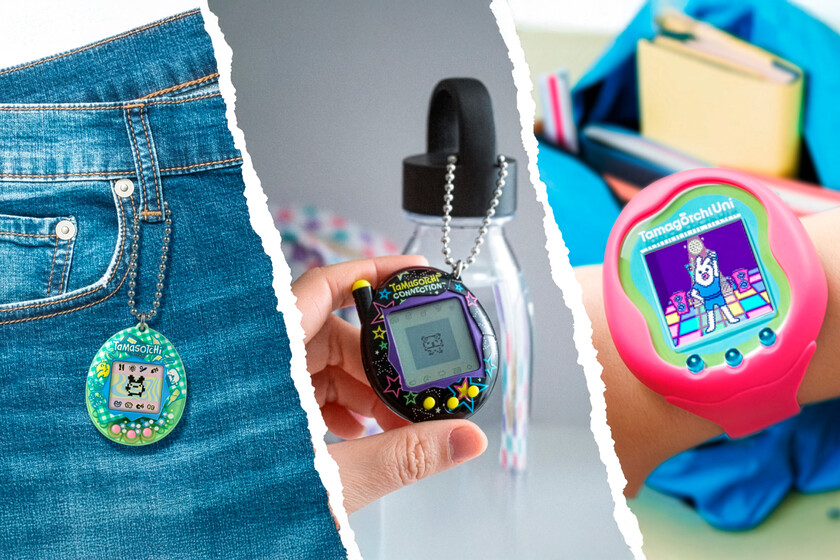
Thirty years after its launch in Japan, the Tamagotchi is still recognizable at first glance. The egg shape, the three buttons, the screen that barely shows a few animated pixels. Everything seems taken straight from the nineties and yet, we are not facing an object frozen in time. Bandai has continued to push new versions and the product continues to find an audience, both among those who remember it from their childhood and among new generations who did not experience its original heyday.
This journey, from global phenomenon to persistent cultural icon, cannot be explained only as a fashion that returns. The Tamagotchi installed a different relationship with a device: in its original version it was not used when you felt like it, but when you wanted it. Caring, feeding, cleaning and assuming consequences were part of the deal, with a radical element for an electronic toy of the time: there was no pause button to rescue you from neglect. What we interpret today as the “attention economy” did not yet have a name, but the mechanics were already there.
A Japanese toy that taught how to coexist with digital
Functionally, the Tamagotchi is a basic simulation of care and growth encapsulated in a pocket-sized object. The device executes a set of rules that determine the state of the digital creature, rules that the user can only partially modulate through specific actions repeated over time. There is no learning curve complex nor a clearly defined ending, and therein lies part of its uniqueness compared to other electronic toys of its time. The important thing is not to “win”, but to sustain the bond.
The interest is not in dominating the system, but in living with it. That logic, deliberately open, allowed the Tamagotchi to transcend the usual framework of the electronic toy and integrate into the daily routine of those who used it. It was not about sitting down to play, but rather assuming a presence that could demand intervention throughout the day, regardless of the context. It’s a small distinction on paper, but huge in practice, because it moves the game from a “time” to an ongoing relationship.
To understand why this product aIt seems in Japan in 1996it is convenient to look at the industrial context without turning it into a closed cultural explanation. Bandai operated in a mature market for toys and licenses, and in the mid-nineties it was looking for formats capable of connecting with a young audience that already lived with electronics. Japan, furthermore, was an environment especially accustomed to portable personal objects, from players to consoles, and to characters turned into everyday icons. All of that didn’t “cause” the Tamagotchi, but it did make it more readable.
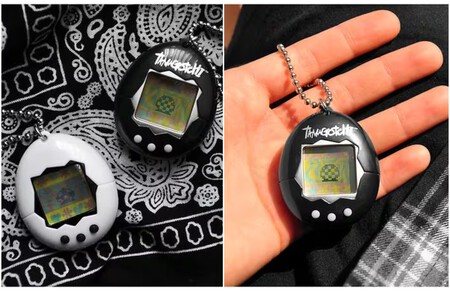
The key is that the Tamagotchi did not rely on a well-known franchise or a previous history. Its appeal was based on a simple, portable and easy-to-communicate idea, reinforced by an aesthetic close to the Japanese visual culture of the time, where the small and the expressive were already part of the landscape. That combination helped the concept be adopted quickly and, above all, shared naturally. Not as a rare device, but as a personal item that was carried around.
Although the Tamagotchi is often spoken of as a singular invention, its origin is the result of a very specific collaboration. Akihiro Yokoi, president of WiZ, proposed the initial concept of a portable virtual pet and presented it to Bandai in the mid-nineties. There, Aki Maita, responsible for the project within the company, was the one who transformed that idea into a viable product from a technical and commercial point of view. This double authorship matters because it avoids the easy story of the solitary genius and better describes how many consumer phenomena are born.
The initial concept was that of a portable virtual pet.
The process included testing with real users before its launch, something unusual in the development of electronic toys at the time. These tests allowed us to adjust both the design and the focus of the product and revealed a key fact for Bandai: interest was strongly emerging among teenagers, especially girls, which influenced the final aesthetic and the way it was presented. It is not a minor detail, because it explains why the Tamagotchi became a social and visible object, not a device that was hidden.
If we talk about the name, we can say that it was not a minor detail or an afterthought either. “Tamagotchi” is born from a deliberate combination between tamago, the Japanese word for “egg”y watchreferring to an often consulted object, adapted phonetically in Japan. That choice reveals how the product was thought about from the beginning. Not as a toy that is used occasionally, but as something that is carried around and looked at frequently.
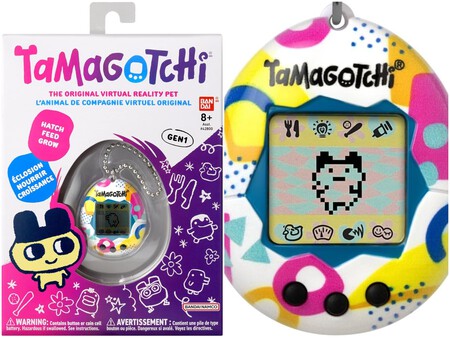
As we say, in the original model, the device did not offer full control to the user. There was no way to freeze the system or protect the creature from the consequences of carelessness, and that harshness was built into the proposal. The asymmetry, in which the user responded more than he commanded, altered the traditional relationship between player and toy and increased the emotional cost of abandonment.
Bandai assumed from the beginning that this lack of indulgence was part of the experience. The Tamagotchi was not designed to please, but to demand consistency and generate involvement. This logic, which today we associate with much more sophisticated digital dynamics, was key to making the bond with the creature feel less instrumental and closer to an everyday responsibility.

When the Tamagotchi left Japan, it did so as hard-to-anticipate phenomena often do: faster than the market could absorb. In May 1997 it arrived in the United States and, from there, spread to other markets, including European countries, in a very short period. Bandai went from managing a domestic launch to dealing with a global product, with supply problems, resale and a constant presence in media that did not always know how to fit that toy into known categories.
Popularity brought with it unexpected tensions. The device began to appear in classrooms, exams and activities where it was not invited, and in many centers it was decided to restrict or prohibit it due to the interruptions it generated. This reaction, far from stopping the phenomenon, contributed to amplifying itbecause it confirmed that the Tamagotchi was no longer just a toy: it was a social issue. In a very short time it became a generational marker, something talked about and seen, not private entertainment.

When the initial fever began to fade in the late 1990s, the Tamagotchi didn’t go away. It changed phase. Bandai chose to reactivate it with technical iterations that altered the experience without breaking its logic, and there appears a first key leap: connectivity between devices, initially through infrared, which allowed direct interaction between pets. The product was still recognizable, but I found a new reason to return, without depending solely on memory.
That movement set a pattern that would repeat itself over time. Each new wave introduced a specific technological change, such as the jump to color, new screens or different formats, which served to attract a different generation without deleting the previous one. The Tamagotchi ceased to be a one-time phenomenon and became a brand capable of periodically reactivating itself, with gradual adjustments instead of aggressive reinventions.
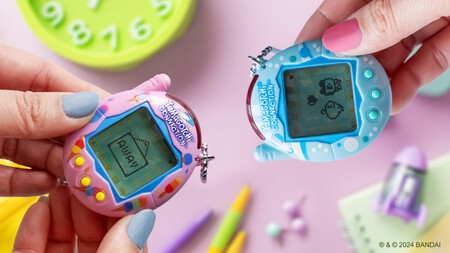
Thirty years later, the Tamagotchi doesn’t stand up solely as a throwback to the ’90s. Bandai has noted an uptick in the brand’s commercial traction in recent years, largely driven by the adult audience that knew it in their childhood, and has accompanied it with new lines and launches.
The environment in which the Tamagotchi exists today is nothing like that of the late nineties. Virtual pets have multiplied in the form of mobile applications and connected toys that integrate sensors, permanent connection and, in some cases, AI-based features. In that context, the Tamagotchi can’t compete for realism or breadth of features, nor does it seem interested in doing so.

The strategy, more than technological, is positioning. Instead of maximizing capabilities and becoming closer to a “smart companion,” the Tamagotchi remains a device with clear rules and a limited experience, even when it incorporates connectivity in recent models. It is not a renunciation of modernity, but a way to preserve its identity in the face of an ecosystem saturated with screens and services. Its appeal lies in that mix of simplicity, tangibility and predictability, not in promising a perfect relationship.
Images | Antonio Rubio | BANDAI (1, 2, 3)
In WorldOfSoftware | Gunpei Yokoi: rise and fall from grace of the never sufficiently recognized genius who took Nintendo to the top