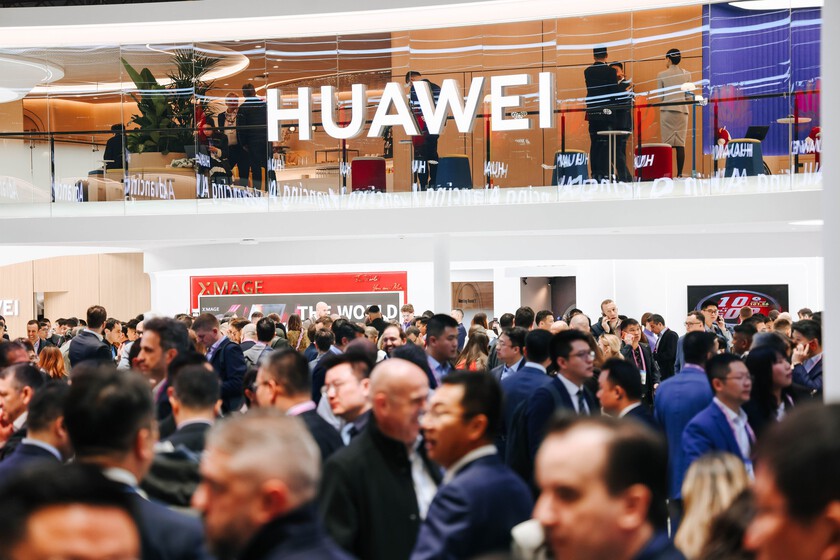
There are images that summarize geopolitical tension better than any official document. One of them occurred in Barcelona during the last Mobile World Congress. While several European capitals debate how to reduce the presence of suppliers considered high risk in telecommunications networks, Huawei appeared at the sector’s largest fair with a presence that is difficult to ignore. The Chinese company arrived at the event with one of the most visible spaces in the venue and left as one of the most notable presences at the congress, a scene that helps to understand the current relationship between Europe and the technology giant.
The image. When touring the pavilions of the Barcelona exhibition center, it was quickly understood the weight that Huawei had decided to exhibit. As Politico reports, the company installed one of the largest exhibition spaces at the event and located it in one of the busiest areas of the complex, a location usually reserved for the most powerful actors in the industry. During the days of the fair, that stand became a constant crossing point for executives, operators and analysts who toured the congress.
Prominence also on the agenda. Beyond its deployment within the venue, Huawei also took up space in the official MWC programming. Company executives participated in different sessions of the congress and the company was among the actors present in the debates on network infrastructures and technological evolution of the sector. That role was reinforced with recognition at the Global Mobile Awards, the awards that are presented each year during the event. The award for one of its network infrastructure developments served as a reminder that, despite the political climate surrounding the company in part of Europe, its technological weight within the industry remains relevant.
The European contrast. The scene left by the MWC contrasts with the political climate that has surrounded Huawei in part of Europe for several years. The European Commission has been toughening its discourse for some time on suppliers considered high risk in critical telecommunications infrastructure and has encouraged Member States to reduce their dependence on them. In parallel, several European countries have taken measures to limit or withdraw their technology from sensitive networks, especially in the deployment of 5G, with decisions in countries such as Germany, which has promoted the withdrawal of Chinese components in critical parts of the network, or Sweden, which banned Huawei from its 5G networks. The result is a fragmented map in which regulatory pressure coexists with a more complex industrial reality.
Spain has not been immune to the European debate on Huawei either, although its evolution has followed a less abrupt path than in other countries. The Government has not decreed a formal ban, but the company’s role in critical infrastructure has been progressively decreasing. In the deployment of 5G, large operators have been replacing their technology in the network core, the part that manages communications and user data. The result is an intermediate scenario: Huawei is still present in the technological ecosystem, but its weight in the most sensitive points of the networks has been significantly reduced.
A resilience already known. The Barcelona scene fits a pattern that Huawei has been repeating for years. Following the sanctions imposed by the United States in 2019, many analysts assumed that the company would be relegated to a secondary role in the global technology industry. However, the company quickly reoriented its strategy: it strengthened its domestic market in China, developed its own chips and opted for an independent software ecosystem after losing access to Google services. This adaptation process allowed the company to remain present in numerous segments of the sector, even in markets where its position had been weakened.
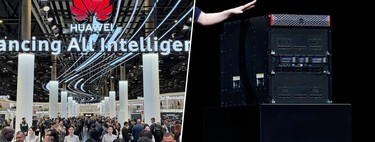
The image that Huawei left at the MWC. We can interpret it as a moment within a longer story. For years, different actors have tried to stop the advance of the Chinese giant in the global technology industry. However, the company has continued to reorganize its strategy and maintain a presence in the sector. What happened in Barcelona suggests that this process is far from over. Quite the opposite: we are watching a new stage unfold in real time.
Images | Huawei
In WorldOfSoftware | The US has decided to shoot itself in the foot and destroy one of the best AI companies in the country