By using this site, you agree to the Privacy Policy and Terms of Use.
Accept
World of SoftwareWorld of SoftwareWorld of Software
  • News
  • Software
  • Mobile
  • Computing
  • Gaming
  • Videos
  • More
    • Gadget
    • Web Stories
    • Trending
    • Press Release
Search
  • Privacy
  • Terms
  • Advertise
  • Contact
Copyright © All Rights Reserved. World of Software.
Reading: Identity and AI: Questions of data security, trust and control | Computer Weekly
Share
Sign In
Notification Show More
Font ResizerAa
World of SoftwareWorld of Software
Font ResizerAa
  • Software
  • Mobile
  • Computing
  • Gadget
  • Gaming
  • Videos
Search
  • News
  • Software
  • Mobile
  • Computing
  • Gaming
  • Videos
  • More
    • Gadget
    • Web Stories
    • Trending
    • Press Release
Have an existing account? Sign In
Follow US
  • Privacy
  • Terms
  • Advertise
  • Contact
Copyright © All Rights Reserved. World of Software.
World of Software > News > Identity and AI: Questions of data security, trust and control | Computer Weekly
News

Identity and AI: Questions of data security, trust and control | Computer Weekly

News Room
Last updated: 2026/04/02 at 4:45 PM
News Room Published 2 April 2026
Share
Identity and AI: Questions of data security, trust and control | Computer Weekly
SHARE

AI-driven identity solutions are often presented as the grown-up answer to modern access control: smarter verification, less friction, better security, happier users. In principle, yes. In practice, they also drag a fairly hefty suitcase of compliance, privacy and ethical questions in behind them.

The first issue is compliance. Identity is not a side topic in enterprise environments. It sits right in the middle of security, governance, risk and accountability. Once AI is involved in deciding who gets access, who is challenged, who is flagged as suspicious, or who is denied entry altogether, that stops being just a technical control and quickly becomes a governance matter. Many of these solutions rely on large volumes of personal data, sometimes including biometrics, behavioural analysis, device data, location information and patterns of use. That means organisations need to be crystal clear on lawful basis, necessity, proportionality, retention and oversight. In other words, they need to know not just that the tool can do something, but that they should be doing it at all. Like knowing that an iPhone is a tool, not the conversation.

Privacy is where things get a bit soupy. AI identity systems are usually marketed on the basis that they can take more signals into account and make better decisions as a result. That sounds great, and sometimes it is. But it also means more collection, more processing and more potential intrusion. The line between intelligent authentication and overreach can get thin very quickly. Data gathered to confirm identity can easily become data used to monitor behaviour, profile staff, track habits or support broader surveillance if the guardrails are poor. That is where trust starts to wobble. Enterprises need privacy by design, proper impact assessments, transparent notices and disciplined boundaries around how identity data is used. Just because a system can infer more does not mean it should. It’s a potential minefield that should be navigated mindfully and with integrity.

That brings us to is the ethical question, which is where the machine gets a little too smug for its own good. AI models are not neutral simply because they are mathematical. If an identity tool has been trained on incomplete or biased data, it may perform unevenly across different groups. That can lead to higher false rejections, repeated challenges for legitimate users, or decisions that disproportionately affect certain individuals. In a business setting, that is not just inconvenient. It can be unfair, exclusionary and potentially discriminatory. Organisations cannot simply deploy these systems and hope the algorithm behaves itself. That’s magical thinking.

Explainability matters too. If someone is denied access, locked out of a process or flagged as high risk, there must be a way to explain that decision in plain language and to challenge it if necessary. Black box identity decisions are a poor fit for any organisation trying to claim strong governance. Human review, escalation routes and clear accountability all need to be part of the design.

The real implication is that AI-driven identity should never be treated as a shiny bolt-on security upgrade. It is part of a much bigger picture involving data protection, user trust, accountability and control. Used well, it can strengthen resilience and reduce fraud. Used badly, it can create exactly the kind of opaque, over-engineered risk that good governance is supposed to prevent. The smart approach is not to resist the technology, but to govern it properly from the outset. Because in identity, as in most things, clever without controlled is just chaos in a smarter outfit.

Sign Up For Daily Newsletter

Be keep up! Get the latest breaking news delivered straight to your inbox.
By signing up, you agree to our Terms of Use and acknowledge the data practices in our Privacy Policy. You may unsubscribe at any time.
Share This Article
Facebook Twitter Email Print
Share
What do you think?
Love0
Sad0
Happy0
Sleepy0
Angry0
Dead0
Wink0
Previous Article 5 Smartphones With The Fastest Charging Batteries Of All Time – BGR 5 Smartphones With The Fastest Charging Batteries Of All Time – BGR
Next Article Startup launched by former AWS energy team emerges with M to help solve data center power crunch Startup launched by former AWS energy team emerges with $7M to help solve data center power crunch
Leave a comment

Leave a Reply Cancel reply

Your email address will not be published. Required fields are marked *

Stay Connected

248.1k Like
69.1k Follow
134k Pin
54.3k Follow

Latest News

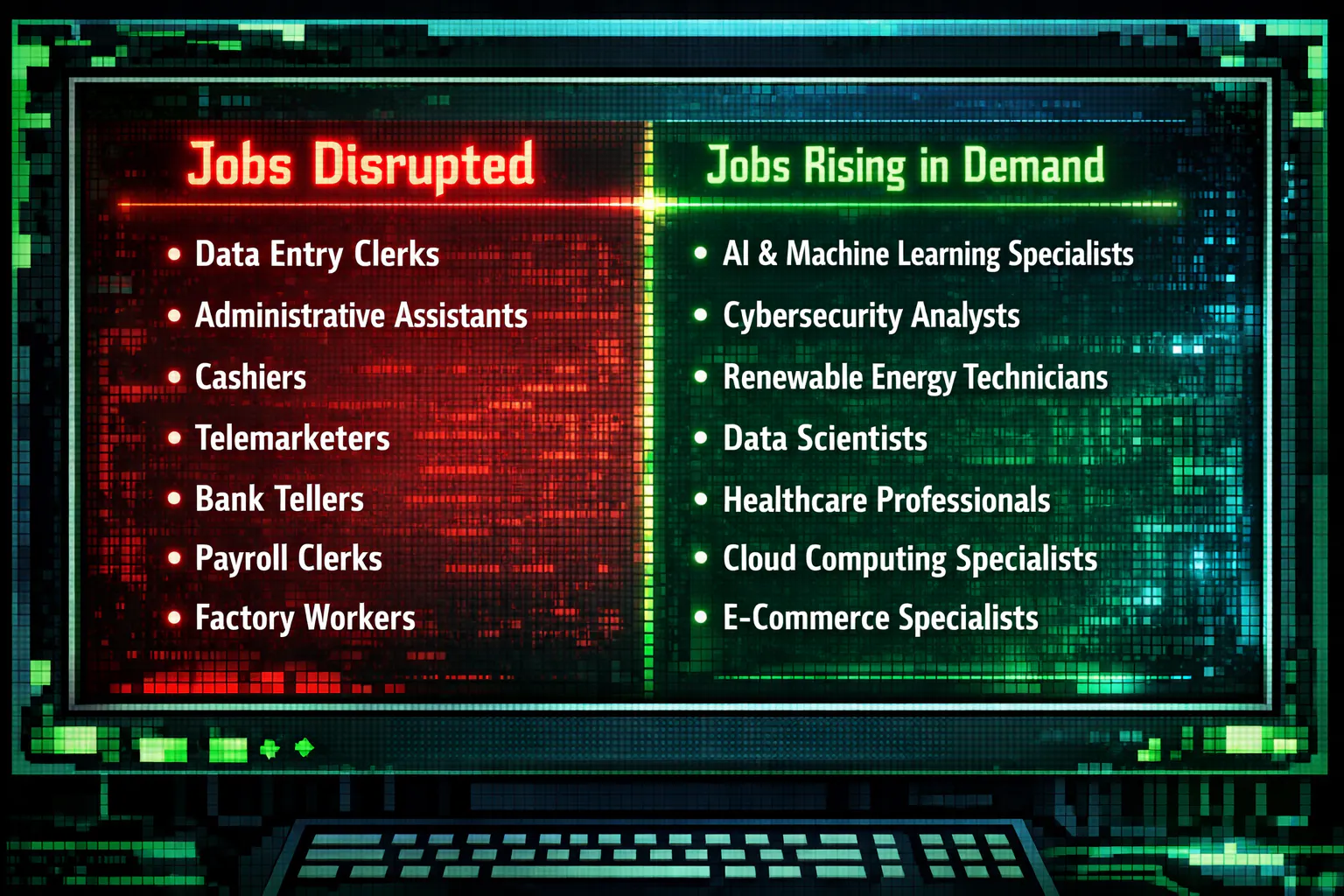
Microsoft Generative AI Report: The 40 Jobs Most Disrupted Jobs & The 40 Most Secure Jobs  | HackerNoon
Microsoft Generative AI Report: The 40 Jobs Most Disrupted Jobs & The 40 Most Secure Jobs | HackerNoon
Computing
Flipboard Launches Surf, Pulling Together Your Social Interests and News Feeds
News
AO3 is finally out of beta after 17 years
News
The Google Pixel 10 Is 0 Off
The Google Pixel 10 Is $150 Off
Gadget

You Might also Like

Flipboard Launches Surf, Pulling Together Your Social Interests and News Feeds
News

Flipboard Launches Surf, Pulling Together Your Social Interests and News Feeds

4 Min Read
AO3 is finally out of beta after 17 years
News

AO3 is finally out of beta after 17 years

2 Min Read
The Best Online Fax Services We’ve Tested for 2026
News

The Best Online Fax Services We’ve Tested for 2026

25 Min Read
Microsoft launches new high-speed voice and image models –  News
News

Microsoft launches new high-speed voice and image models – News

5 Min Read
//

World of Software is your one-stop website for the latest tech news and updates, follow us now to get the news that matters to you.

Quick Link

  • Privacy Policy
  • Terms of use
  • Advertise
  • Contact

Topics

  • Computing
  • Software
  • Press Release
  • Trending

Sign Up for Our Newsletter

Subscribe to our newsletter to get our newest articles instantly!

World of SoftwareWorld of Software
Follow US
Copyright © All Rights Reserved. World of Software.
Welcome Back!

Sign in to your account

Lost your password?