There are plenty of things to worry about these days, and the ability of AI to weaponize biology into one of the largest threats facing our world isn’t top of mind for most of us.
Seed-stage investors have a different view. Over the past few months, two startups focused on the intersection of AI and biosecurity have raised good-sized initial rounds with OpenAI among their investors.
Valthos, a developer of AI systems that identify biological threats and design countermeasures, raised $30 million last fall in its first known funding round. The New York-headquartered company counts Founders Fund and Lux Capital as backers, along with OpenAI.
Weeks later, Red Queen Bio, a self-described AI biosecurity company, secured $15 million in a seed round led by OpenAI and joined by investors including Cerberus Ventures, Fifty Years and Halcyon Futures. The company’s operating thesis is that as AI capabilities advance, biological risks grow exponentially, so defenses must scale at the same rate.
On the nonprofit front, meanwhile, Cambridge, Massachusetts-based SecureBio secured grant funding from multiple sources last year, including $1.4 million from Coefficient Giving in December. The organization’s stated mission is to secure the future from catastrophic pandemics.
A drop in the AI bucket
Given all the capital that has poured into artificial intelligence of late, these are not comparatively large sums going to biosecurity. To put it in perspective, the two biggest seed rounds are less than one-tenth of a percent of the record-setting $110 billion financing OpenAI secured last week.
What’s more noteworthy than sums invested is these are relatively new areas for startups to scale.
Per Crunchbase data, the term “biosecurity” and similar terminology has cropped up in funded startup descriptions but not so much in the context of AI. Funded startups around this theme have also commonly focused on livestock.
The Australian startup ExoFlare, for instance, raised a few million two years ago, per Crunchbase data, with a focus on tracking biosecurity risks for cattle, pigs, eggs and poultry. And Nebraska-based Daro picked up $1.1 million last year for a business focused on swine disease surveillance.
Running in place
In addition to their AI focus, the latest crop of biosecurity seed-funded startups stand out for the dire scenarios they’re hoping to contain.
Per Valthos, it’s now faster to weaponize biology than to advance new cures, an ominous development that AI leaders have identified as one of the largest threats of our time. The company envisions a future where any threat to human health can be immediately identified and neutralized.
Red Queen Bio evokes a similarly alarming specter of threats, reflected in its nomenclature. The Red Queen hypothesis, a notion that evolution requires constant adaptation to ever-evolving threats, stems from a “Through the Looking Glass” passage. In it, the tyrannical Red Queen explains that in her kingdom, “it takes all the running you can do, to keep in the same place.”
Running to keep in the same place seems a more broadly apt metaphor for the modern era in myriad domains, not just biosecurity. However, this is one of the spaces where not keeping up carries the potentially deadliest penalties.
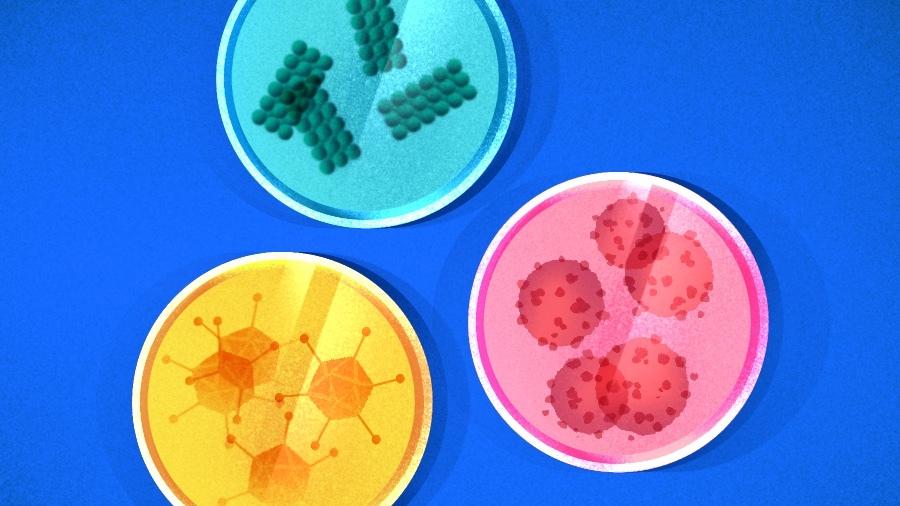
Illustration: Dom Guzman
Stay up to date with recent funding rounds, acquisitions, and more with the
Crunchbase Daily.